Pirates Slots: Free Demo & Reviews
This hub covers 293 Pirates titles on the site, averaging 95.71% RTP — exactly in line with the site-wide average — with picks from leading pirate slot providers.


What makes a slot a ‘Pirates’ title
On this site, pirates slots are defined simply by their theme tag: if a game is tagged Pirates, it appears in this cluster. In practical terms that means the visual and narrative dressing draws on pirate imagery — ships, seas, maps, treasure chests, flags and characters dressed as pirates — rather than any single shared mechanic. The tag is about look and story, not about how the game pays, and two games with the same tag can play very differently on the reels.
Because this is a visual theme rather than a mechanical feature, there is no single rule for what happens on the reels. One Pirates title might use a straightforward grid with paylines, another might use different reel layouts or bonus structures. The common thread is the presentation, not the engine underneath. If you open several titles from the cluster back-to-back you will quickly see how widely the interpretation varies: some lean into cartoonish adventure, others aim for a darker, more atmospheric take on life at sea, but all are grouped here because the site has applied the same Pirates label to them.
That grouping is useful when you want to browse by taste. Rather than checking providers or release dates one by one, the theme page collects every game on the site that carries the tag so you can judge the size of the catalogue, see how it compares on average return-to-player, and spot which studios build most often in this style. Use it as an overview of what the site actually holds under this label, not as a description of a single game.
Pirates slots by the numbers
This catalogue holds 293 games tagged Pirates, which makes it a large theme on the site. For context, a cluster of this size sits well above a niche tag that might hold only a few dozen titles, and it means you will find considerable variety within the same visual idea rather than a handful of similar releases.
Across those 293 titles the average RTP on the site is 95.71%. The site-wide average across all themes is also 95.71%, so this cluster sits exactly on the overall mean. The difference versus the corpus is 0.00 percentage points. That figure is calculated from the games on this site only and is an aggregate of many individual games, each with its own published RTP. It does not mean every Pirates game pays the same, and it does not mean the theme itself changes the odds. RTP remains a property of each specific game, expressed as a long-run theoretical average, and it varies title to title inside the cluster just as it does across the whole catalogue.
What the aggregate does tell you is that, within this site’s data, Pirates as a group does not skew higher or lower than the average experience. You will find individual titles above and below that line, but the cluster as a whole is centred on the site norm. If you are comparing themes on this site, this one is notable for breadth of choice rather than for a distinctive RTP profile.
| Measure | Value on this site |
|---|---|
| Games tagged Pirates | 293 |
| Average RTP for Pirates titles | 95.71% |
| Site-wide average RTP (all themes) | 95.71% |
| Difference vs. site average | 0.00 pp |
Reading the table with the game count alongside the RTP figures helps set expectations. A large count means more interpretations of the same visual idea, more providers involved, and more differences in volatility, maximum win potential and feature structure from one title to the next. The average smooths those individual differences away, so the most useful way to use the numbers is to treat them as a description of the cluster size and its central tendency, then look at specific titles for the details that actually distinguish one game from another.
Because the site calculates these aggregates from its own database, they reflect only what is published here. They are not a claim about Pirates games in general across the wider market and they are not a promise about any individual session. Short-term results vary, higher variance titles can swing more sharply around the average, and the RTP figure for any single game is always the one listed on that game’s own page.
Providers building Pirates titles
The distribution of studios behind Pirates titles shows which providers have built most often in this theme on the site. The top five by count are Spinomenal with 10 games, Pragmatic Play with 9, Play’n GO with 9, Evoplay with 6, and Red Tiger Gaming with 6. Together those five account for 40 of the 293 titles, while the remaining games are spread across many other studios.
Spinomenal appears most frequently in this cluster on the site, with a narrow lead over the next two providers. Pragmatic Play and Play’n GO are tied on 9 each, which indicates both have returned to the theme repeatedly rather than treating it as a one-off. Evoplay and Red Tiger Gaming follow with 6 each. The pattern is not that one studio dominates the theme; instead several well-known providers each contribute a noticeable share, which tends to produce stylistic variety inside the same tag.
That spread matters when you browse. Studios often reuse interface conventions, art pipelines and feature families across their own releases, so seeing multiple providers near the top suggests you will encounter different approaches to level design, symbol sets, audio and bonus presentation even within a single theme. If you already know you prefer how a particular studio structures its games, the provider counts give you a quick sense of where to look first inside the Pirates catalogue without having to open every title.
Below the top five the counts thin out, but the long tail is where much of the variety lives. With 293 titles in total, a large proportion sits outside the top providers, meaning smaller or less frequent contributors add their own interpretations of the same pirate dressing. The result is a broad catalogue in which the most common builders are easy to spot, yet the majority of the cluster is still made up of many different sources. When you sample titles across both the top names and the wider list, you get the fullest view of how this theme is rendered on the site.
As with RTP, provider frequency is a description of what the site holds, not an endorsement and not a predictor of results. It simply answers the question: if you pick a random Pirates game from this site’s catalogue, which studios are you most likely to land on? On present data the answer points most often to Spinomenal, then to Pragmatic Play and Play’n GO in equal measure, followed by Evoplay and Red Tiger Gaming.
Where to start
This site currently lists four specific Pirates titles as published picks you can open directly as free demos. They are a small sample from the wider set of 293, but they illustrate the range inside the tag and give you concrete places to begin without having to work through the whole catalogue at once.
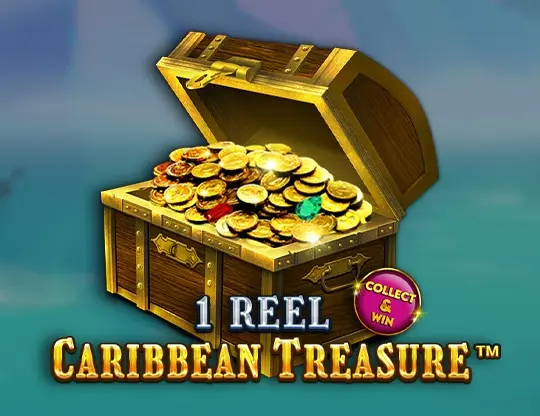
1 Reel Caribbean Treasure from Spinomenal is listed with an RTP of 95.42%. It is the only title among the picks from the provider that appears most often in this theme on the site, and its name places it directly in a Caribbean setting. The published data for this pick does not include volatility or maximum win on the site, so the detail to note from the facts is the provider match and the individual RTP as shown on its own page.
Cursed Pirates from Triple Cherry is listed with an RTP of 94.00%. It represents a different studio from those at the top of the provider counts, which is consistent with the long-tail variety described above. The entry in the picks does not include volatility or maximum win in the site data, so the concrete facts to use are the title, provider and RTP as given.
Pirots from ELK Studios is listed with an RTP of 94.00%, volatility marked as medium-high, and a maximum win of 10,000x. Among the picks it is the only one where the site data includes volatility and maximum win alongside RTP. That makes it the most fully described in terms of aggregate risk and reward profile, with the volatility label indicating a higher swing pattern and the maximum win figure indicating the top multiplier listed for that title. Both figures are properties of this specific game, not of the Pirates theme as a whole.
Pirates Party from NetEnt is listed with an RTP of 96.17%, which sits above the Pirates average of 95.71% and above the site-wide average of the same value. Like the other picks its theme dressing is pirates, but its individual RTP is the highest among the four highlighted titles. No volatility or maximum win is listed for this pick in the site data, so the comparison to use is on RTP and provider alone.
Taken together the four picks span four different providers and a short RTP range from 94.00% to 96.17% against a cluster average of 95.71%. That spread reflects the earlier point about variation inside an average: even a small sample shows games both below and above the mean, which is normal for a large catalogue where each title carries its own maths. If you want to understand the cluster quickly, opening two picks from different providers — for example one from Spinomenal and one from ELK Studios — will show you more of the stylistic and structural difference than opening two from the same studio, and checking each game’s own page will give you the full paytable and feature detail that the theme overview does not attempt to summarise.
If the picks list looks short compared with the total count of 293, that is because only a subset of the tagged games is currently published as individually browsable titles on the site. The aggregate counts and averages still include the full set, so the numbers above describe the complete cluster even when the linked sample is smaller. Use the picks as entry points and, when you want more, return to the full theme listing to work through additional titles by provider or by the individual RTP shown on each game page.
Before you play
Free demos are a way to look at how a game is structured and how its theme is presented without wagering. They do not change the maths and they do not predict what would happen with real money. If you decide to play beyond demos, treat it as entertainment you pay for, not as income. Set a budget in advance, keep it affordable, and stop whether you are ahead or behind. You must be 18+ to gamble. If you need support, use a responsible-gambling resource in your jurisdiction and seek help early if play stops feeling like entertainment.