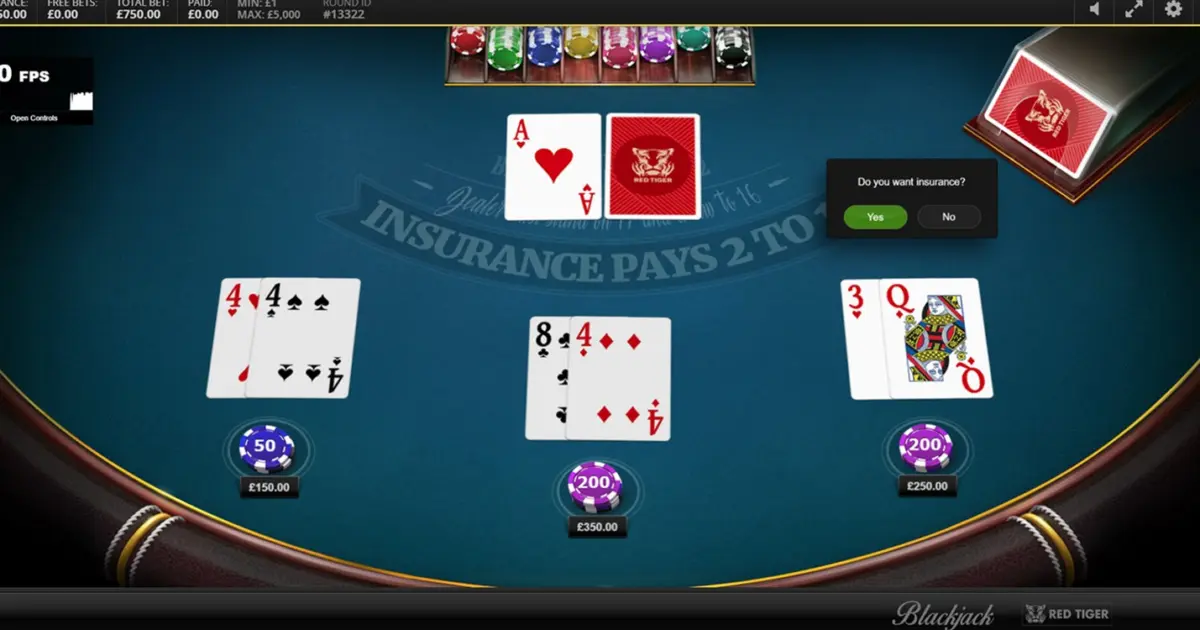
Classic Blackjack sits in the middle of the pack: its 99.28% RTP is honest work, but it trails the best tables in the category by around 0.2%. That gap is small in absolute terms but meaningful over a long session, and if you’re playing correctly you should know exactly where you stand. Red Tiger built a clean baseline table here, and the title telegraphs intent—this is the rule set most strategy charts assume.
The published RTP figure applies only when you play perfect basic strategy on every hand, and that caveat is not negotiable. A casual player who splits tens, takes insurance, or stands on 16 against a dealer 10 will realize a materially lower return, often in the 97% range or worse. The house edge under perfect play is 0.72%, and every mistake you make widens it.
| Metric | Value |
|---|---|
| RTP (perfect strategy) | 99.28% |
| House edge | 0.72% |
| Provider | Red Tiger Gaming |
| Free demo | Yes |
| Popularity rank | 2nd (99.2th percentile) |
Is Classic Blackjack a fair table?
The 99.28% RTP is legitimate, but it assumes flawless execution. Red Tiger publishes the figure openly, and it falls within the expected range for a classic rule set. The house edge of 0.72% means the casino expects to keep 72 cents of every hundred dollars wagered over the long run, assuming you never deviate from basic strategy. In practice, most players give back more.
Fair does not mean beatable. This is still a negative-expectation game, and no amount of skill converts that 0.72% edge into a player advantage. The RTP figure tells you how much of your money comes back in the form of winnings on average, not how often you win a given session. Variance is wide, and short-term results will swing well outside the expected value.
Red Tiger Gaming and this table
Red Tiger offers one blackjack table in this corpus, and this is it. The studio’s average RTP across its blackjack catalog is 99.28%—which is to say, this single table defines the figure. That’s neither good nor bad in isolation, but it does mean you won’t find a tighter or looser Red Tiger alternative to compare it against.
The overall corpus average for blackjack tables sits at 99.41%, putting Classic Blackjack 0.13 percentage points below the mean. Players chasing the lowest house edge have better options: Multihand Blackjack, American Blackjack, and Blackjack Multihand VIP all publish 99.5% RTPs, and that 0.22-point difference is worth about 22 cents per hundred dollars wagered.
Rule set: what the title implies
The “Classic” label is a strong hint that this table uses the baseline rule set most strategy charts are written for, but Red Tiger does not publish the full rule breakdown in the metadata available here. That means you should confirm the specifics in the game’s own paytable before you play for real money.
A classic rule set typically means a 3:2 payout on blackjack, the dealer standing on all 17s, and permission to double after a split. It usually involves multiple decks—often six or eight—and may or may not offer late surrender. Each of those rules moves the house edge by a few hundredths or tenths of a percent, and the cumulative effect is what produces the 0.72% edge Red Tiger reports.
The most critical rule to verify is the blackjack payout. A 6:5 payout instead of 3:2 costs you roughly 1.4% and turns an otherwise playable table into a poor one. If the paytable shows 6:5, walk away. The title here strongly suggests 3:2, but always check.
The maths of a blackjack hand
Blackjack is a solved game. Basic strategy is a fixed chart that tells you the mathematically correct play for every possible combination of your hand and the dealer’s upcard. It does not guarantee you win any given hand—it minimizes the house edge over thousands of hands by making the decision that loses the least or wins the most in expectation.
The house edge comes from one structural asymmetry: you act first, and if you bust, you lose immediately even if the dealer busts afterward. That advantage is worth several percentage points to the casino. Basic strategy claws most of it back by exploiting the dealer’s rigid rules—hitting 16, standing on 17—but it never fully closes the gap. The best you can do is reduce the edge to a fraction of a percent.
Card counting does not work here. This is an RNG table that reshuffles after every hand, so there is no deck penetration and no count to track. Counting works in live shoe games because the remaining deck composition changes as cards are dealt, but an RNG resets to a full, shuffled deck every time. Any system that relies on tracking cards is useless against this table.
Common mistakes that cost you the edge
Insurance is a bad bet. The dealer offers it when they show an ace, and it pays 2:1 if they have blackjack. At standard odds, the house edge on insurance is around 7%—nearly ten times the edge on the base game. You should decline it every time unless you are counting cards in a live shoe game, which does not apply here.
Taking insurance “to protect a good hand” does not change the maths. Whether you hold 20 or 12, the insurance bet is evaluated independently, and it is a losing proposition at 2:1 odds. The only time insurance approaches fair value is when the remaining deck is unusually rich in tens, which cannot happen in an RNG game.
Deviating from basic strategy is the fastest way to widen the house edge. Standing on 16 against a dealer 10 because “I have a feeling” or splitting tens because you want to chase two hands costs you money in expectation every time you do it. The strategy chart is not a suggestion—it is the optimal play derived from millions of simulated hands. Ignore it and you are giving the house a larger edge than the one they already have.
Side bets carry a far higher house edge than the base game, often in the 3% to 8% range. Perfect Pairs, 21+3, and similar wagers are designed to look attractive with large payouts on rare outcomes, but the maths is brutal. If this table offers side bets, treat them as entertainment with a high cost, not a strategic opportunity.
Trying it free first
A free demo is available for this table, and you should use it. Demo play lets you test the interface, confirm the rule set in the paytable, and practice basic strategy without risking money. It will not predict your real-money results—variance is wide, and a lucky demo session means nothing about the next hundred hands—but it will tell you whether the table’s pace and layout suit you.
When you do play for real money, set a budget in advance and treat it as the cost of entertainment, not a path to income. Blackjack is a negative-expectation game, and over time the house edge will assert itself no matter how well you play. If you are not comfortable losing the amount you bring to the table, do not sit down. This is a game for adults 18 and older, and responsible play means knowing when to walk away.
Final take on Classic Blackjack
Classic Blackjack is a competent baseline table with a transparent RTP and a rule set that matches its name. The 99.28% return is honest, but it is not the tightest table available—several alternatives in the same category push past 99.5%, and that difference is material if you play regularly. The title suggests a 3:2 blackjack payout and dealer standing on 17, but Red Tiger does not publish the full rule breakdown here, so confirm it in the game’s paytable before you commit real money.
If you know basic strategy cold and you are comfortable with the 0.72% house edge, this table will not cheat you. If you are hunting for the absolute lowest edge, look at Multihand Blackjack or one of the 99.5% alternatives instead. This is a solid middle-of-the-road option, and it ranks second in popularity for a reason—it does what it says on the tin, and the demo is there to prove it.
Frequently Asked Questions
Can I play Classic Blackjack for free?
Yes, Red Tiger Gaming offers a free demo of Classic Blackjack. Demo play lets you test the interface, confirm the rule set in the paytable, and practice basic strategy without risking money. It will not predict real-money results because variance is wide, but it is a useful way to see whether the table's pace and layout suit you before you sit down with a bankroll.
What is the RTP of Classic Blackjack?
Classic Blackjack has a published RTP of 99.28%, which translates to a 0.72% house edge. That figure assumes you play perfect basic strategy on every hand. If you deviate—taking insurance, splitting tens, or guessing instead of following the chart—you will realize a materially lower return, often in the 97% range or worse. The RTP tells you the long-run expected return, not your short-term session results.
Does card counting work on Classic Blackjack?
No. Classic Blackjack is an RNG table that reshuffles after every hand, so there is no deck penetration and no count to track. Card counting works in live shoe games because the remaining deck composition changes as cards are dealt, creating situations where the player has an edge. An RNG resets to a full shuffled deck every time, making any counting system useless here.
How does Classic Blackjack compare to other Red Tiger blackjack tables?
Red Tiger Gaming offers only one blackjack table in this corpus, and this is it. There is no tighter or looser Red Tiger alternative to compare it against. The 99.28% RTP sits 0.13 percentage points below the overall blackjack category average of 99.41%, so if you want a lower house edge, consider tables like Multihand Blackjack or Blackjack Multihand VIP, both of which publish 99.5% RTPs.
Should I take insurance in Classic Blackjack?
No. Insurance is a side bet that pays 2:1 when the dealer shows an ace and has blackjack. At standard odds, the house edge on insurance is around 7%, nearly ten times the edge on the base game. It is a losing bet in expectation every time, regardless of whether you hold a strong hand. The only exception is when counting cards in a live shoe game with a deck rich in tens, which does not apply to an RNG table.




