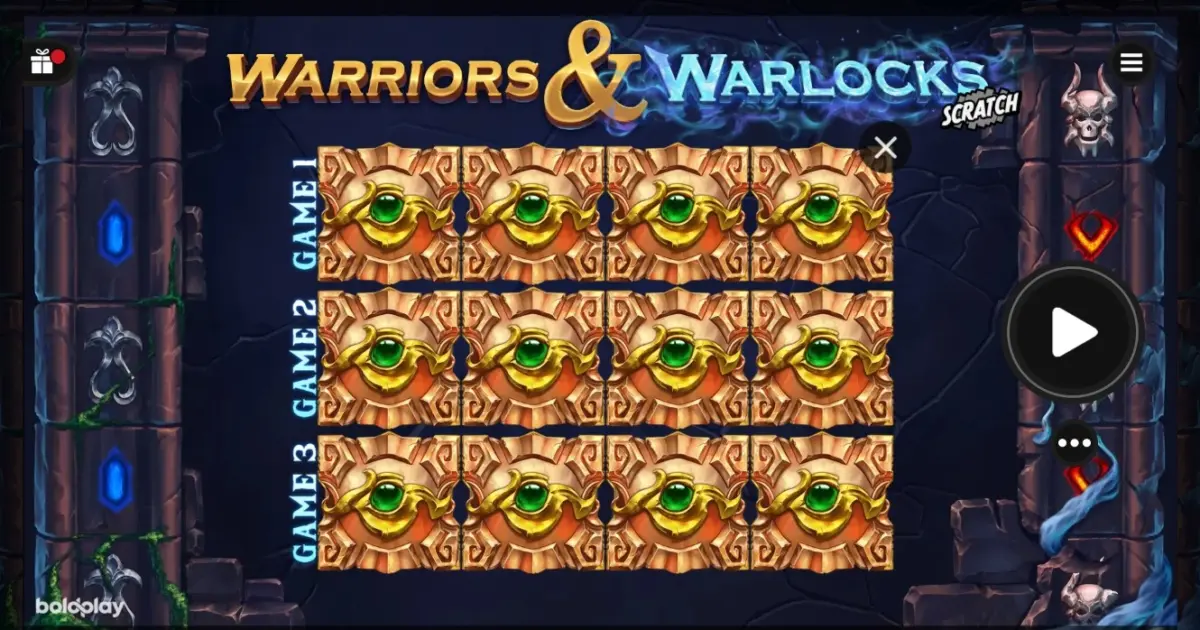
Warriors and Warlocks Scratch is a fantasy-themed digital scratch card from Boldplay with a 92.97% RTP—above the typical scratch card average of 87.84%—and free demo play available. The outcome is generated the moment you buy in, so the on-screen reveal is purely presentation layered over a result that already exists, exactly like a physical lottery ticket.
This card sits in the upper third of Boldplay’s catalog by return rate, though the studio’s 37-card range averages 94.47%, so it’s not their tightest ticket but not their loosest either. The fantasy theme is decorative; the payout structure underneath is what matters when you’re deciding whether to buy.
| Attribute | Value |
|---|---|
| Provider | Boldplay |
| RTP | 92.97% |
| Theme | Fantasy |
| Free Demo | Yes |
Warriors and Warlocks Scratch and the Boldplay ticket range
Boldplay publishes return figures for most of its scratch products, which is less common in this format than it is for slots. Warriors and Warlocks Scratch returns 92.97% over the life of its ticket batch, placing it 5.13 percentage points above the scratch card average across all providers in our index. That gap is meaningful when every ticket’s outcome is pre-decided—the prize distribution built into this batch is demonstrably less tight than the typical scratch card.
Within Boldplay’s own catalog, this card sits in the middle tier. Holmes and Moriarty Scratch returns 95.44%, and Gold Creek Superpays Scratch offers 93.6%, both higher. Book of Amduat Scrach also beats it at 95.38%. If you’re comparing Boldplay tickets, check the published RTP rather than assuming the theme or title signals anything about the prize tiers underneath.
The 92.97% figure and how it was built
A scratch card’s RTP is fixed at design time by how the studio distributes prizes across a very large batch of virtual tickets. Boldplay has published 92.97% for this card, meaning that for every 100 currency units wagered across all tickets in the batch, 92.97 units are returned as prizes. The remaining 7.03 units are the house edge, spread evenly across every ticket you buy—not accumulated on losing streaks or released after wins.
This is a lottery-style payout structure, not a spinning-reel RNG. There is no per-spin hit frequency or cycle length the way a slot calculates volatility. Instead, the batch contains a fixed number of winning tickets at each prize tier, and once a winning ticket is issued, it’s gone from the pool. Your individual ticket’s outcome was generated the instant you bought it, and scratching the panels on screen is only a reveal animation layered over that pre-decided result.
The 92.97% figure applies to the batch as a whole over millions of tickets. Your session of ten or fifty tickets will almost certainly not return exactly 92.97%—you will hit a cluster of losing tickets, or you will catch a mid-tier prize early and finish ahead. The RTP is a long-run expectation, not a session guarantee, and there is no timing or pattern that changes the odds of the next ticket you buy.
What the 92.97% RTP means for your session
A 92.97% return is competitive for a scratch card, sitting well above the format average. The difference between this and a 95% ticket is real over hundreds of plays, but in a single session of twenty or thirty tickets, the prize tier you happen to hit will matter far more than the two-point RTP gap. Check the game’s paytable screen before you buy in to see where the bulk of the return is concentrated—if most of it sits in a top-tier prize you’re statistically unlikely to hit in a short session, the 92.97% average may not describe your actual experience that day.
What actually happens when you buy a ticket
When you buy a Warriors and Warlocks Scratch ticket, the game’s server generates your outcome immediately—win or lose, and at what prize tier—and writes it to the ticket before you see anything on screen. The reveal animation that follows is purely cosmetic. Whether you scratch the panels manually or use an instant-reveal button, you are uncovering a result that was decided the moment you paid, not determining it through any action you take.
This is identical to how a physical scratch card works at a convenience store: the ticket was printed with its outcome already fixed, and scratching the latex coating only reveals what was always there. Digital scratch cards use the same model, with a random draw from the remaining pool of tickets replacing the physical print run. There is no reel spin, no hand dealt from a shoe, and no round-by-round decision that changes the probability of winning.
Because each ticket is independent, a losing streak does not mean you are “due” for a win, and a winning streak does not mean the next ticket is more likely to lose. The batch’s prize distribution is fixed, but with millions of tickets in circulation, your personal pattern over ten or fifty plays has no predictive value. The RTP applies to the entire batch, not to any one player’s sequence.
Reveal zones, panels and what they mean here
Digital scratch cards present their outcome through reveal zones or panels—the on-screen areas you scratch or tap to uncover symbols, numbers or prize amounts. The number and layout of these zones is a presentation choice by the studio, not a mechanical feature that changes the odds. Whether a card has three panels, nine panels or a single instant-reveal button, the outcome was generated before any of them appeared on screen.
Some scratch products layer a small pick-a-prize or bonus reveal mini-game on top of the base ticket for presentation—this is a cosmetic flourish that makes the reveal feel more interactive, but it does not introduce a decision point that affects your odds. The prize you will receive from that bonus round was already determined when you bought the ticket, and the pick-me game is only the delivery mechanism. Warriors and Warlocks Scratch uses a fantasy theme, so any visual presentation of warriors, warlocks or treasure chests is decorative, not a signal of what the ticket will pay.
The reveal animation exists to stretch the purchase into a few seconds of entertainment. If you prefer to skip it and see your result immediately, most scratch products including this one offer an instant-reveal or “reveal all” button. The outcome is identical either way, because the ticket’s result was written before the animation began.
Variance in scratch cards versus slots
Variance in a slot game describes how often wins occur and how large they are relative to the average payout—low variance means frequent small wins, high variance means rare large wins. Scratch cards do not use variance in this sense, because there is no per-spin event to measure. Each ticket is a single purchase with a single outcome, drawn from a fixed prize distribution designed by the studio at the start.
What you experience as “variance” in a scratch card session is really the shape of the prize tiers in the batch. If most of the 92.97% RTP is returned through small prizes won frequently, you will see a steadier session with lots of minor wins. If most of it is concentrated in a top-tier jackpot prize, you will buy many losing tickets before hitting a large prize, if you hit it at all. Boldplay has not published the prize tier breakdown for this card, so check the paytable screen in the game to see where the return is concentrated.
Because each ticket’s outcome is independent and pre-generated, there is no hot or cold streak in the slot sense. A run of losing tickets does not make the next ticket more likely to win, and a big win does not mean the following tickets are “due” to lose. The batch’s prize distribution is fixed, but your personal path through it is random, and past results have no bearing on future tickets.
Playing responsibly
Warriors and Warlocks Scratch is entertainment you pay for, not a way to generate income. The 92.97% RTP means you will lose 7.03% of your total spend over the long run, and short sessions can deviate sharply from that average. Set a fixed budget before you start, treat that amount as the cost of the entertainment, and stop when it’s gone—whether you’re ahead or behind at that point. The purchase-and-reveal loop is fast and cheap to repeat, which makes it easy to buy more tickets than you intended. This format rewards strict session limits.
The free demo mode is useful for seeing the reveal presentation and prize tiers without spending, but demo results are drawn from the same batch structure as real-money tickets, so a demo win or loss does not predict what will happen when you buy in. Only play with money you can afford to lose, and never chase a losing session by increasing your buy-in. This game is restricted to players 18 and older in all jurisdictions where it is offered.
Verdict on Warriors and Warlocks Scratch
Warriors and Warlocks Scratch is a competitively priced ticket from Boldplay with a 92.97% RTP, sitting 5.13 points above the scratch card average and in the middle tier of the studio’s own range. The fantasy theme is decorative; the payout structure underneath is what matters, and Boldplay’s published RTP figure makes this card more transparent than many scratch products where the return is not disclosed.
This is a one-reveal, one-outcome game with no strategy beyond session budgeting and no decision that changes your odds after you buy in. The free demo mode is available, which is worth using to see the prize tiers and reveal presentation before you spend. If you’re comparing scratch cards by RTP alone, this one is competitive, but check the paytable to confirm where the 92.97% return is concentrated—if most of it sits in a top-tier prize you’re unlikely to hit in a short session, your actual experience may feel tighter than the published figure suggests.
Frequently Asked Questions
Is there a Warriors and Warlocks Scratch free demo I can try without spending?
Yes, Warriors and Warlocks Scratch offers free demo play. The demo uses the same prize distribution and reveal mechanics as real-money tickets, so it's useful for seeing the paytable and presentation before you buy in. Demo results are drawn from the same batch structure, so a demo win or loss does not predict your real-money outcome—every ticket's result is independent and pre-generated when you buy it.
What does the 92.97% RTP mean for this scratch card specifically?
The 92.97% RTP means that across millions of tickets in the batch, 92.97% of all money wagered is returned as prizes and 7.03% is the house edge. This is a lottery-style prize distribution fixed at design time, not a per-ticket guarantee—your session of ten or fifty tickets may return much more or much less. The figure is competitive for a scratch card, sitting 5.13 percentage points above the format average.
Can I improve my odds on Warriors and Warlocks Scratch by timing my purchases or using a pattern?
No. Each ticket's outcome is generated the instant you buy it, drawn randomly from the remaining pool in the batch. Past results—yours or anyone else's—have no bearing on the next ticket, and there is no timing, pattern or session length that changes the odds. The prize distribution is fixed, but your path through it is random, so a losing streak does not make you "due" and a win does not mean the next ticket is more likely to lose.
Who makes Warriors and Warlocks Scratch and what else do they offer?
Warriors and Warlocks Scratch is made by Boldplay, a studio with 37 scratch cards in its catalog and a 94.47% average RTP across that range. This card sits in the middle tier by return rate within Boldplay's lineup—Holmes and Moriarty Scratch offers 95.44%, and Gold Creek Superpays Scratch returns 93.6%, both higher than this one. Boldplay publishes RTP figures for most of its products, which is less common in this format than it is for slots.
How does a digital scratch card like this one differ from a physical lottery ticket?
A digital scratch card works exactly like a physical lottery ticket: the outcome is fixed before you see it, and "scratching" only reveals a result that was already decided. Digital cards replace the printed ticket with a random draw from a server-side batch, but the prize structure is identical—each ticket is independent, pre-generated, and drawn from a fixed distribution of winning and losing tickets. The on-screen reveal animation is cosmetic, and using an instant-reveal button produces the same result as manually scratching each panel.