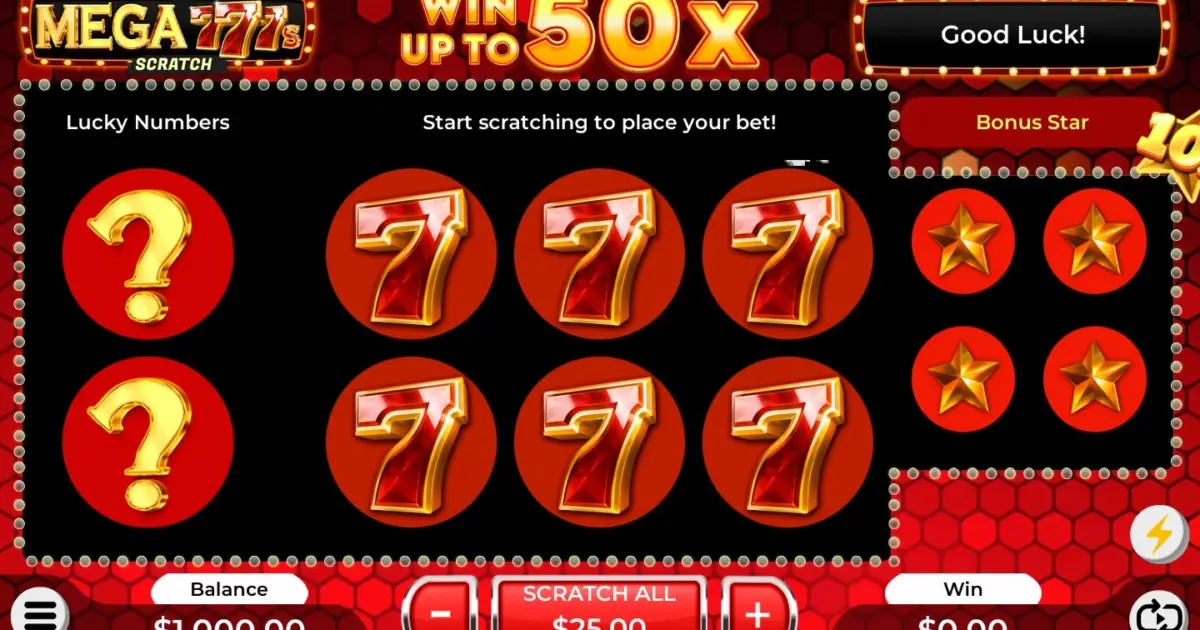
If you want a fast, no-decisions scratch ticket with a notably high headline return, Mega 777 is worth a look in free demo. The game is built around a single purchase-and-reveal, and the 97% return to player puts it well above the average for scratch cards in this catalogue. The mega 777 scratch card is easy to understand, cheap to repeat, and honest about what it is: one ticket, one result, decided instantly.
Is mega 777 scratch card worth a try?
For many players the appeal of a digital scratch card is exactly that it does not ask you to learn paylines, bonus rounds or betting systems, and Mega 777 fits that description. There is one choice per play — whether to buy the ticket — and the outcome is generated the instant you confirm the purchase. Scratching the panels on screen does not influence what you have won; it simply reveals a result that already exists, just like rubbing off the foil on a paper ticket from a shop.
That simplicity makes it easy to try in free demo before you spend anything. The provided facts confirm that free demo is available for this card, so you can see the reveal flow and check the rules or paytable screen without a balance. Demo does not predict what a real-money ticket will do, because each ticket is independent.
The strongest decision-relevant fact is the return figure. At 97.0% RTP from Mobilots, this card keeps less of total stakes across a very large batch than the typical scratch card. That does not promise anything about your next ticket — a single ticket either wins its prize tier or it does not — but over many tickets it is a materially higher design return than average. If you enjoy quick, low-friction play and want the simplest format on the site, this is a sensible one to sample first. If you want rounds with choices, holds or in-play decisions, a different genre will suit you better.
Where the return to player actually comes from
A digital scratch card does not generate its result by spinning reels. The provider sets the return at design time by planning how prizes are spread across a very large batch of virtual tickets. Some tickets are assigned to lower tiers, a smaller number to middle tiers, and a very small number to the top tier. Once that distribution is fixed, the published RTP is simply the total value returned to players divided by the total value of the batch if every ticket were bought.
For Mega 777 that published figure is 97.0% RTP. In practical terms that means that, across the entire batch as designed, 97% of the money staked is earmarked to be paid back as prizes and 3% is retained. You never experience the batch as a whole; you experience one independent ticket at a time. Your ticket is drawn from that distribution, revealed instantly, and then the next ticket you buy is drawn independently from the same distribution.
This is why scratch cards have no hit frequency in the slot sense. There is no reel stripping or symbol weighting cycle to discuss, only the published or unpublished return for the ticket batch. The facts for this card do include the headline RTP, which you can verify on the game’s own help or paytable screen. If a different card does not publish its figure, that is common for this format and simply means you cannot assess its long-term design return before you buy — you would be playing without that piece of information.
No timing, pattern or streak changes the odds of the next ticket. Because each ticket is pre-generated and independent, a losing streak does not make the batch “due” and a winning streak does not make it “cold”. The distribution does not adjust itself based on what you have just revealed.
What the name tells you about the theme
The name Mega 777 points toward a classic luck theme. The “777” label is widely used in scratch and instant-win design to signal a simple, number-based presentation rather than a narrative or character-led one. Without inventing visual details, the name alone suggests a straightforward presentation built around familiar lucky-number iconography.
The facts provided do not include a detailed theme description, artwork notes, number of reveal zones, ticket price or prize table for this specific card. That absence matters for your decision: you cannot tell from third-party data how many panels you will scratch, what the prize tiers are, or whether this ticket layers any extra pick or bonus reveal on top of the base ticket. Some digital scratch cards in general do add a small bonus reveal after the main match — for example a second-chance pick — but you should not assume this card does so unless its own rules screen says it does.
The best place to confirm presentation is the game’s own rules or help file, which will show the exact layout, how a win is defined, and whether any secondary reveal exists. Treating the name as a loose guide rather than a guarantee keeps expectations accurate. It tells you the card is pitching itself as a classic, high-impact instant win, not a story-driven or branded tie-in, and that the play will be judged on the clarity of that one reveal rather than on elaborate visuals.
One purchase, one outcome: what that means for your bankroll
A scratch card compresses the entire gamble into one moment. You decide to buy, the system generates the result, and you reveal it. There is no in-round choice — no hold, no cash-out, no way to adjust the stake mid-reveal — so nothing you do after purchase can change the odds of the ticket you just bought. Strategy in the usual casino sense does not apply here.
What does apply is session management. Because the loop is so fast — buy, scratch, result in seconds — it is easy to move through many tickets without noticing spend. Before you start, decide how many tickets you will buy or how much you will spend in total, not per ticket. Treat each ticket as a separate paid entry with independent odds, not as progress toward a win.
This is also why free demo is useful and limited. Demo lets you feel the speed of the loop and read the paytable without cost, which helps you set a realistic budget. It does not simulate what real-money tickets will do, and it should not be used to look for patterns. Each ticket’s outcome is generated independently at the moment of purchase, so previous reveals have no bearing on the next one.
If you prefer games where decisions during the round affect variance or play time, a slot or table game will give you more to do. If you prefer a clean win-or-lose moment with no follow-up decisions, the one-purchase structure is the point.
How Mega 777 compares to other scratch cards
Against the wider collection here, Mega 777’s design return is unusually high. The average RTP across the scratch corpus is 87.84%, so at 97.0% this ticket is 9.16 percentage points above average on that headline measure. That gap reflects the underlying prize distribution the studio chose for the batch, not a difference in how you scratch or when you buy.
For context, Mobilots is listed with only two scratch games in this data set and an average provider RTP of 97.0%, which aligns with this card’s figure. That is provider-level context, not a guarantee about any single ticket, but it tells you the studio has positioned its small scratch range toward the higher end of the return scale seen here.
Comparisons to other specific cards help ground expectations. Holmes and Moriarty Scratch is another ticket on the site, published at 95.44% RTP, so Mega 777 is higher on the headline return while Holmes and Moriarty is itself still above the corpus average — the difference comes down to how each studio spread its prize tiers, not to skill or timing. If you prefer to stay within the same provider catalogue, Aloha Wins is the other Mobilots ticket noted here, which can be a useful side-by-side in demo to see how two tickets from the same studio present a similar one-reveal loop differently.
Players who sample popular scratch cards more broadly might also look at Shamrock Winnings to feel how different themes handle the same instant-reveal structure. The format will feel familiar — buy, reveal, result — but the paytable, number of reveal zones and any general bonus-style layer will vary by card, and you should check each game’s own help screen before buying.
| Detail | Value |
|---|---|
| Game | Mega 777 |
| Provider | Mobilots |
| RTP | 97.0% |
| Subcategory | Scratch cards |
| Free demo | Available |
Session limits and spending
The purchase-and-reveal loop on a scratch card is deliberately quick. That speed makes clear limits more important than usual. Decide in advance how much time and money you will allocate to a session, use whatever limit tools the site offers, and stop when you reach the boundary you set, whether you are ahead or behind. Do not chase losses and do not increase stakes to try to recover a ticket that did not win.
It helps to view each ticket as entertainment you pay for, not as a way to make money, and to remember that every ticket is independent and the price of the next one is a fresh cost. If you feel you are playing faster than you intended, take a break. You must be 18+ to play. If gambling stops feeling enjoyable, use a time-out, self-exclusion or support service in your jurisdiction, and speak to someone you trust. Keeping spend pre-set and session length short is the only practical form of bankroll control on a one-reveal game, because no choice during the reveal changes the odds.
Free demo can support that discipline. Use it to learn the reveal flow and locate the rules without spending, not to test for future results. When you switch to real play, keep the same ticket count or spend ceiling you practised with.
Verdict
Mega 777 is a straightforward instant ticket that does not pretend to be more complex than it is. You buy, you reveal, you get the result. The standout fact is the 97.0% RTP design return, which is markedly above the 87.84% average for scratch cards measured here and is openly published for verification on the game’s paytable. That makes it a logical first try in demo if you want to sample the format with a higher headline return.
The trade-off is the same as with any one-reveal game: there are no in-round decisions to learn, no bonus choices to influence variance, and no way to stretch a single ticket into longer play. You are paying for the immediacy of the reveal. For some players that is exactly the appeal; for others it will feel thin compared with slots or lottery-style games that layer additional picks on top of the base ticket — and whether this card does so is not confirmed in the facts provided, so check its own help screen.
Tried in free demo, it is a clear, honest example of the format with a strong design return behind it. Set a ticket budget, treat each purchase as independent, and keep expectations tied to entertainment rather than profit.
Frequently Asked Questions
Can I try Mega 777 for free before I buy a ticket?
Yes. The facts list free demo as available for Mega 777, so you can open the ticket and see the reveal flow without a balance. Use demo to read the paytable and gauge the speed of play. Demo outcomes are independent and do not predict what a real-money ticket will return.
What is the RTP of Mega 777 and what does it mean for a scratch card?
Mega 777 is published at 97.0% RTP by Mobilots. For a scratch card that figure is the total prizes divided by the total stakes across a very large batch of virtual tickets as designed. It describes the batch, not your next ticket, and is substantially above the 87.84% corpus average here.
Is there any strategy or timing that improves my odds on Mega 777?
No. Each ticket's outcome is generated the instant you buy it and scratching is just the reveal animation. There are no in-round choices that change the odds, and previous wins or losses have no effect on the next ticket. Control spend and ticket count instead of trying to time purchases.
Who makes Mega 777 and what else do they offer?
Mega 777 is made by Mobilots, which is listed with two scratch games in this data set and a provider average RTP of 97.0%. That context shows the studio's small scratch range is positioned toward the higher end of returns here. Check the provider page for its other ticket presentation.
How does Mega 777 compare to Holmes and Moriarty Scratch?
Holmes and Moriarty Scratch is published at 95.44% RTP, which is above the corpus average but below Mega 777's 97.0%. Both are one-purchase, one-outcome tickets, so the practical difference is how each studio distributed prize tiers across its batch, not how you scratch or when you buy.