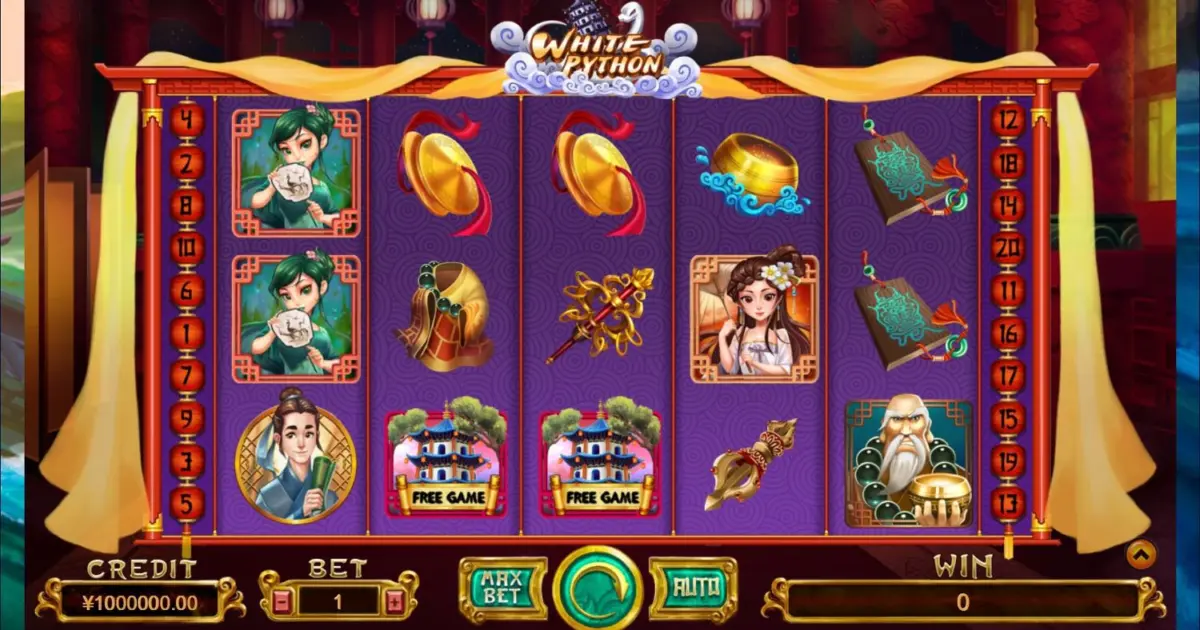
The decision-relevant fact about the white python slot is an absence: no RTP figure has been published for it. You can play it free, on five reels, with an Asian theme, from a studio called Tidy that has 17 titles in this catalogue. Whether that is enough to go on depends on how much weight you put on knowing your long-run return before you stake anything.
Below is everything that is actually documented, plus what the gaps mean in practice.
Who makes White Python
Tidy is the provider. Seventeen titles from the studio appear in this catalogue, which puts it in small-studio territory rather than among the large suppliers whose games you see on every lobby front page.
Studio size matters less than studio transparency. Larger suppliers tend to publish RTP figures, volatility ratings and max win multipliers as standard, partly because operators demand it and partly because regulators in several markets require the information to be reachable from the game itself. Smaller studios are more variable. In this case, no RTP, no volatility rating and no max win figure have been recorded for this title, and none are available for the other Tidy games listed here either.
That is a pattern rather than a one-off omission, and it is worth reading as one. If you are the kind of player who compares return percentages before choosing a game, a catalogue with no published percentages gives you nothing to compare. If you mostly pick games on theme and feel, it matters less.
One practical note: RTP can be configurable. Some studios ship a game to operators at several different return settings, so the same title can pay differently depending on where you play it. When no figure is published at all, you cannot rule that out. Check the game’s own information screen in whatever lobby you find it in, because that is the only place a specific, binding number would appear.
Where White Python sits in the Tidy catalogue
Three other Tidy releases are listed here, and they make a useful reference set because none of them carries a published RTP either. Elves Town takes the studio into fantasy territory rather than Asian iconography, so if the theme here is what puts you off, that is the nearest sideways step within the same catalogue. School of Witchcraft is the other themed alternative, and Invincible Expedition rounds out the set.
Comparing games within a studio normally means lining up RTP, volatility and max win side by side and picking the one whose profile suits your bankroll. That is not possible across these four. What you can compare is theme, reel layout and how the game feels over a demo session of a few hundred spins. That is a thinner basis for a decision, but it is not worthless, and it costs nothing to gather.
This title is the most visible of the group by some distance. It ranks 1,655th in this catalogue, which places it in the top 8.3% by popularity. Popularity is a measure of traffic, not of generosity. Plenty of well-played games return less than quieter ones. Treat the rank as evidence that people find and try this game, nothing more.
| Feature | Detail |
|---|---|
| Game name | White Python |
| Provider | Tidy |
| Reels | 5 |
| Theme | Asian, 5-Reels |
| Type | Slot Machine |
| RTP | Not published |
| Volatility | Not published |
| Popularity rank | 1,655 (top 8.3%) |
| Provider catalogue size | 17 titles |
| Free demo | Available |
RTP: no published figure against a 95.71% catalogue average
Tidy has not published an RTP for this game, so any percentage you see quoted for it elsewhere should be treated as unverified until you can see it on the game’s own info screen.
Here is the context that makes the gap concrete. The average RTP across every game in this catalogue is 95.71%. At that rate, £100 in total wagers returns about £95.71 across a very large sample, leaving roughly £4.29 as the house edge. Move to 96.5% and the same £100 returns £96.50. Drop to 94% and it returns £94. On a session of 1,000 spins at £0.20 a spin, £200 of total turnover, the difference between 94% and 96.5% is about £5 of expected cost. Not dramatic on one session, but it compounds across many.
Two things to keep straight. RTP is a long-run average measured over millions of spins, so your own hundred or thousand spins can land far above or below it. And every spin is independent: the reels have no memory of what came before, so nothing in a previous result shifts the odds of the next one. RTP describes the shape of the distribution over time, not what happens next.
Without a figure, you are effectively taking the return on trust. Some players are fine with that. If you are not, pick a game that publishes its number.
Volatility and who it suits
No volatility rating has been published for this title either, so the honest answer is that its risk profile is undocumented.
What volatility does is worth understanding anyway, because it shapes your session more visibly than RTP does. Low-volatility games pay small amounts often. Your balance drifts rather than lurches, sessions last longer on the same money, and the biggest result you are likely to see is modest. High-volatility games pay rarely and larger. Long dry stretches are normal, and you need a deeper bankroll relative to your stake to survive them long enough for the game’s maths to show itself. Medium sits between the two.
Two games with identical RTP can feel completely different because of this. One trickles, one lurches. Neither returns more over time.
With nothing published, the demo is your measuring instrument. Run a few hundred spins at a fixed stake and watch how your balance behaves: frequent small returns and shallow dips suggest lower volatility, while long flat stretches punctuated by occasional spikes suggest higher. A few hundred spins is a small sample and will not give you a reliable number, but it will tell you whether the rhythm of the game suits your patience and your budget.
Playing White Python for free
The free demo is available, which means you can load it with play-money credits and see the reels, paytable and any features for yourself without staking anything. That matters more than usual here, because the demo is the only way to learn anything about the game’s behaviour that the published data does not tell you.
Do check the paytable and information screen while you are in there. If a specific RTP is configured for the build you are playing, that screen is where it will be stated, and it will be more authoritative than any third-party listing.
One limit worth being clear about: demo play does not predict real-money results. The credits are not convertible, and a good run on play money says nothing about the session that follows it. The mechanics are the same; the sample is short and the outcome is meaningless in financial terms.
Slots are 18+. Set a budget before you start, treat the money as the price of entertainment rather than an investment, and stop when the budget is spent. If it stops feeling like entertainment, that is the point to close the tab.
Similar picks
If the missing RTP is the sticking point, the Asian theme is one of the biggest categories in this catalogue with 1,455 titles, and several of them publish their numbers. Wong Choy lists 96.74%, the highest of the comparable set and just over a point above the 95.71% catalogue average, which means roughly £1 less expected cost per £100 wagered. Mystic Fortune Deluxe is close behind at 96.71%.
At the other end, The Book of Amaterasu lists 95.00%, below the catalogue average, which is a useful reminder that a published figure is not automatically a good one. The advantage of a stated number is that you can judge it.
None of this makes the alternatives more entertaining. It makes them easier to assess.
Verdict
A five-reel Asian-themed slot from a 17-title studio, popular enough to sit in the top 8.3% of this catalogue, with a free demo and no published RTP, volatility rating or max win figure. That last part is the whole review.
If you choose games on theme and want to spend some time on the demo, there is nothing here to warn you off. If you compare return percentages before staking, this game gives you nothing to work with, and Asian-themed alternatives with documented figures around 96.7% are one click away. Check the in-game info screen before any real-money play, and if no number appears there either, decide whether you are comfortable playing without one.
Frequently Asked Questions
Can you play White Python for free?
A free demo is available, so you can load the game with play-money credits and try all five reels without staking anything. This matters more than usual for this title, since Tidy has not published an RTP or volatility rating. The demo is the only way to observe how the game actually behaves.
What is the RTP of White Python?
No RTP figure has been published for this game. For context, the average across this catalogue is 95.71%, which returns about £95.71 per £100 wagered over a very large sample. Any percentage quoted for this title elsewhere is unverified, so check the game's own information screen for a binding number.
Is White Python high or low volatility?
No volatility rating has been published, so its risk profile is undocumented. Low volatility means frequent small returns and longer sessions on the same budget; high volatility means rare, larger payouts and long dry stretches that need a deeper bankroll. A few hundred demo spins will hint at which pattern applies.
Who is Tidy and what other slots do they make?
Tidy is the studio behind this game, with 17 titles in this catalogue, making it a smaller supplier. Its other releases here include Elves Town, School of Witchcraft and Invincible Expedition. None of them carries a published RTP figure either, which suggests a studio-wide pattern rather than a one-off omission.
How does White Python compare to Wong Choy?
Wong Choy publishes a 96.74% RTP, while this game publishes none, so Wong Choy is the easier of the two to assess before you stake anything. That figure sits just over a point above the 95.71% catalogue average, roughly £1 less expected cost per £100 wagered. Both draw on Asian themes.