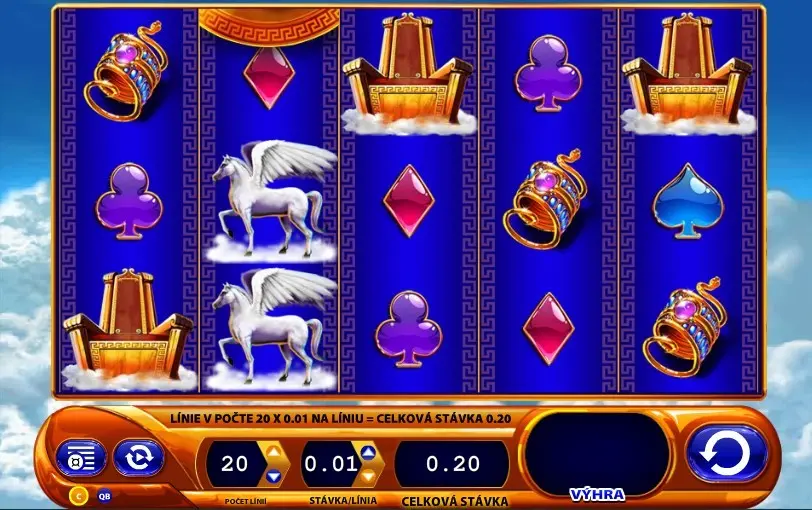
The Kronos slot is a five-reel machine from WMS with a published return to player of 95.94%. That sits marginally above the 95.71% average across the games in our database and marginally below WMS’s own catalogue average of 96.01%, which makes it an ordinary-value title rather than a standout one. A free demo is available, so the cheapest way to decide is to spin it yourself at zero stake.
Is Kronos worth playing?
It is worth a demo session, and worth real money only if you like how it feels, because the numbers alone do not argue for it. At 95.94%, the theoretical return is 0.23 percentage points better than the average game in our corpus and 0.07 points worse than the typical WMS release. Those gaps are small enough that they will be invisible over any session you actually play, and they are not a reason to choose or avoid the game.
What the figures do not tell you is equally important. WMS has not published a volatility rating, a paylines count, a hit frequency or a maximum win multiplier for this title in the data available here. Any “max win” number you see quoted elsewhere for this game should be treated as unverified. That absence matters: without a volatility figure you cannot estimate how big the swings will be, and without a max win you cannot judge the ceiling. You are left with the RTP, the reel count and your own impressions from the demo.
Ranked 2,697 by traffic and sitting in the 86.5th percentile for popularity, it draws steady interest without being a headline release. That is roughly what you would expect from a long-standing land-based-style cabinet game with an online conversion.
| Provider | WMS |
|---|---|
| RTP | 95.94% |
| Reels | 5 |
| Theme | Fairy tales |
| Free demo | Yes |
| Site-wide average RTP | 95.71% |
What 95.94% RTP means over 1,000 spins
RTP is a long-run average, not a promise about your next session. A 95.94% figure means that across an extremely large number of spins, the game is designed to return £95.94 for every £100 wagered, leaving a house edge of 4.06%. That average only emerges over hundreds of thousands or millions of spins, far more than one person plays.
Put a number on it anyway, because the number is useful. At £0.50 a spin, 1,000 spins puts £500 through the game. The expected loss is 4.06% of that, or about £20.30. At £1 a spin the same 1,000 spins wagers £1,000 and carries an expected cost near £40.60. That expected figure is the average of a very wide distribution, not a forecast. Real 1,000-spin sessions on a game like this commonly land anywhere from well ahead to losing most of the stake.
Two things follow. First, every spin is independent; the reels have no memory of what came before, so a long run without a payout does not make the next spin more likely to pay. Second, the honest way to read 4.06% is as the price of the entertainment over time, the same way you would read a cinema ticket.
How volatile is the Kronos slot?
No volatility rating has been published for this game in the available data, so the honest answer is that nobody reading this can tell you. That is worth knowing rather than glossing over, because volatility affects your session far more directly than a 0.07-point RTP difference does.
In general terms, low-volatility slots pay small amounts often, which keeps a bankroll ticking along and produces long, fairly flat sessions. High-volatility slots pay rarely and larger, which means longer dry stretches and a real chance of losing a modest bankroll quickly even when the RTP is identical. Two games can both return 95.94% in theory and feel completely different to play. Medium volatility sits between the two.
You can estimate it yourself in the free demo. Play a few hundred spins at a fixed stake and watch the balance line rather than individual results. If it drifts gently with frequent small returns, you are looking at something on the lower end. If it drops in long steps punctuated by occasional larger returns, treat it as high variance and size your real-money stakes down accordingly. That observation is about the shape of the game, not a prediction of results.
What the Fairy tales theme brings to the game
The game is filed under Fairy tales, one of the larger theme groups with 183 titles, alongside a 5-Reels tag. A theme label tells you the narrative register a studio is working in, and not much more. It does not tell you what the symbols are, how the reels animate, or what the soundtrack does, and no details of that kind are published here, so treat any description of specific characters or scenes as guesswork.
What a theme is genuinely useful for is filtering. Fairy tale slots tend to be built for broad appeal rather than niche taste, which is part of why the category is so crowded. If the setting is what draws you, the size of that 183-game pool means you have plenty of room to compare before committing money to any one title.
The practical point is that theme should be the last thing you weigh, not the first. Return, volatility and stake range determine how a session goes. Presentation determines whether you enjoy it. Both matter, in that order.
Stakes, session length and bankroll
No minimum or maximum stake has been published for this title in the data here, so check the limits in the game window before you play. Those limits vary by operator even for the same slot, which is another reason to look rather than assume.
The arithmetic you can do regardless. Divide your session budget by your chosen stake to get the number of spins you can cover if you never win anything, then treat that as the floor of your session length. A £40 budget at £0.20 a spin covers 200 spins as an absolute worst case, and in practice returns will stretch it further. The same £40 at £2 a spin covers 20 spins, which is not a session.
Set the stake from the budget, not the other way round, and leave it there. Changing stake size mid-session does not alter the house edge on any future spin, and no staking pattern, timing or progression can shift a 4.06% edge. All it changes is how fast you move through your money.
Alternatives if Kronos is not for you
Within WMS’s 55-game catalogue, Spartacus Call to Arms posts the better theoretical return at 96.05%, which is 0.11 points above this game and slightly ahead of the studio average. Zeus is the closer comparison at 95.97%, effectively identical in return and a useful benchmark if you want to see whether WMS’s house style suits you before spending anything.
Staying with Fairy tales, Golden Goddess runs 96.00%, a shade higher again and drawn from the same 183-title theme pool. All of these differences are small in practice; over 1,000 spins at £1 the gap between 95.94% and 96.05% is about £1.10 in expected cost. Choose on how the games play, and use RTP as a tiebreaker rather than a headline.
If none of them appeal, the broader point stands: with an average return of 95.71% across the games surveyed, anything at or above 96% is doing slightly better than the field.
Final take
A middling-to-fair RTP, a five-reel layout, a crowded theme and a lot of unpublished detail. That is a reasonable candidate for a free session and a hard game to recommend sight unseen. The Kronos free demo costs nothing and answers the questions the data sheet cannot: how often it pays, how it feels, whether you want to keep going. Use it first.
If you do move to real stakes, keep it simple. Slots are for over-18s only. Decide the amount you are willing to spend before you start, treat it as paid entertainment that you expect not to get back, and stop when it is gone rather than topping up. If it stops being fun, close the tab.
One last caveat worth repeating: demo results tell you nothing about what real-money play will do. The maths is identical, but a good or bad run in practice mode is just a short sample of a very long distribution.
Frequently Asked Questions
Can you play Kronos for free?
A free demo of this WMS title is available, so you can spin it at no stake and with no deposit. That is the practical way to judge a game whose volatility rating and paylines count have not been published. Use a few hundred demo spins to see how the balance behaves before deciding whether to stake anything.
What is the RTP of Kronos?
The published RTP is 95.94%, meaning a theoretical return of £95.94 per £100 wagered across an extremely large sample, and a house edge of 4.06%. That is 0.23 points above the 95.71% average across the games surveyed here and 0.07 points below the 96.01% WMS catalogue average. Short sessions will vary widely from it.
Is Kronos a high volatility slot?
No volatility rating has been published for this game, so it cannot be stated either way. High-variance slots pay rarely and larger, low-variance ones pay small amounts often, and both can share the same 95.94% return. You can gauge it yourself by watching the balance line over a long demo run at a fixed stake.
Who makes Kronos and what else do they do?
WMS developed it, and there are 55 WMS slots in our database with an average RTP of 96.01%. If you want comparisons from the same studio, Spartacus Call to Arms returns 96.05% and Zeus 95.97%. WMS is best known for cabinet-style games later converted for online play.
How does Kronos compare to Zeus?
The two are near-identical on return: 95.94% here against 95.97% for Zeus, a gap of 0.03 percentage points that amounts to roughly 30p over 1,000 spins at £1. Both come from WMS's 55-game catalogue. With returns that close, the choice comes down to which one you prefer playing in the demo.