Scratchy Bit is worth a try if you want the fastest possible casino format with zero learning curve — you buy a ticket, reveal once, and you either win or you do not. As a one-reveal scratch card from Spinomenal, it offers no decisions after purchase, so your choice is simply whether you enjoy that instant lottery-style outcome. The scratchy bit scratch card is best approached as paid entertainment with a fixed ticket-batch maths behind it, not as a game you can influence.
What kind of scratch card is Scratchy Bit?
Scratchy Bit is a digital scratch card in the Scratch cards subcategory from Spinomenal, a studio with 13 scratch cards in this corpus. It sits at rank 17 by popularity, placing it in the 94.4th percentile, which means it is among the more frequently encountered scratch cards in the data set. Like all digital scratch cards, it is not a slot: there are no reels that spin, no paylines, and no round structure.
The FACTS for this ticket list a count of 1, which for a scratch card is best understood as a single reveal zone or panel on the card, not a reel count. You buy in for one ticket at a time, the outcome is generated the instant you buy, and the scratching you do on screen is a reveal animation layered over a result that already exists, exactly like a physical printed scratch ticket. There is no hold, no cash-out, no bet adjustment mid-round, and no second chance within the same ticket.
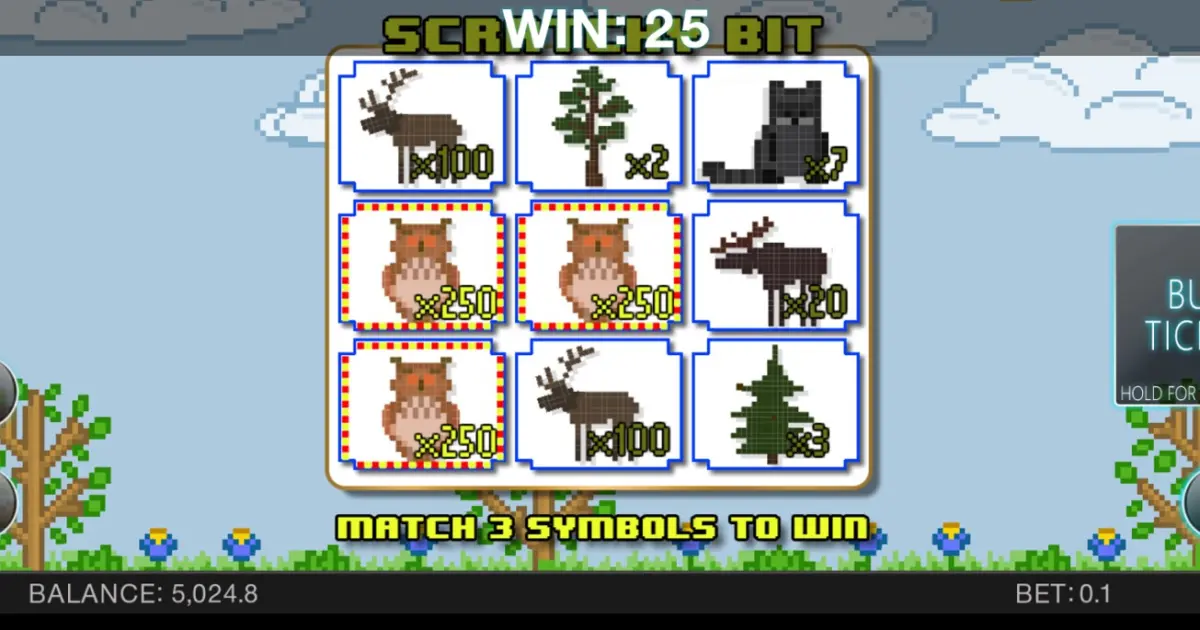
What you see on screen is therefore presentation, not process. The theme label provided for this card does not specify visual details beyond the name itself, so it is not possible to describe the artwork, number of symbols per panel, or whether a bonus reveal or pick-a-prize mini-game is layered on top without inventing detail. Some digital scratch products do add a small bonus reveal for presentation, but that should not be assumed for this specific card unless the rules or paytable screen shows it. If you open Scratchy Bit and see only one area to reveal, that matches the single-zone structure described here.
This one-and-done structure is the core appeal and the core limitation. You do not need to learn combinations or features, and there is nothing to mistime. At the same time, there is very little depth to analyse compared with a slot or table game, because there is only one purchase decision per play and no in-round choices that change the odds of the ticket you just bought.
| Provider | Spinomenal |
|---|---|
| Reels | 1 |
| Free demo | Yes |
| Site-wide average RTP | 87.84% |
The maths behind a single ticket
A digital scratch card uses lottery-style payout maths, not spinning-reel RNG in the slot sense. At design time, the studio distributes prize tiers across a very large batch of virtual tickets. The return to player for the batch as a whole is fixed by how many tickets at each prize level are placed into that batch. That design determines the long-run average return if you could hypothetically buy every ticket in the batch, but it says nothing about any single ticket you buy.
For you as the player, each ticket’s outcome is independent and pre-generated. A losing streak or a winning streak on previous tickets has no bearing on the next one you buy. There is no shoe to count, no reel strip to read, and no concept of hit frequency carried over from slots that applies here in a useful way, only the published or unpublished RTP for the ticket batch as a whole. Buying more tickets does not change the odds of any one ticket, and timing your purchases does not either.
Because of this, the usual language of strategy does not apply. Bankroll and session management — deciding how many tickets you will buy in a session, at what stake, and when to stop — is the only lever you have. You cannot influence the distribution of prizes inside the batch, and you cannot improve your chances by scratching in a certain pattern or speed, since the result was already set when the ticket was generated.
It also helps to keep expectations plain. One reveal means high variance in the short term: you will mostly see non-winning tickets with occasional wins if the batch includes them, and the spacing between wins is random. That randomness is not a flaw to be solved; it is how a fixed prize-tier batch is designed to behave when tickets are drawn independently.
Where the RTP comes from
This provider has not published a return-to-player figure for this specific ticket, which is common for scratch cards since the RTP depends on the whole prize-tier design and not all studios publish it per card. Check the game’s own rules or paytable screen before you buy in, as that screen is the only authoritative place for any ticket-specific RTP, ticket price, or top prize that might be disclosed.
When a scratch card RTP is published, it comes from the batch maths described above: the studio decides how many tickets pay nothing, how many pay small tiers, and how many pay larger tiers, and the weighted average of all those outcomes is the RTP for the batch. For example, a 90% RTP would mean that across the entire very large batch, 90% of all money staked is returned as prizes in aggregate, not that any individual ticket returns 90%.
For context, the average RTP across the 13 Spinomenal scratch cards in this corpus is 91.83%, while the average across all scratch cards in the corpus is 87.84%. Those averages are useful for understanding the provider’s general range, but they are not the RTP of Scratchy Bit itself and should not be treated as if they were.
The absence of a published figure does not make the card better or worse; it just means you cannot use RTP to compare it directly with other tickets that do publish a number. If comparison matters to you, prioritise cards that state the figure on their rules screen, or treat unpublished-RTP cards as entertainment-first products where you set a strict budget and judge value by whether you enjoyed the reveal cycle at the price offered, not by an assumed return.
Reading the rules before you buy in
Because scratch cards are so simple to play, the most useful screen is the rules or paytable, and it is worth opening before your first purchase. Look for the ticket price or price range if the game offers more than one stake, the prize tiers and the top prize for the batch, and any statement about RTP. If those fields are missing from the info screen, that absence is itself information: the studio has chosen not to disclose them in that placement.
Also check how the reveal works. With a single reveal zone, the rules will typically state whether you match symbols, reveal a value, or uncover a prize amount directly. Do not assume a bonus mini-game exists — many digital scratch products layer a small bonus reveal or pick-a-prize presentation on top of the base ticket, but that is something some scratch games do in general, not a feature of this specific card unless the description or FACTS supports it. For Scratchy Bit, no bonus feature is confirmed in the available facts, so read the in-game help to confirm what, if anything, follows the main reveal.
Pay attention to purchase flow as well. You commit to one price per ticket, there is no in-round choice, and once you have bought the ticket the outcome is already decided. Understanding that the scratch animation is only a reveal helps avoid the feeling that you could have scratched differently to change the result. The same applies to autoplay or quick-buy options if offered: they change speed, not odds.
Finally, note that ticket price and top prize are not in the facts provided here, so they cannot be stated in this review without inventing them. Rely on the in-game display for those numbers, and if they are not shown, treat the card as an undisclosed-price product and decide whether you are comfortable buying in without that detail.
How Scratchy Bit compares to other tickets
Within its own studio, Scratchy Bit sits alongside other Spinomenal scratch products, but direct comparison is limited when RTP is unpublished. Easter Pick is a useful reference because it is also from Spinomenal and does carry a published figure of 91.83% in the facts, matching the provider average. That makes it a concrete benchmark if you want a ticket where the batch return is stated, rather than inferred from a provider average.
Cupid’s Scratch offers a different kind of comparison: it is from the same provider but has no published RTP in the facts either, which shows how common non-disclosure is even within one catalogue. Choosing between Scratchy Bit and that alternative comes down to presentation preference and whether either game shows more detail on its own rules screen, since neither can be ranked by a disclosed RTP here.
Another related option is Champions Pick, also from Spinomenal with a published 91.83% figure. If you specifically want a ticket where the maths is transparent, a card like that lets you compare the stated return with the corpus average of 87.84% and decide whether the disclosed number meets your expectations. For Scratchy Bit, the honest comparison is to say it shares the same provider and the same single-ticket format, but without a published figure you are comparing catalogue context, not ticket maths.
Popularity is the other available comparator. At the 94.4th percentile and rank 17, Scratchy Bit is more widely encountered than most scratch cards in the data set, which suggests players do return to it for its simplicity, but popularity does not imply a higher or lower return. Because each ticket is independent and pre-generated, a card cannot be hot, cold, or due, and a higher rank does not make the next ticket more likely to win.
Free demo and staying in control
A free demo is available for this card, which is the best way to see the reveal flow and the rules screen without staking. Demo play uses the same presentation — you buy a virtual ticket and scratch to reveal — but it does not predict real-money outcomes and should not be used to judge whether the next real ticket will win. Each real ticket remains independent and pre-generated regardless of what happened in demo.
The purchase-and-reveal loop on scratch cards is fast and cheap to repeat, which makes session limits more important than usual. Decide in advance how many tickets or how much spend your session allows, and treat that money as the cost of entertainment you pay for, not as a way to make income. Only play with funds you can afford to lose, set a time limit as well as a spend limit, and stop when you reach either. You must be 18+ to play.
If you find yourself chasing losses, buying tickets faster to get the result over with, or borrowing to continue, use the responsible-gambling tools offered by the site you are on — deposit limits, time-outs, or self-exclusion — and consider support from a recognised organisation in your jurisdiction. Keeping the format’s speed in mind helps you stay in control more than any notion of ticket strategy ever will, because no pattern of buying changes the odds of the next ticket.
For Scratchy Bit specifically, demo is also useful to confirm practical details not in the facts, such as the exact ticket price, prize tiers, and whether any extra reveal is present. Check those in demo, then re-check in real-money mode before you buy, since displays can differ by operator.
Final verdict
Scratchy Bit does what a one-reveal scratch card is supposed to do: one purchase, one reveal, instant result, no decisions in between. Its popularity suggests the loop is satisfying if you like immediate outcomes without learning rules, but the review must be honest that there is very little strategy to discuss beyond bankroll and session management.
The lack of a published RTP for this specific ticket means you cannot rank its maths against cards that disclose a figure. Provider context — an average of 91.83% across Spinomenal scratch cards versus a corpus average of 87.84% — gives a sense of the studio’s range, yet it is not a substitute for a ticket-specific number. If a disclosed return matters to you, a related ticket like Easter Pick with a stated figure may be easier to evaluate.
Try the free demo first to see the single reveal zone in action and to read the rules screen for ticket price and prize tiers. If you enjoy the format and are comfortable with an unpublished batch return, Scratchy Bit is a straightforward, fast example of the genre. If you prefer transparent maths or a layered bonus reveal, you may find more to weigh elsewhere. Either way, set a budget, keep tickets independent in your mind, and treat each purchase as entertainment.
Frequently Asked Questions
Can I try Scratchy Bit as a free demo before buying a ticket?
Yes. The facts confirm a free demo is available for Scratchy Bit. Demo lets you see the single reveal zone and the rules screen without staking, but it does not predict real-money outcomes because each ticket is independent and pre-generated. Re-check price and rules in real-money mode before you buy.
What is the RTP of Scratchy Bit and what does it mean for a scratch card?
No RTP has been published for Scratchy Bit in the facts provided, which is common for scratch cards. When published, a scratch card RTP is the weighted average return across a very large batch of tickets with fixed prize tiers, not a per-ticket guarantee. Check the in-game rules for any disclosed figure.
Is there any strategy or timing that changes the odds of the next Scratchy Bit ticket?
No. Scratchy Bit is a one-purchase, one-reveal ticket with no in-round choices, and the outcome is generated the instant you buy. Scratching pattern, speed, or timing does not affect the result, and previous wins or losses do not influence the next ticket. Only bankroll and session management matter.
Who makes Scratchy Bit and how popular is it?
Scratchy Bit is from Spinomenal, which has 13 scratch cards in this corpus at an average RTP of 91.83%. Scratchy Bit ranks 17 and sits in the 94.4th percentile for popularity, meaning it is more frequently encountered than most scratch cards in the data set, though popularity does not affect odds.
How does Scratchy Bit compare to Easter Pick from the same provider?
Both are Spinomenal scratch cards with a single-reveal format, but Easter Pick has a published RTP of 91.83% in the facts, while Scratchy Bit has no published figure. If you want a directly comparable disclosed return, Easter Pick is easier to evaluate; otherwise the choice is presentation and what each game's rules screen discloses.