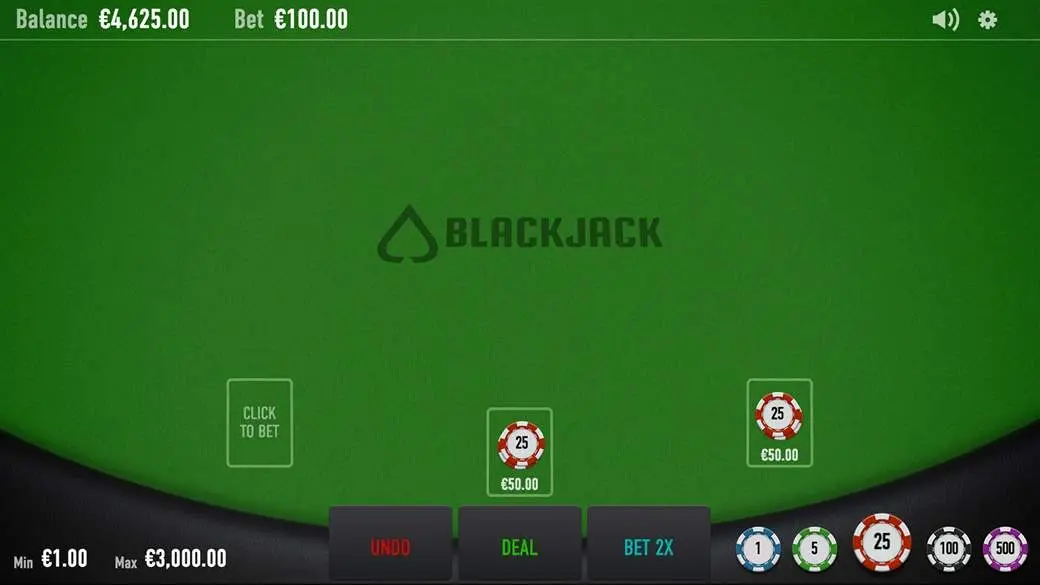
Blackjack (Relax Gaming) is a single RNG table carrying a published RTP of 99.6%, which puts it at the sharp end of what you’ll find in a free-demo lobby. If that figure holds up under the game’s own paytable, it earns a seat at your table. The honest caveat is that the number only describes a player who makes the correct decision on every single hand.
Below is what the 99.6% actually promises, which rules you need to verify before trusting it, and how this table stacks up against the better-known blackjack games alongside it.
Blackjack (Relax Gaming) at a glance
This is Relax Gaming’s sole blackjack title in the corpus, so there’s no wider family of variants to compare it against from the same studio. It ranks highly for popularity, which usually reflects a clean interface and a headline RTP that players trust rather than any proven edge. The free demo is available, so you can read the rules screen and play hands without staking money.
What Relax Gaming does not publish here is almost everything that fixes the exact house edge: the deck count, whether the dealer hits or stands on soft 17, the blackjack payout, the double and split rules, and which side bets are offered. Each of those shifts the edge, some by hundredths of a percent and some by more than a full percent. Treat the sections below as a checklist to run against the in-game paytable before you commit real money.
| Figure | Value |
|---|---|
| Provider | Relax Gaming |
| Published RTP | 99.6% |
| Implied house edge | ~0.4% |
| Blackjack titles by this provider | 1 |
| Corpus average RTP | 99.41% |
| Free demo | Yes |
What a 99.6% RTP means at a blackjack table
RTP is simply the flip side of the house edge: 99.6% RTP means a house edge of about 0.4%, so the maths favours the dealer by that margin over the long run. That is a strong number, a fraction above the corpus average of 99.41%, and it tells you the base game is fair by demo-lobby standards.
The part that trips up casual players is the assumption baked into every RTP figure: it is calculated for a player using perfect basic strategy on every hand. Deviate — stand when you should hit, skip a double, take a bad split — and your realised return drops below 99.6%, sometimes well below. The published figure is a ceiling you play towards, not a rebate you receive automatically. A player guessing their way through will hand back several extra percent without noticing.
The rules that move the house edge
Because Relax Gaming does not list the table rules in the data available here, the following are general rules-of-thumb rather than confirmed facts about this game. Read them, then check the paytable.
- Blackjack payout is the single biggest lever. A 3:2 payout is standard; a 6:5 payout costs the player roughly 1.4% and is the most damaging common rule change there is. Confirm this first.
- A dealer who stands on soft 17 is better for you than one who hits it, worth around 0.2%.
- Fewer decks favour the player slightly; more decks nudge the edge up by a few hundredths of a percent.
- Double-after-split, re-splitting aces and late surrender all shave small amounts off the edge in your favour when offered.
- A dealer peek for blackjack is friendlier than a European no-hole-card rule, where you can lose a doubled or split stake to a dealer blackjack.
The game’s title gives no rule-family hint — it is just “Blackjack” — so you cannot infer deck count or soft-17 behaviour from the name. The 99.6% figure implies a player-friendly rule set, but only the in-game rules screen confirms which of these levers are pulled your way.
Basic strategy, and what it can and cannot do
Basic strategy is a solved chart, not a system or a hunch. For any combination of your hand and the dealer’s up-card, it gives the single decision — hit, stand, double, split or surrender — that loses the least over time. It is the difference between actually earning the 99.6% return and quietly leaking value on close calls.
What it cannot do is turn a negative-edge game positive. Basic strategy minimises the house edge; it never eliminates it. No arrangement of decisions makes this a game you beat in the long run, and no hand is ever “due” — each deal is independent. If you play the free demo, use it to drill the chart until the correct play is automatic, because that habit is the only thing that carries the RTP from theory into your session. A card is only worth memorising once, but the discipline pays every hand.
Side bets and insurance
The data here doesn’t confirm which side bets, if any, this table offers, so check the felt before you assume Perfect Pairs or 21+3 are available. What holds universally is that side bets carry a far higher house edge than the base game — often several percent — because they pay for rare outcomes. They are entertainment, not a way to improve your return.
Insurance is the one to name plainly: at the standard 2:1 payout it is a losing bet, a side wager on the dealer holding blackjack that costs you money over time regardless of your own hand. Decline it. If this table is your first stop before American Blackjack, treat the insurance prompt the same way at every table you visit.
Playing the Relax Gaming blackjack demo
The free demo lets you play with virtual chips, which is the ideal place to learn the interface, confirm the actual rules on the paytable and rehearse basic strategy without risk. Use it to check the payout and soft-17 rule the game doesn’t publish elsewhere. One warning worth stating outright: card counting does not work here. This is an RNG table that reshuffles every hand, so the deck has no memory for you to track, and no counting or betting progression changes that.
On progressions specifically — Martingale, doubling after a loss, and the rest — they reshape your variance, making small wins frequent and large losses rare but severe. They do not change the expected value by a single cent. Keep it in perspective. This is an 18+ activity, it should be entertainment rather than a source of income, and demo results never predict real-money outcomes. Set a budget before you sit down, size your bets so a normal losing streak doesn’t end your session early, and stop when you reach the limit you set.
If you want a slightly different rule mix to practise against, Classic Blackjack is a useful second table for comparison.
Verdict: who should sit at this table
On the one figure that’s confirmed, this table is a good pick: 99.6% RTP is above the lobby average and reflects a player-friendly base game. It suits a disciplined player who already knows basic strategy and will decline insurance and side bets on principle. The free demo removes any risk in trying it, and the reshuffle-every-hand format means you’re playing pure basic strategy, not chasing a count.
The one job left to you is verification. Because the deck count, soft-17 rule and — most importantly — the blackjack payout aren’t published in the data here, open the in-game rules screen and confirm the payout is 3:2 rather than 6:5 before you stake anything. If it checks out, this is one of the leaner tables around; if it doesn’t, the headline RTP won’t survive contact with the felt. Players wanting a same-tier alternative to line up against it can look at Blackjack (Mascot Gaming).
Frequently Asked Questions
Can I play Blackjack by Relax Gaming for free?
Yes. A free demo is available, so you can play with virtual chips at no cost. It's the best place to check the actual paytable, learn the interface and drill basic strategy before staking real money. Just remember that demo results, with no real stake or pressure, don't predict how a real-money session will go.
What does the 99.6% RTP mean for me as a player?
The 99.6% RTP corresponds to roughly a 0.4% house edge, but that figure assumes perfect basic strategy on every hand. If you play by feel and misplay close decisions, your real return drops below 99.6%, sometimes by several percent. The published number is a ceiling you play towards, not a return you receive automatically.
Which rules affect the house edge on this table?
Relax Gaming doesn't publish this table's rules, so verify them on the paytable. As rules-of-thumb: a 6:5 blackjack payout instead of 3:2 costs about 1.4%, a dealer standing on soft 17 helps you, and double-after-split, re-splitting aces and surrender all shave the edge in your favour when offered.
Does card counting or a betting system work here?
No. This is an RNG table that reshuffles after every hand, so there's no running count to track — card counting simply cannot work against it. Betting progressions like Martingale reshape your variance but never change the expected value. Basic strategy minimises the house edge but doesn't eliminate it, and no hand is ever "due".
How does it compare to American Blackjack?
On the published numbers this Relax Gaming table edges ahead: 99.6% RTP versus 99.5% for American Blackjack. That's a small gap, and the actual difference depends on each game's confirmed rules — payout, soft 17 and deck count. Check both paytables rather than picking on the headline RTP alone, since unpublished rules can outweigh a 0.1% difference.




