If you want a bingo room with a published return figure rather than a blank space where the number should be, this one qualifies: Viking Runecraft Bingo carries an RTP of 95.87%, and a free demo is available so you can watch a few rounds play out before committing money. That combination puts it ahead of a lot of bingo products, where the payout share is often left unstated.
What it does not do is give you anything to decide once a round starts. Bingo is a shared draw, so the honest question is whether the price, the format and the presentation suit you, not whether you can play it well.
Viking Runecraft Bingo in one minute
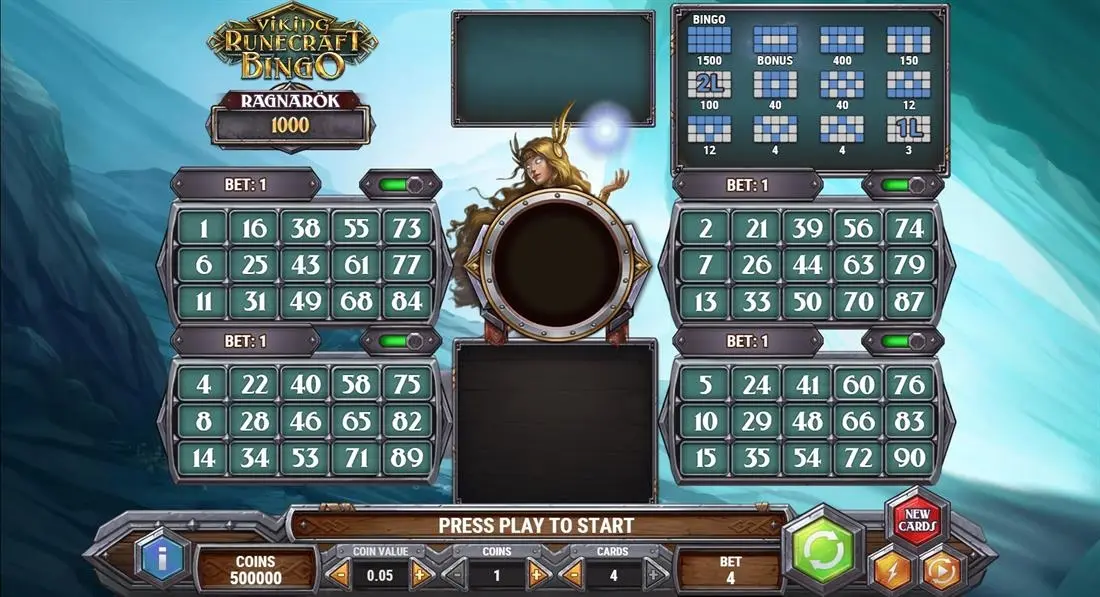
The game comes from Play’n GO, a studio with six bingo titles listed here, and it borrows the Norse-runes branding the developer already uses across its slot range. That tells you the visual language to expect — runestones, Nordic iconography, the same house style — but the theme label is all the presentation detail confirmed for this room, so treat anything more specific as unverified until you load it yourself.
The measurable facts are short. The return to player is 95.87%. The demo is free to play. It sits 21st in the ranking on this site and lands in the 87.7th percentile for popularity, meaning more players open this page than open roughly seven in eight of the bingo games listed. That is a signal of interest, not of generosity.
What is not published: the ticket price, how many cards you can buy for a single round, the exact prize-tier split, the call speed, and the release date. None of that is a red flag in bingo, where several of those values are set by the operator hosting the room rather than by the studio, but it does mean the room’s own rules page is your source for them, not this review.
| Provider | Play’n GO |
|---|---|
| RTP | 95.87% |
| Free demo | Yes |
| Site-wide average RTP | 94.41% |
Return to player: 95.87%
Read this figure differently than you would a slot’s RTP. In a slot, the return comes from symbol weighting inside a per-spin RNG. In bingo, the return is a function of how the prize pool is structured against ticket sales — the share of stakes that comes back to the room as prizes. So 95.87% describes what the room returns collectively across many rounds and many players, not a per-ticket rate you can expect to track.
For context, the average across bingo games on this site is 94.41%, so this room sits about 1.46 percentage points above it. Play’n GO’s own bingo average is 96.31%, which puts this title slightly below its stablemates rather than at the top of the studio’s range.
The practical reading: on 95.87%, roughly 4.13% of what goes into the room is retained over the long run. On a single session that number tells you almost nothing, because bingo prizes are lumpy by design. A full house going to one ticket in a room of hundreds means most players in that round take nothing while one takes a large share. The published percentage smooths across all of that. It is a comparison tool between rooms, not a forecast for your night.
Prize tiers: one line, two lines, full house
Play’n GO has not published the prize-tier breakdown for this specific room, so what follows is how the format works generally rather than a claim about this game’s paytable. Check the room’s rules page for the actual split before you buy in.
In 90-ball bingo, one game contains three winnable events: one line completed across a ticket row, two lines, then the full house when every number on the ticket has been called. The full house takes the largest share of the pool, with the line prizes carving off smaller slices earlier in the draw. That structure is why a 90-ball round has three moments of tension instead of one.
Seventy-five-ball rooms work differently — they use patterns on a 5×5 grid, and often let you pick your own cards. Speed and 30-ball formats compress everything into a single full-house win on a smaller card for faster rounds.
Since the format is not stated in the facts available for Viking Runecraft Bingo, do not assume three tiers here. Load the demo and count the prize lines yourself; it takes one round.
Buying more cards: more chances, not better odds
This is where bingo maths gets misread most often. Buying six tickets instead of one does raise your chance of being the player who completes a line or full house first, because you cover more of the possible number combinations in that round. That part is real.
What it does not do is improve your value per pound. Every extra ticket is staked into the same prize pool at the same return rate, so six tickets means six times the exposure to the same house edge — not a better rate on each one. Your expected return per unit staked is identical whether you hold one card or twenty.
The other thing worth knowing: your ticket’s numbers are fixed before a single ball is called, and every ticket in the room is marked against the same sequence. With auto-daub on, there is no decision left to make and no skill to apply. Nobody in the room has an information advantage. Whoever’s pre-set numbers match the call order first wins, and that is the whole of it. No number, ticket or room is ever “due” — each draw is independent of every draw before it.
Bonus rounds and side games, if any
Nothing in the available information for this room confirms a bonus round, side game or slot-style feature, so treat it as a straight bingo product until the game itself shows you otherwise.
That caveat matters because themed bingo titles from slot studios often do bundle extras — a wheel, a pick-me, a mini reel set triggered by certain calls. When they exist, those features run on their own separate mechanics, with their own volatility and their own contribution to the overall return figure. A published 95.87% would cover the whole product, bingo and side game combined, which means the bingo portion alone could sit above or below that number depending on how the extras are weighted.
Since none of that is confirmed here, the safe assumption is the simpler one. If you specifically want a bingo game with a slot-feature layer, verify it in the demo rather than inferring it from the Norse branding. Play’n GO’s Sweet Alchemy Bingo is another crossover from the studio’s slot catalogue worth loading if you are comparing how these hybrids are built.
Trying the demo first
A free demo is available, and it is the right first step. Play Viking Runecraft Bingo free and you can check the things this review cannot tell you: ticket price ranges, how many cards a round allows, call speed, whether the prize structure is three-tier or single-prize, and whether the interface reads clearly at the speed the balls drop.
Demo play uses the same randomness as the paid room but it does not predict what a real-money session will do. Free rounds carry no financial consequence, which changes how the same volatility feels — that is a psychological difference, not a mathematical one.
Bingo is 18+. Set your budget before you open the room, not after a round you did not win, and treat the money as the price of the entertainment rather than a stake you expect back. A published return of 95.87% is a long-run average across the whole room, so no session is owed anything.
If you want a return figure to compare against while you are in demo mode, Bugs Party publishes 96.00%, slightly higher than this room.
Who should play Viking Runecraft Bingo
This suits you if you already like the Play’n GO Norse aesthetic and want a bingo room where the payout share is on the record. At 95.87% it is above the 94.41% average across bingo titles here, and the free demo removes the guesswork about presentation and pace.
It suits you less if you want a documented prize structure before you commit, since the tier split, ticket price and format are not published in what is available here. It also will not suit anyone looking for decisions to make mid-round — auto-daub bingo has none, by design.
For a like-for-like alternative from the same studio, Rainforest Magic Bingo is another Play’n GO slot-brand crossover, though no RTP is published for it, which makes this room the better-documented of the two. If a stated return figure is your deciding factor, that gap is the whole comparison.
Frequently Asked Questions
Can you play Viking Runecraft Bingo free?
Yes, a free demo is available, so you can watch the draw, the interface and the pace without staking money. Use it to check the details that are not published — ticket price, card limits and call speed. Demo rounds use the same randomness but do not predict real-money results.
What is the RTP of Viking Runecraft Bingo and what does it mean in bingo?
It is 95.87%. In bingo that figure describes the share of ticket stakes returned to the room as prizes over the long run, set by prize-pool structure rather than by reel weighting. It is a comparison tool between rooms, not a per-ticket rate you can track in one session.
Does card choice or skill affect your odds in Viking Runecraft Bingo?
No. Every ticket in the room is marked against the same sequence of random calls, and your numbers are fixed before the first ball. With auto-daub there is no decision to make once a round starts, so no player holds an advantage over another.
Who makes Viking Runecraft Bingo?
Play'n GO, which has six bingo titles listed on this site with an average published RTP of 96.31%. This room's 95.87% sits slightly below that studio average but above the 94.41% average across all bingo games here. The Norse runes branding comes from the developer's slot range.
Does buying more cards improve value per pound?
No. More cards cover more number combinations, so they raise your chance of being the player who wins that round, but every extra ticket is staked at the same 95.87% return. That means more exposure to the same house edge, not a better rate on each pound.