If you want a Japan-themed bingo room with a published return figure rather than a blank paytable, Pachinko 3 gives you one: 94.65% of stakes returned as prizes. That is marginally above the average across the bingo games listed here and a little under what Vibra Gaming usually publishes. A free demo exists, so you can see the pace and layout before spending anything.
Pachinko 3 in one minute
Pachinko 3 is a bingo game from Vibra Gaming, a studio with nine bingo titles on this site. It sits in the ninth rank position here and in the 95.1st popularity percentile, so plenty of people open it — worth knowing, though popularity is not a payout indicator.
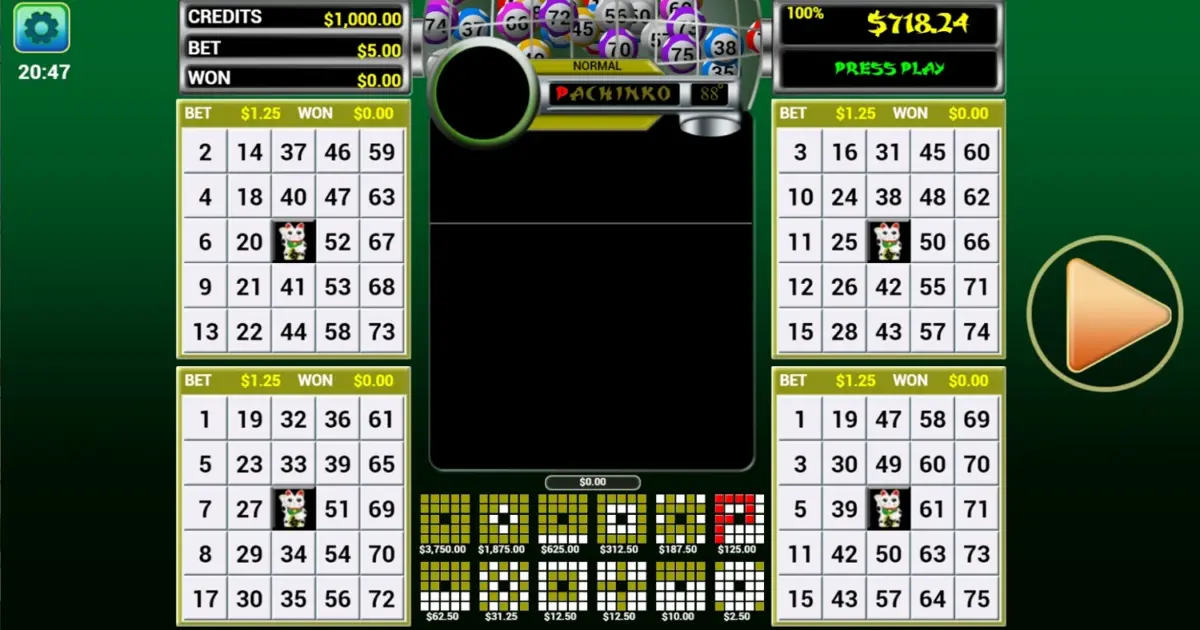
The theme is Japanese pachinko parlours, one of only two Japan-themed bingo games in this collection. Beyond that theme label, the operator has not published details of the visual presentation, card layout or call speed, so nothing here describes screens or sound. What is confirmed: the provider, the 94.65% return, the bingo classification and the free demo.
| Detail | Value |
|---|---|
| Game name | Pachinko 3 |
| Provider | Vibra Gaming |
| Game type | Bingo |
| Published RTP | 94.65% |
| Theme | Japan / Pachinko |
| Free demo | Yes |
| Provider bingo titles | 9 |
Return to player: 94.65%
In bingo, a return figure works differently from a slot’s. A slot’s RTP comes from symbol weighting on the reels. A bingo return comes from how the operator splits ticket sales into the prize pool — the share of stakes that flows back out as prizes rather than staying with the house. Read 94.65% as roughly 94.65p returned per pound staked across a very large number of rounds, not as anything you can expect from one session.
Context helps. The average across bingo games on this site is 94.41%, so Pachinko 3 is about a quarter of a percentage point above it. Against Vibra Gaming’s own nine-title average of 95.69%, it comes in a full percentage point lower. Two stablemates publish more: Show Ball 3 at 96.87% and Bingo 3 at 95.00%. If the return number is what you are optimising for, those are the better picks within the same studio.
None of this predicts a round. A published percentage describes long-run distribution of a prize pool, nothing about which ticket completes first tonight.
Prize tiers: one line, two lines, full house
Vibra Gaming has not published the prize-tier breakdown for this room, so treat the following as how the format generally works rather than as this game’s confirmed structure. Check the in-game rules page before you buy in — that is where the split lives.
Traditional 90-ball bingo pays three tiers inside a single game: one line, two lines, then the full house, with the full house taking the largest share. A 75-ball game instead pays patterns on a 5×5 grid. Speed and 30-ball formats compress everything into one full-house prize on a smaller card for quicker rounds. FACTS does not state which of these Pachinko 3 uses, and the name alone does not tell you, so confirm the format on the paytable rather than assuming.
What is universal: every ticket in the room is marked against the same sequence of randomly called numbers. It is a shared draw, not a private spin. Whoever completes the required line or pattern first wins that tier, decided entirely by which numbers each ticket already held before the calling started.
Buying more cards: more chances, not better odds
Buying more cards for the same round covers more of the possible number combinations, so you are more likely to be the player who completes a pattern first. That much is real. What it does not do is improve your value per pound.
The published 94.65% applies to each unit staked. Ten cards at the same price means ten units exposed to the same house edge, so your expected return per pound is unchanged — you have simply staked more money and increased both the chance of a win and the size of the possible loss. There is no volume discount on the maths.
The other thing worth being blunt about: in standard auto-daub online bingo, skill is essentially zero. The software marks your numbers for you, so there is nothing to play well or badly. Card selection, where a game offers it, changes which combinations you hold but not the underlying return. No number is ever due, and no room runs hot or cold — each call is independent of every call before it.
Bonus rounds and side games, if any
No bonus round, side game or jackpot feature is documented for Pachinko 3 in the information available, so assume none until the game’s own paytable says otherwise.
The pachinko theme makes the question reasonable to ask. Themed bingo products in this genre often bundle a slot-style side game or a mini-feature triggered by particular calls, and a pachinko motif is a natural fit for a ball-drop bonus. But a theme is not evidence of a feature. Any side game runs on its own separate mechanics with its own odds, and those mechanics would not be covered by the 94.65% headline unless the operator states that the figure includes them.
If a side feature matters to your decision, the demo answers it in a couple of minutes at no cost, which is more reliable than inferring from artwork. The related Pachinko 2 shares the theme and publishes 95.60%, so it is a sensible second look if the pachinko angle is what drew you in.
Trying the demo first
A free demo of Pachinko 3 is available, and it is the cheapest way to answer the questions the published data leaves open: which format the cards use, how the prize tiers split, how fast the calls come, and whether any side feature exists. Ten minutes in the demo tells you more about whether you will enjoy the room than any review can.
One limit to keep in mind: demo results do not predict real-money outcomes. A good run in free play is a short sample from a random draw and carries no information about what happens when you stake cash.
Bingo is for adults only, 18 or over. Set a budget before you open the room and treat it as money you have already spent on entertainment, the same way you would a cinema ticket. It is not income, and no return percentage makes it one. If a session stops being fun, closing the tab costs nothing.
Who should play Pachinko 3
This one suits you if the Japanese pachinko theme is the draw and a published return figure matters more to you than a fully documented paytable. At 94.65% it is a fraction above the site-wide bingo average, which makes it a fair rather than generous option, and the free demo removes the risk of finding out you dislike the pace after paying for tickets.
Look elsewhere in the Vibra Gaming range if the number is your priority: Show Ball 3 at 96.87% returns more than two percentage points extra per pound staked over the long run, and Bingo 3 also publishes above this room. Skip Pachinko 3 entirely if you want confirmed prize tiers, a known call speed or a documented bonus feature before you commit, because none of those is published here.
Whichever you pick, the shared-draw maths stays the same. Your ticket wins or it does not, based on numbers fixed before the first call.
Frequently Asked Questions
Can I play Pachinko 3 for free?
Yes, a free demo of Pachinko 3 is available, so you can see the card layout, call pace and any side features before staking money. One caveat: demo results tell you nothing about real-money outcomes. Free play is a short sample from a random draw, not a preview of how a cash session will go.
What does the 94.65% RTP mean in a bingo game?
It means roughly 94.65% of all stakes are returned to players as prizes over a very large number of rounds. In bingo that figure comes from how the operator structures the prize pool against ticket sales, not from weighted reels like a slot. It describes long-run distribution, never a single round.
Does card choice or skill affect my chances in Pachinko 3?
No. Standard online bingo is auto-daub, so the software marks your numbers and there is nothing to play well or badly. Every ticket in the room is scored against the same random sequence of calls. Selecting different cards changes which combinations you hold, not the 94.65% return.
Who makes Pachinko 3 Bingo?
Vibra Gaming, a studio with nine bingo titles listed on this site averaging 95.69% return. Pachinko 3 sits about a percentage point below that studio average. It ranks ninth here and falls in the 95.1st popularity percentile, meaning it gets opened often, though popularity says nothing about payouts.
How does Pachinko 3 compare to Pachinko 2?
Pachinko 2 shares the Japan and pachinko theme and publishes a higher 95.60% return against Pachinko 3's 94.65%, so it gives back nearly a percentage point more per pound over the long run. Both are Vibra Gaming games, and both are worth a demo run if the pachinko theme is what appeals.