Big-Bod Bingo is a room from FBM Digital Systems that arrives without a published RTP figure, which means you cannot verify your expected return before buying in. The game is available in a free demo, so you can see how the room plays without staking anything. The key question is whether the operator’s rules page discloses its payout structure, because that disclosure is the only way to judge value in bingo before you commit money.
Big-Bod Bingo at a glance
| Detail | Value |
|---|---|
| Provider | FBM Digital Systems. |
| RTP | Not published |
| Format | Not specified |
| Free demo | Yes |
| Provider game count | 17 |
FBM Digital Systems publishes Champion Bingo II and the two Multi Mega variants alongside this room. None of those siblings carries a published RTP either, which suggests the studio’s bingo lineup operates without standardised return disclosures. That consistency in the absence is itself useful information: it tells you the studio may structure prizes in a way it considers self-evident from the room’s on-screen paytable rather than from a fixed percentage label.
How the numbers are called and marked
Every bingo game you play online follows the same shared-draw mechanic regardless of which studio built it. A sequence of numbers is called at random, and every ticket in the room is checked against that same sequence simultaneously. Your ticket does not generate its own independent stream of outcomes the way a slot reel does — it simply holds a subset of numbers, and the game tells you who completes a required pattern first based on the order those numbers appear.
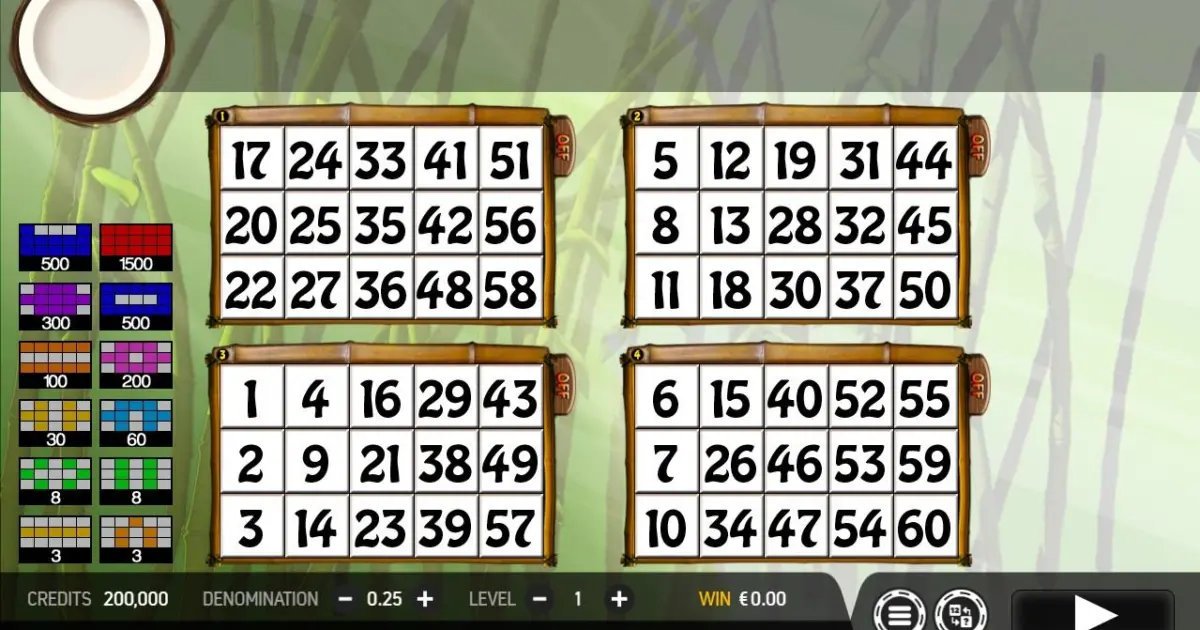
In 90-ball bingo, numbers range from 1 to 90; in 75-ball, from 1 to 75; in speed formats with 30 or 50 balls, the range compresses further and rounds finish faster. FACTS does not specify which range Big-Bod Bingo uses, so check the room’s title screen or rules page when you open the demo. The format affects call pace, card layout, and how many calls typically precede a win, so this is one of the first things to confirm before you decide whether the tempo suits your attention span.
Auto-daub handles marking for you in virtually all modern online bingo rooms, including this one. You do not tap numbers manually. Your only active decision is how many tickets to buy and whether to buy them in the first place.
What the absence of an RTP figure means in bingo
A slot’s RTP is a fixed mathematical property encoded into its reel weighting. It holds true across millions of spins because the outcome distribution is identical every spin. Bingo’s return works differently: the total money returned to players is determined by how the operator allocates a percentage of ticket sales to the prize pool, which can vary from room to room, session to session, or be set by the operator’s current promotion. There is no single “RTP” in the slot sense.
The figure that matters in bingo is the payout percentage — what share of total stakes gets redistributed as prizes rather than retained as margin. Some operators publish this, some do not. FBM Digital Systems has not published a figure for Big-Bod Bingo, which is not unusual for bingo but does shift the burden of verification onto you. Before playing for real money, look for the room’s paytable or rules page, where operators who structure transparent prizes will state something like “85% of sales returned as prizes.” If that page is absent or vague, you are playing without knowing the house’s actual margin.
The provider’s average across its catalog sits near 95.81% according to aggregated data, but an average of other products tells you nothing about this specific room’s structure. Do not treat that figure as a guarantee for Big-Bod Bingo.
One card or many: how tickets affect your odds
Buying more tickets in a bingo game increases your chance of being the person who completes the pattern first, but it does not improve your expected return per pound staked. Each additional ticket costs more money and carries the same house margin as the first. If the room pays out 80% of stakes as prizes, that 20% margin applies to every pound you spend whether you buy one ticket or ten.
The practical effect of buying multiple tickets is variance redistribution. Ten tickets across a 50-player room gives you roughly ten times the chance of winning compared to one ticket, but you also stake ten times as much per round. Your average loss per session stays proportional to total stakes, not to ticket count. The only thing that changes is the probability distribution of outcomes in any single game: more tickets narrows the gap between “someone else wins” and “I win,” without shifting the long-run expectation toward you.
If a room offers a discount per bulk ticket purchase, that can improve value slightly by reducing the effective margin. Without knowing whether Big-Bod Bingo does, check the buy-in screen in the demo to see the price per ticket at different quantities.
Prize tiers and what they actually pay
90-ball bingo splits a single game into three tiers — one line, two lines, and full house — with the full house typically carrying the largest share of the prize pool. 75-ball bingo uses pattern shapes on a 5-by-5 grid, sometimes with multiple patterns per game. Speed formats usually collapse everything into a single full-house win to keep rounds short. Big-Bod Bingo’s specific tier structure is not documented in the available data, so you should confirm it from the room’s own paytable screen.
What you can expect to see in the rules: what fraction of the total pool goes to each tier (for example, 20/30/50 split across line, two lines, and full house), whether there is a jackpot that accumulates across sessions, and whether a consolation prize exists if the game caps before full house is achieved. Any of those structural choices significantly affects your experience and your long-run return, even when the headline payout percentage is the same.
Some operators also run bonus or cashpot games that sit alongside regular rounds, often paying out at a random call count. These are separate prizes with their own funding, not modifications to the base game’s payout percentage.
Playing the Big-Bod Bingo demo
FBM Digital Systems offers a free demo of this room, which lets you observe call pace, card layout, tier structure, and the interface without staking money. The demo is useful for learning how the specific room works, but it does not predict real-money outcomes in any meaningful way. In bingo, what matters is who else is in the room and how many tickets they hold — a variable the demo cannot replicate honestly. The number sequence you see in free play has no bearing on a future real-money session’s calls.
Use the demo to confirm format, read the on-screen rules, and decide whether the tempo matches what you want. Treat it as a product preview, not as a prediction tool. If you move to real money, set a budget before you enter the room and stop at that number regardless of where you are in a sequence. Bingo is entertainment you pay for, not income. If you find yourself chasing losses or buying more tickets to recover, stop and reassess. All players must be 18 or over.
Verdict: who should play Big-Bod Bingo
This room suits a player who wants to try a bingo format from a studio with a modest catalogue and no published return figures, provided they read the room’s paytable carefully before staking money. If you compare it against Multi Mega Full HD or Multi Mega – Classic, none of these carries an RTP disclosure, so the practical differences will come down to ticket pricing, prize allocation, and pace rather than any advertised edge.
For a player who prioritises transparency, a bingo room with a published payout percentage from the start gives you a clearer basis for comparison before you commit. For a player who values trying formats quickly, the free demo makes this a zero-cost way to sample FBM Digital Systems’ approach to bingo presentation and call structure. The absence of a published figure is not a warning signal in itself, but it does mean your due diligence has to happen inside the room rather than in a product page.
Frequently Asked Questions
Can I play Big-Bod Bingo for free?
Yes. FBM Digital Systems offers a free demo of Big-Bod Bingo that lets you observe the call format, prize structure, and interface without staking money. The demo is useful for learning how the room works before deciding whether to play for real money.
What is the RTP for Big-Bod Bingo?
No published RTP figure exists for this specific room. In bingo, a true fixed RTP like a slot's does not apply because returns depend on how the operator allocates each session's prize pool relative to ticket sales. Check the room's own rules page for a payout percentage.
Does buying more tickets improve my odds or my value per pound?
More tickets increase your chance of winning a given round but do not improve your expected return per pound staked. Each ticket carries the same house margin as the first, so ten tickets mean ten times the exposure to the operator's cut, not better per-unit value.
Who makes Big-Bod Bingo?
FBM Digital Systems. developed Big-Bod Bingo as part of a catalogue of 17 bingo games. The studio also publishes Multi Mega Full HD, Multi Mega Classic, and Champion Bingo II. None of these titles carries a published individual RTP figure.
What format does Big-Bod Bingo use — 90-ball or 75-ball?
The specific ball format is not documented in the available data for this game. Big-Bod Bingo could be 90-ball, 75-ball, or a speed variant. Open the free demo or check the room's rules page to confirm the number range, card layout, and prize tiers before playing.