If you want a fast bingo round rather than a long 90-ball session, 30 Mania! Bingo is worth a look mainly because the free demo lets you see the pace and the ticket layout before any money is involved. The catch is that FBM Digital Systems has not published a return-to-player or payout percentage for this room, so you cannot compare its value against other bingo products on paper. That single gap is the most important thing to know before you decide.
How 30 Mania! plays
Online bingo works differently from a slot or a card game, and that difference matters here. Instead of each player triggering a private random outcome, every ticket in the room is marked against one shared sequence of randomly called numbers. When a number is drawn, it is drawn for everybody at once. Your ticket either holds it or it does not, and that was settled the moment the ticket was issued.
In practice this means the round has a single timeline that all players share. The winner is whoever holds the ticket that completes the required pattern first on that shared call sequence. There is no separate draw running for you in the background, and no per-player variance in which numbers appear.
The name points to a compressed, 30-number style of play, and that is the framing this review uses. Beyond the format implied by the title, FBM Digital Systems has not published the details of ticket pricing, how many cards you can hold in one round, the call speed, or the prize tier structure for this specific room. Those are the things that actually determine what a round costs you and what it can pay, so treat the in-client paytable and rules page as the real source rather than any review, including this one.
| Provider | FBM Digital Systems. |
|---|---|
| Free demo | Yes |
| Site-wide average RTP | 94.41% |
FBM Digital Systems. and this room
FBM Digital Systems has 17 games in the catalogue here, and across the ones with a published figure the average return sits at 95.81%, against a site-wide average of 94.41%. That is a useful signal about the studio’s general positioning, but it is not a statement about this room. 30 Mania! Bingo has no published figure of its own, and a studio average cannot be transferred onto an individual product.
What the catalogue does tell you is that this is a bingo-focused developer rather than one dabbling in the format. If you want to see how the studio handles a different structure before committing to a fast round, Champion Bingo II is the obvious comparison point from the same stable. For a look at how the developer builds its multi-card products, Multi Mega Full HD and its stripped-back sibling Multi Mega – Classic sit in the same range and are worth opening in demo alongside this one. None of those three carry a published return figure either, which tells you something about how this studio documents its bingo titles generally.
Reading the RTP figure
There is no RTP figure to read for this room. FBM Digital Systems has not published one, and that is common in bingo rather than a red flag on its own. The reason is structural: in bingo, the money returned to players is a function of how the operator splits ticket sales into the prize pool. Sell more tickets and the pot grows. Sell fewer and it shrinks, or a guaranteed minimum has to cover the gap. There is no fixed per-round return baked into weighted symbols the way a slot has.
So when a bingo product does publish a percentage, read it as “share of stakes returned as prizes across the room,” not as a per-ticket expectation you can rely on in a single session. And when it publishes nothing, as here, the honest position is that you cannot calculate the house edge from the outside. Check the room’s own paytable and rules page before you buy in. If it states a payout percentage, prize guarantees, or how the pot is formed from ticket sales, that is your figure. If it states none of those, you are buying entertainment at an unknown margin, and it is fair to size your stake accordingly.
90-ball, 75-ball or speed: what the format changes
Format is the single biggest driver of how a bingo round feels, so it is worth being precise about what each one does. 90-ball games run three prize tiers inside one round: one line, two lines, then full house, which means the round has three separate moments where someone wins and a longer overall arc. 75-ball games use a 5×5 grid and pattern wins, and often let you pick your own cards, which changes the texture of the session even though it does not change the underlying maths. Speed and 30-ball formats strip this back to a single full-house win on a smaller card, so rounds resolve quickly and the money moves faster.
The name here signals the compressed end of that spectrum, and that is the practical difference to expect: shorter rounds, a single win moment, more rounds per hour. Faster rounds are neutral in themselves, but they change how quickly a set budget gets used, which is the part worth planning for. FBM Digital Systems has not published the specific prize tier structure or call speed for this room, so the demo is the reliable way to see the actual rhythm rather than assuming it.
Does skill matter here? An honest answer
In standard auto-daub online bingo, your skill contributes essentially nothing to the outcome. The software marks your numbers for you, so there is no marking speed to master and nothing to miss. The result is decided by which numbers your ticket happens to hold against a call sequence that was random and shared with every other player in the room.
The one genuine decision is how many tickets you take into a round, and it is worth being clear about what that buys. Holding more tickets covers more of the possible outcomes, so it raises the chance that you are the player who completes the pattern first. It does not improve your expected value per unit staked. You are putting more money through the same margin, not getting a better rate on it. Anyone framing extra cards as a way to improve your return per pound has the maths backwards.
Where 75-ball games let you choose your own cards, that choice is cosmetic in terms of odds. Every combination faces the same random draw. Pick the cards you like the look of, by all means, but do not treat the choice as an edge.
Free play before real money
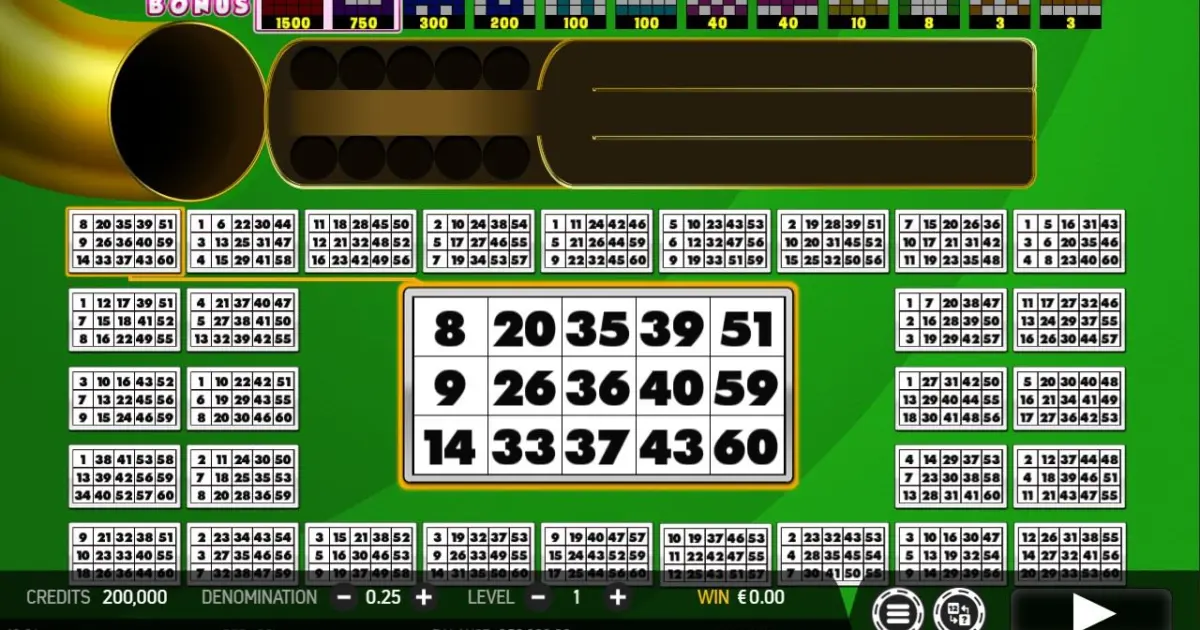
A 30 Mania! free demo is available, and it is the right first step. Use it to check the things FACTS cannot tell you: how fast calls arrive, how readable the ticket is on your screen, whether the pace suits you at all. Playing 30 Mania! free costs nothing and answers those questions directly.
What the demo cannot do is tell you anything about real-money results. Demo sessions do not predict what happens when you buy in, and a good or bad run in free play carries no information about the next one.
Bingo is for over-18s only. Set a budget before you open the room, treat it as the price of the entertainment rather than money you expect back, and stop when it is spent. That is the whole of it.
Final take on 30 Mania!
30 Mania! Bingo is a reasonable pick if fast rounds appeal and you are comfortable playing without a published payout percentage. The free demo removes most of the risk from finding out whether the pace and layout work for you, and FBM Digital Systems clearly builds bingo as a core line rather than a sideline, with 17 titles in the catalogue.
The reservation is the documentation. No published return figure, no stated ticket price, no confirmed prize structure from the studio means you are relying on the in-client paytable to tell you what a round actually costs and pays. Open it before you commit money. If the room lists its numbers clearly, you have what you need. If it does not, that is a fair reason to keep the stake small or spend your time in a room that shows its maths.
Frequently Asked Questions
Can you play 30 Mania! Bingo for free?
Yes, a free demo of 30 Mania! is available, so you can open the room and see the call pace, ticket layout and round length before spending anything. Demo play is useful for judging whether the format suits you, but it tells you nothing about real-money results and does not predict future sessions.
What is the RTP of 30 Mania! Bingo?
FBM Digital Systems has not published a return-to-player or payout percentage for this room. That is common in bingo, because the money returned depends on how ticket sales are divided into the prize pool rather than on fixed symbol weighting. Check the room's own paytable and rules page before you buy in.
Does buying more cards improve your value in 30 Mania!?
No. Holding more tickets covers more possible outcomes, so it raises your chance of being the player who wins that round, but your expected value per pound staked stays the same. You are running more money through the same margin, not securing a better rate on it.
Who makes 30 Mania! Bingo?
FBM Digital Systems, a studio with 17 games listed here. Across its titles that publish a figure, the average return is 95.81% against a site-wide average of 94.41%, though that average does not apply to this specific room, which has no published figure of its own.
How does 30 Mania! compare to Champion Bingo II?
Both come from FBM Digital Systems and neither publishes a return figure, so the difference is structural rather than mathematical. 30 Mania! points to a compressed speed format with fast rounds, while Champion Bingo II is worth opening in demo alongside it to compare pace, ticket layout and how each room presents its rules.