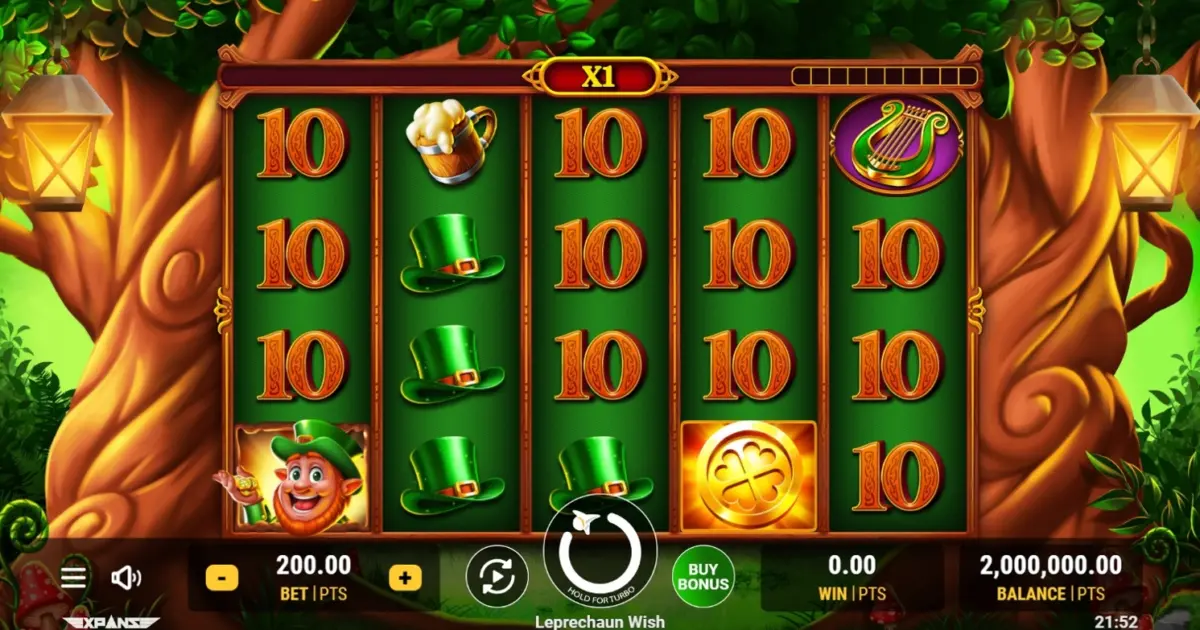
The leprechaun wish slot carries a 97.2% RTP, which puts it above the 97.05% average of Expanse Studios’ small catalogue and well above the 95.71% corpus-wide average. That is a genuinely above-average return figure. What is missing is equally important: no volatility rating, no hit frequency, and no max-win ceiling have been published, which means you cannot responsibly size a bankroll around this game the way you could with better-documented titles.
Who makes Leprechaun Wish
Expanse Studios is a small provider. This is one of only six titles it has in our catalogue, which means every game carries outsized weight in how the studio is perceived overall. A six-game portfolio gives you very little room to hide weak numbers, so the fact that three of Expanse’s titles cluster around 97% RTP is a meaningful signal about the studio’s general approach to mathematical design.
The studio is not a household name the way Playtech or NetEnt are. It operates in a tier of smaller, regional providers that supply white-label platforms and a handful of mid-tier casino brands. That does not make its games unsafe or unregulated by default, but it does mean the paper trail of third-party audits and published whitepapers that larger studios routinely produce is thinner here. When you review a slot from a provider this small, you should expect to see fewer independent verification reports linked on the game’s official page.
With only six games in the catalogue, there is no broad statistical sample within the provider itself to contextualise whether 97.2% is typical or exceptional for Expanse. It is the second-highest figure among the games we have listed, which places it near the top of a very short range.
Where Leprechaun Wish sits in the Expanse Studios catalogue
Across Expanse’s six listed games, RTP figures range from 96.63% up to 97.28%. Leprechaun Wish at 97.2% sits comfortably in the upper half of that distribution but is not the highest single figure available.
Candy’s Bonanza and Shaolin Crew both return 97.28%, edging ahead by eight basis points. That gap is negligible in practical terms — over ten thousand spins at a one-pound stake, it amounts to roughly one pound less returned — but if you are the type of player who ranks games by a decimal place, those two titles technically hold the provider crown.
At the other end, Gates of Halloween sits at 96.63%, pulling the provider average down to 97.05%. The spread between best and worst in a six-game catalogue is only 65 basis points, which is tighter than what you will find at larger providers with fifty or more slots. That consistency suggests Expanse uses a narrow range of mathematical templates rather than experimenting widely across its library.
RTP: 97.2% against a 97.05% house average
Return to player is a long-run statistical average, not a prediction for any individual session. A 97.2% RTP means that across a very large number of spins, £97.20 is theoretically returned for every £100 wagered. The remaining £2.80 is the theoretical house edge.
That figure compares as follows:
| Reference point | RTP | Leprechaun Wish vs. reference |
|---|---|---|
| Leprechaun Wish | 97.2% | — |
| Expanse Studios average | 97.05% | +0.15 points |
| Corpus-wide average (all listed slots) | 95.71% | +1.49 points |
The most useful comparison is the corpus-wide figure. At 95.71% average across all slots in our database, Leprechaun Wish exceeds the norm by 1.49 percentage points. In practical terms, over 10,000 spins at £1 each, that difference translates to £149 more theoretically returned compared to an average slot. Whether you ever experience that difference in a real session depends entirely on variance, which is the variable Expanse has not published.
The 97.2% figure is above the 96.5% threshold many players use as a rough “acceptable” cutoff, and above the 97% mark that separates genuinely competitive games from the majority. You would need to look at very few slots in a typical casino lobby before finding one below 97%.
Volatility and who it suits
Expanse Studios has not published a volatility rating for Leprechaun Wish. This is the single most significant gap in the data available for this game. Without it, you cannot determine whether the 97.2% RTP is delivered through frequent small wins or through rare large payouts.
The distinction matters because the same theoretical return can feel radically different depending on how wins are distributed. A low-volatility game spreads returns across many small hits, so your balance dips gently and recovers often. A high-volatility game concentrates returns into fewer, larger events, meaning long dry stretches followed by occasional spikes. With a £50 budget, a high-volatility game might leave you out of spins within twenty rounds; a low-volatility game with identical RTP could keep you playing through several hundred.
Some players infer volatility from hit frequency data or from max-win multipliers. Neither of those figures is available here either. You could observe demo play across a few hundred free spins and note how often wins land, but that observation would be anecdotal and sample-size-limited, not a substitute for a published rating.
The practical advice: if you cannot find volatility information in the game’s help section or on the provider’s documentation, treat the game as potentially high-variance until proven otherwise. That means budgeting more conservatively and expecting longer periods without meaningful returns.
Playing Leprechaun Wish for free
A free demo version of this game is available, which lets you spin without staking real money. This is the right way to form impressions about pacing, bonus-trigger frequency and overall feel before committing funds. Demo play runs on the same maths as real-money play, so if the game triggers bonus features rarely in demo, expect similar timing when wagering actual cash — though the outcome sequence will differ, since every spin is independent.
No stake range has been published for this title in our data, so you will need to check the specific casino offering it to see minimum and maximum bets. As a general rule, if you plan a session budget, divide it by the number of spins you want and work backwards to a stake. A £30 budget spread across 100 spins means 30p per spin. If the game’s minimum stake is higher than that, you get fewer spins for the same money and less time to observe its behaviour.
Treat any slot session as paid entertainment with a set cost, not as an investment or a way to recover losses elsewhere. Set a budget before you open the game, stop when it is spent, and never chase. You must be 18 or older to play for real money.
Similar picks
Leprechaun Wish is one of 391 Irish-themed slots in our database, so you have plenty of alternatives if the RTP or missing volatility data bother you. Here is how three thematic neighbours compare on the one number we do have for all of them.
Gold Party returns 96.5%, about 70 basis points below Leprechaun Wish. That is within the range where session outcomes will be indistinguishable in practice, but over very long play the difference compounds. Pop O Gold sits at 96.0%, adding another 50 basis points of disadvantage. If your priority is maximising theoretical return within the Irish-gold theme, Leprechaun Wish leads those two by a clear margin.
At the other end of the spectrum, Emerald Bisons PrizeMatch returns just 94.07%. That is a full 3.13 percentage points below Leprechaun Wish and well below the corpus average. Over 10,000 spins at £1, the theoretical difference between the two games is £313 — a gap large enough to matter even to players who are sceptical about RTP as a short-term predictor.
Verdict
Leprechaun Wish earns a position in the 99.7th percentile of all tracked slots by rank, which reflects both its strong RTP and its popularity among the players using this platform. The 97.2% return figure is genuinely competitive and exceeds the corpus average by a meaningful margin.
What drags the assessment down is transparency. A provider that publishes RTP but not volatility, hit frequency, or max-win figures is giving you half the information you need to make a responsible decision. The maths may be sound, but the experience of playing could range from smooth to punishing, and you cannot know which until you observe many spins or find third-party data.
If you play slots primarily for long-session entertainment on a tight budget and you value knowing the volatility before you commit, look for a better-documented game. If you are comfortable testing with free spins and do not mind that unknown, the RTP alone makes this a mathematically attractive pick within Expanse’s small catalogue.
Frequently Asked Questions
What is the RTP of Leprechaun Wish?
Leprechaun Wish has a 97.2% RTP, meaning that across a very large sample of spins the theoretical return is £97.20 for every £100 wagered. This exceeds Expanse Studios' own catalogue average of 97.05% and beats the corpus-wide average of 95.71% by nearly 1.5 percentage points.
Can I play Leprechaun Wish for free?
Yes, a free demo version is available. Demo play uses the same random outcome engine as real-money play, so it gives you a sense of pacing and feature frequency without any financial risk. The results in demo will not predict or influence what happens when you switch to real-money mode, since each spin is independent.
Is Leprechaun Wish a high or low volatility slot?
Expanse Studios has not published a volatility rating for this game. Without that figure, it is not possible to determine whether the 97.2% RTP is delivered through frequent small wins or through rare larger payouts. This is a notable gap compared to most established providers, who typically rate volatility on a low-to-high scale.
How does Leprechaun Wish compare to other Expanse Studios games?
Expanse Studios has only six titles in our catalogue. Leprechaun Wish at 97.2% RTP sits near the top, behind Candy's Bonanza and Shaolin Crew at 97.28% each, and ahead of Gates of Halloween at 96.63%. The spread across all six games is narrow at 65 basis points, suggesting consistent mathematical design across the provider's portfolio.
Who is the developer behind Leprechaun Wish?
The game is made by Expanse Studios, a small provider with six titles tracked in our database. The studio operates below the tier of household-name suppliers like NetEnt or Playtech. Its catalogue averages 97.05% RTP, which is a strong figure for a provider of any size, indicating a studio-wide preference for generous return percentages.




