The one number worth starting with: this five-reel game returns 96.12% in theory, which is above both the Red Tiger Gaming house average of 95.62% and the 95.71% average across the wider slot corpus. If you judge games by published return alone, the fortune house slot sits on the better side of the line. What is missing is almost everything else — no volatility rating, no max win, no hit frequency and no stake range have been published for this title, so a large part of any honest review is describing that gap rather than filling it.
Is Fortune House worth playing?
For a player who cares mainly about theoretical return, yes — 96.12% is a defensible figure and it beats the provider’s own average by half a percentage point. For a player who wants to know the shape of the session before committing money, the answer is less comfortable, because the risk profile is simply not on record.
The supporting detail is thin but real. Red Tiger Gaming has 335 games in this catalogue, and this one sits at popularity rank 2481, which places it in the 87.6th percentile — more played than the large majority of titles, though nowhere near the top tier. Popularity is not a quality measure and it certainly says nothing about how the game will treat your balance; it only tells you that a reasonable number of people have chosen to open it.
The practical verdict: worth a look, best approached through the free demo first. Demo mode lets you observe pacing, how often the reels land something, and how steep the quiet stretches feel — the things the published data does not cover. Just be clear that a demo session tells you nothing predictive about a later real-money session.
What 96.12% RTP means over 1,000 spins
RTP is a long-run average, not a per-session promise. A 96.12% return means that across an extremely large number of spins — millions, not thousands — the game is designed to pay back £96.12 for every £100 staked, with the remaining £3.88 retained as house edge.
Scale that to a realistic session. At £0.50 a spin, 1,000 spins puts £500 through the game. The mathematical expectation on that turnover is a loss of roughly £19.40. At £1 a spin the same 1,000 spins stakes £1,000 and expects a loss near £38.80. Those are averages of averages, and any individual 1,000-spin run can land far above or far below them. One thousand spins is a small sample by statistical standards, which is exactly why real results scatter so widely.
The comparison is where 96.12% earns its keep. Against the 95.71% corpus average, the edge is 0.41 percentage points — about £4.10 less expected loss per £1,000 wagered. Against Red Tiger’s own 95.62% average, the gap is 0.50 points. Small, but it compounds across turnover, and it is the one advantage here that is documented rather than assumed.
Every spin is independent. Nothing in the maths reacts to how long you have played, how much you have staked, or what happened on the previous spin.
How volatile is the fortune house slot?
Unknown. Red Tiger Gaming has not published a volatility or variance rating for this title, and no hit-frequency figure is available either, so any site quoting one is either guessing or sourcing it from somewhere unverified. Treat those numbers with suspicion.
What you can do is understand what each profile would mean, then judge for yourself in demo play. Low volatility generally means frequent small returns, a balance that drifts down gently rather than crashing, and longer sessions from the same bankroll. High volatility means long stretches returning nothing punctuated by much larger hits; the theoretical RTP is identical, but the route to it is far rougher and the bankroll needed to ride it out is considerably bigger. Medium sits between the two.
Crucially, volatility and RTP are independent settings. A 96.12% game can be built either way. So the 96.12% figure tells you what the game gives back over an enormous sample; it tells you nothing at all about whether your particular hundred spins will feel steady or brutal.
If swing size matters to you — and for bankroll planning it should — the absence of a published rating is a genuine drawback, not a detail to wave past.
What the Fortune theme brings to the game
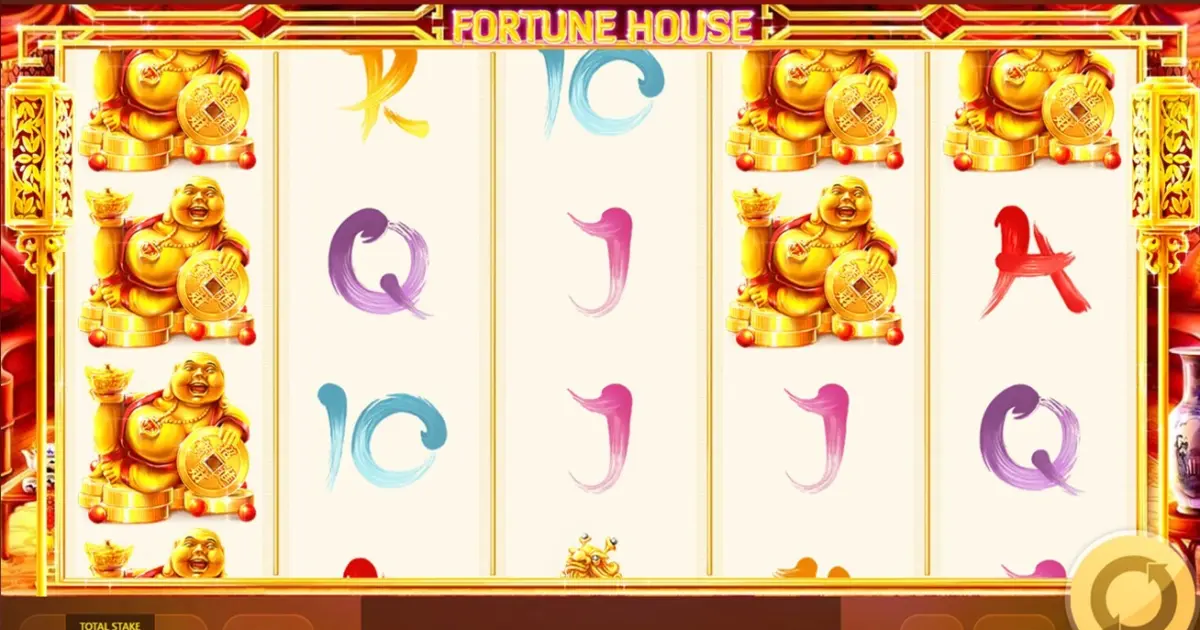
The listed themes are Fortune and 5-Reels, which is a category label rather than a description. It signals that the game draws on prosperity and good-luck imagery, a staple of slot design and one of the larger theme groups in this catalogue at 542 titles. Beyond that, no details of symbols, artwork, soundtrack or animation are on record, and inventing them would be no more useful to you than a stock photo.
What theme does affect is whether you enjoy sitting with the game, and that is not a trivial consideration when the maths is fixed. Theme has zero influence on return or variance. A prosperity-themed game and a mythology-themed game with identical RTP settings behave identically in the long run; the difference is entirely presentational.
The five-reel format is the industry default. It usually means a 5×3 or 5×4 grid with paylines or a ways-based evaluation, though the specific payline count, mechanics and any bonus structure are unpublished here. Many slots in this bracket carry wilds, scatters and a free-spins round as a matter of convention — but convention is not evidence, and nothing confirms which of those, if any, appear in this game. Load the free demo if you want that answer.
Stakes, session length and bankroll
No minimum or maximum stake has been published, so check the betting range inside the game before you commit anything. The general arithmetic still applies, and it is the most useful planning tool you have.
| Detail | Value |
|---|---|
| Game | Fortune House |
| Provider | Red Tiger Gaming |
| RTP | 96.12% |
| Reels | 5 |
| Primary theme | Fortune |
| Type | Slot Machine |
| Popularity rank | 2481 (87.6th percentile) |
| Provider catalogue | 335 games |
| Provider average RTP | 95.62% |
| Free demo | Available |
| Volatility | Not published |
| Max win | Not published |
Work backwards from time. Decide your budget first, then divide by the number of spins you want from it. A £40 budget at £0.20 a spin buys 200 spins before any returns are counted; at £1 a spin it buys 40. Returns extend that, but the starting division is what sets the realistic ceiling on session length.
Because the variance is undocumented, leave yourself more headroom than you think you need. And no staking pattern — raising after losses, lowering after wins, waiting for a quiet patch to end — changes the 3.88% house edge by a fraction. The edge applies to every spin equally, regardless of sequence.
Alternatives if Fortune House is not for you
If the published return is your deciding factor, two same-theme options are documented higher. Fortune Tiger is listed at 96.81% — 0.69 points above this game, which over £1,000 of turnover is roughly £6.90 less in expected loss. Mystic Fortune Deluxe sits at 96.71%, similarly ahead.
Staying with the same studio, Epic Journey returns 96.00%, marginally below this title but still above the 95.62% Red Tiger average — a reasonable comparison point if you want a second read on how the studio builds its better-returning games. Savannah Pride is lower again at 95.75%.
Note that no volatility ratings are published for any of these either, so a switch based on RTP alone changes the long-run maths without telling you anything about the ride. Among Red Tiger Gaming slots, small RTP differences are usually the only hard data you get to compare.
Final take
A solid published return and very little else. 96.12% is above both the provider average of 95.62% and the 95.71% corpus figure, which is a real if modest point in the game’s favour. Against that, the unpublished volatility, max win and stake range mean you cannot plan a session properly from the data sheet alone — you have to open the game and look.
That makes the Fortune House free demo the sensible first step. Play it long enough to see how the pacing feels and whether you actually enjoy it, while remembering that demo results carry no predictive weight for real-money play and cannot pay real money.
Slots are 18+ and priced entertainment, not income. Set a budget you are content to spend before you start, keep it separate from money you need, and stop when it is gone rather than topping up. The house edge does not soften with time.
More from Red Tiger Gaming
- Savannah Pride — 95.75% RTP
- Diamond Blitz — 95.75% RTP
Frequently Asked Questions
Can you play Fortune House for free?
A free demo is available, which runs the same game with virtual credits and no deposit. It is the best way to see pacing and feature behaviour, since Red Tiger Gaming has not published volatility, hit frequency or a stake range. Demo results are not predictive of real-money outcomes and cannot pay real money.
What is the RTP of Fortune House?
The published RTP is 96.12%, meaning a theoretical return of £96.12 per £100 staked across a very large sample. That sits 0.41 points above the 95.71% corpus average and 0.50 above Red Tiger Gaming's own 95.62% average across 335 games. Short sessions will scatter widely around it.
Is Fortune House high or low volatility?
Red Tiger Gaming has not published a volatility rating for this title, so no reliable answer exists and quoted figures elsewhere should be treated with caution. Volatility is independent of the 96.12% RTP, so that number tells you nothing about swing size. Demo play is your only practical way to gauge it.
Who makes Fortune House and what else do they produce?
Red Tiger Gaming, with 335 titles in this catalogue averaging 95.62% RTP. Other games from the studio include Epic Journey at 96.00% and Savannah Pride at 95.75%, both slightly below this title's 96.12%. Primate King Megaways is also theirs, though no RTP figure is published for it.
How does Fortune House compare with Fortune Tiger?
Fortune Tiger is published at 96.81%, which is 0.69 percentage points higher — roughly £6.90 less expected loss per £1,000 wagered. Both share the Fortune theme, one of 542 titles in that group. Neither has a published volatility rating, so the RTP gap is the only hard comparison available.