The number that matters most here is 94.11%. That is the published return-to-player figure for the diamond sands slot from Just For The Win, and it sits about 1.6 percentage points below the 95.71% average across the games covered on this site. Over any meaningful volume of play, that gap is real money. Whether it matters to you depends on what you want from a session.
Is Diamond Sands worth playing?
If you are picking a game purely on numbers, no — there are better-priced options from the same studio. If you want to try a five-reel summer-themed release for free and the RTP gap does not bother you, it is a reasonable half-hour.
Here is the case in plain terms. Just For The Win has 74 titles catalogued, and the average RTP across them is 95.8%. This one comes in at 94.11%, which is 1.69 points below the studio’s own typical figure. It is not an outlier by industry standards, but it is at the lower end of what you will encounter among modern releases.
The counterweight is popularity. The game ranks 1701 on this site, placing it in the 91.5th percentile for traffic. Plenty of people are looking it up, which usually means the presentation lands even when the maths does not flatter it. And since a free demo is available, you can form your own view without staking anything.
One important note on missing data: Just For The Win has not published a volatility rating, a maximum win figure, a hit frequency or a paylines count for this title in the information available here. Any specific number you see quoted elsewhere for those fields should be treated with suspicion until the studio confirms it.
| Provider | Just For The Win |
|---|---|
| RTP | 94.11% |
| Reels | 5 |
| Theme | Holiday |
| Free demo | Yes |
What 94.11% RTP means over 1,000 spins
RTP is a long-run statistical average, not a session promise. A 94.11% figure means that across an extremely large sample of spins, the game is modelled to return £94.11 for every £100 wagered. The other £5.89 is the house edge.
Put 1,000 spins at £0.20 through it and you have wagered £200. The modelled return on that £200 is £188.22, leaving an expected cost of £11.78. At £1 a spin, the same 1,000 spins wager £1,000 and carry a modelled cost of £58.90.
Compare that against a 95.71% game — the corpus average. The same £1,000 wagered there carries a modelled cost of £42.90. The difference is roughly £16 per £1,000 staked. Not catastrophic, but it compounds the longer you play.
Two caveats that genuinely matter. First, 1,000 spins is nowhere near enough to converge on the theoretical figure. Real sessions of that length routinely land far above or far below it, and short-run variance dwarfs the RTP difference. Second, every spin is independent. The game does not track what it owes you and does not correct toward its average within your session.
How volatile is Diamond Sands?
No volatility rating has been published for this game, so the honest answer is that nobody outside the studio knows. That absence is worth flagging rather than filling with a guess.
What you can do is understand the axis you are being asked to judge. Volatility describes the shape of the returns, not the size. Low-volatility slots pay small amounts frequently, which keeps a balance ticking over and makes sessions last longer on a given bankroll. High-volatility slots pay rarely and larger, which means long dry stretches punctuated by occasional spikes — and a much higher chance of losing a small bankroll before anything meaningful lands.
Crucially, two games can share an identical RTP and feel completely different. The percentage tells you the long-run cost; volatility tells you how bumpy the road there is.
Since a free demo exists, the practical move is to run a few hundred demo spins and watch the balance behaviour. Does it drift down steadily with regular small returns, or sit flat for long stretches then jump? That gives you a rough read. Do not treat demo results as predictive of real-money outcomes — the sample is too small and the outcomes are independent either way.
What the Holiday theme brings to the game
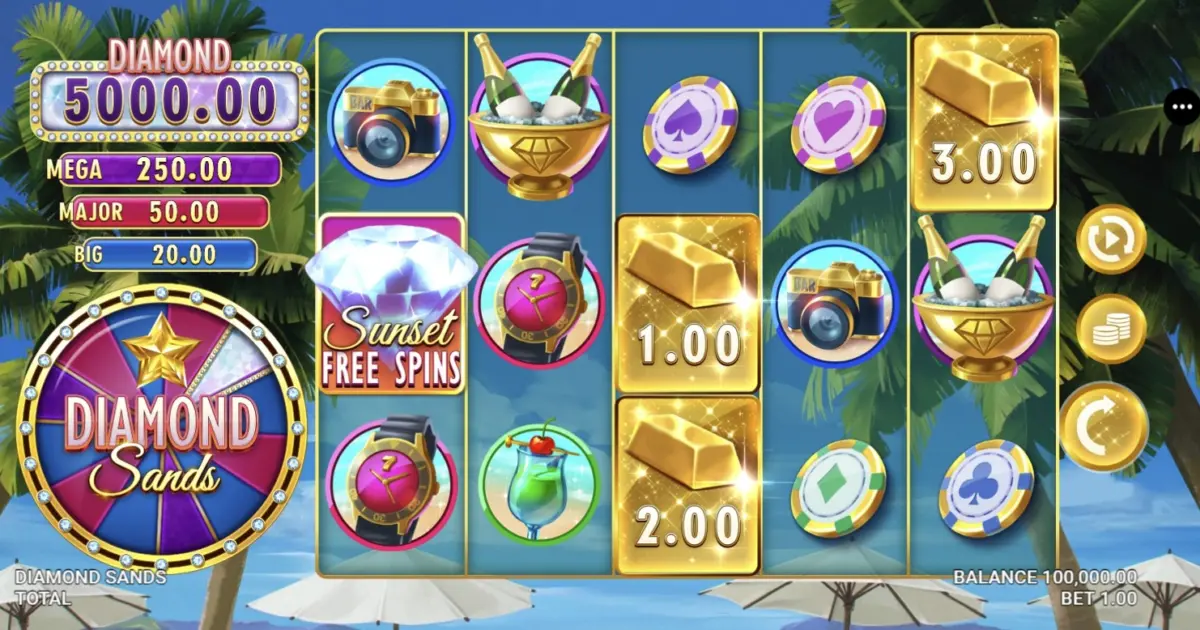
The theme labels attached to this release are Holiday, Summer and 5-Reels. That points to a warm-weather getaway setting rather than a winter one, which distinguishes it from most of the Holiday category.
Beyond those labels, there is no detailed information here about symbols, soundtrack or animation, so this review will not invent any. What the labels do tell you is where the game sits in a crowded space: 329 titles on this site carry a Holiday tag, and the large majority of those lean Christmas. A summer-holiday treatment is comparatively less common.
Theme is worth exactly what it is worth to you. It does not change expected value by a fraction of a percent. A 94.11% game costs the same to play whether it is set on a beach or in a snowfield. If the setting keeps you engaged and comfortable, that has genuine value for your enjoyment — just do not let it substitute for the return figure when you compare options.
The five-reel structure is the standard modern layout. It supports the usual range of mechanics you find across the category, though which specific ones appear here is not documented in the available data.
Stakes, session length and bankroll
No minimum or maximum stake has been published for this title, so you will need to check the range in the game itself or in the demo before committing anything. That is a straightforward five-second check once it loads.
What you can plan in advance is your own budget. Decide the total you are willing to spend before you start, then divide it by your chosen stake to see how many spins that buys. A £40 budget at £0.20 a spin gives you roughly 200 spins before the modelled cost bites; the same £40 at £2 a spin gives you 20. Stake size is the single biggest lever you control over session length.
At a 94.11% return, the modelled cost per spin is 5.89% of your stake. That works out to just over a penny per spin at £0.20, and around 12p per spin at £2. Multiply by the number of spins you expect to play and you have a realistic entertainment cost.
No stake pattern, progression or timing changes any of this. Raising or lowering your bet mid-session does not alter the edge on the next spin.
Alternatives if Diamond Sands is not for you
The most direct upgrade path is within the same studio. Trojan Kingdom runs at 96.12%, two full percentage points better, which cuts the modelled cost per £100 wagered from £5.89 to £3.88. Rubies of Egypt is close behind at 96.1% if you prefer a different setting.
Staying in the Holiday category, Sweet Bonanza Xmas posts 96.51% — the highest figure among the related games listed here, and a 2.4-point improvement on this one. Lucky Santa Bonanza matches Trojan Kingdom at 96.12% for a winter-themed alternative.
All four are worth a demo run before you choose. RTP is the cleanest single comparison point available, but it does not tell you whether you will enjoy the game.
Final take
94.11% is the headline and the drawback. It is below both the Just For The Win average of 95.8% and the wider 95.71% figure, and with no published volatility, max win or stake range, there is less supporting information than you would like when weighing that up. The free demo is the sensible entry point.
Slots are paid entertainment, not income. Play only if you are 18 or over, set a budget you are genuinely comfortable losing before you start, and stop when you reach it rather than when you feel like something is about to change.
If the presentation appeals and you are playing small stakes for a short session, the RTP gap costs pennies. If you plan longer sessions or higher stakes, the alternatives above are better value for the same time spent.
Frequently Asked Questions
Can I play Diamond Sands for free?
A free demo is available for this title, so you can spin it without staking money. That is the sensible way to assess a game with no published volatility rating — run a few hundred demo spins and watch how the balance behaves. Bear in mind demo results are a small sample and do not predict real-money outcomes.
What is the RTP of Diamond Sands?
The published return-to-player figure is 94.11%, meaning the game is modelled to return £94.11 per £100 wagered across a very large sample. That is 1.6 percentage points under the 95.71% site-wide average and 1.69 points under the Just For The Win average of 95.8%. Short sessions will vary widely from that figure.
Is Diamond Sands high or low volatility?
Just For The Win has not published a volatility rating for this game, so there is no reliable figure to quote. Volatility describes how returns are distributed — frequent small ones versus rare larger ones — and it is independent of the 94.11% RTP. The free demo is your best practical way to gauge the swing pattern yourself.
Who makes Diamond Sands and what else do they produce?
Just For The Win developed it. The studio has 74 titles catalogued here, averaging 95.8% RTP, which places this release at the lower end of their own range. Trojan Kingdom at 96.12% and Rubies of Egypt at 96.1% are two of their better-priced games if you want a direct comparison from the same developer.
How does Diamond Sands compare to Sweet Bonanza Xmas?
Sweet Bonanza Xmas returns 96.51% against 94.11% here, a 2.4-point gap. On £1,000 wagered, that difference is roughly £24 in modelled cost. Both sit in the Holiday category, though this one leans summer rather than winter. Neither figure guarantees a session outcome, since every spin resolves independently.