The short answer: this is a 4-reel gangster-themed release from Adell, a studio with 32 games on record, and it sits in the top 11% of titles by popularity here. The catch is that the published data set is thin. No RTP, no volatility rating, no stake range and no max win figure, which means the free demo is doing most of the work of telling you what this game is.
Bonus Brothers slot at a glance
What is on record is the structure rather than the maths. Four reels, a Gangsters theme that also files under Crime and 4-Reels, and a Slot Machine subcategory. Popularity rank 2076 puts it at the 89.6th percentile, so plenty of people have loaded it, though popularity tells you nothing about return or risk.
Who does that suit? Players who are comfortable judging a game by playing it rather than by reading its numbers. If you screen games on RTP before you spin, there is nothing here to screen on, and you would be better served starting with a title that publishes one.
| Figure | Value |
|---|---|
| Provider | Adell (32 games) |
| Reels | 4 |
| Primary theme | Gangsters |
| Other themes | Crime, 4-Reels |
| Subcategory | Slot Machine |
| Popularity rank | 2076 (89.6th percentile) |
| Game RTP | Not published |
| Provider average RTP | 95.22% |
| Site-wide average RTP | 95.71% |
| Volatility | Not published |
| Stake range | Not published |
| Free demo | Available |
What an unpublished RTP actually returns
Adell has not published an RTP figure for this game, so any percentage you see quoted for it elsewhere should be treated as unverified. What can be stated is the context around it. Adell’s catalogue averages 95.22% RTP, and the average across all games covered here is 95.71%.
Work those two through a concrete session. Wager 1,000 spins at 20p and you have staked £200. At 95.22% the long-run expected return on that £200 is £190.44, leaving £9.56 as the house edge. At the 95.71% site average the expected return is £191.42, so the gap between a typical Adell game and a typical game overall is under a pound across £200 wagered.
Two caveats matter more than that gap. First, RTP is a long-run average measured over many millions of spins, not a promise about 1,000 of them; real sessions scatter widely around the figure. Second, a provider average is not this game’s number. Some of Adell’s 32 titles will sit above 95.22% and some below, and without a published figure there is no way to place this one.
Unstated volatility and what your session will feel like
No volatility rating has been published either, so treat the risk profile as unknown rather than assuming it is moderate. The general framework still helps you read what you see on screen.
Low volatility means frequent small returns: the balance drifts down slowly, sessions last a long time on a given budget, and the biggest single result is rarely far above your stake. High volatility inverts that. Long stretches return nothing, the swings are wide in both directions, and the bankroll needed to survive a bad run is several times larger for the same number of spins. Medium sits between the two.
In a demo you can get a rough feel for this by running a few hundred spins at a fixed stake and watching how often anything lands and how large the outliers are. That is an impression, not a measurement, and it will not settle the question. If you want a named risk profile before committing money, compare against something rated, such as Manimals at 96.01% RTP, which gives you both a published return figure and a documented gangster-adjacent alternative.
The 4-reel layout and how wins are counted
Four reels is unusual. Most modern video slots run five, and the older fruit-machine format runs three, so a 4-reel grid sits between two conventions. What it changes mathematically is the number of symbol positions in play, and therefore how combinations are counted.
Fewer reels generally means fewer possible combinations than an equivalent five-reel grid, which pushes designers towards either a compact payline set or a ways-based count. Paylines are fixed patterns across the grid, and a win registers when matching symbols land on one of those defined paths. Ways-based counting ignores position within the reel and pays whenever matching symbols appear anywhere on enough consecutive reels, which is why ways figures tend to be larger numbers.
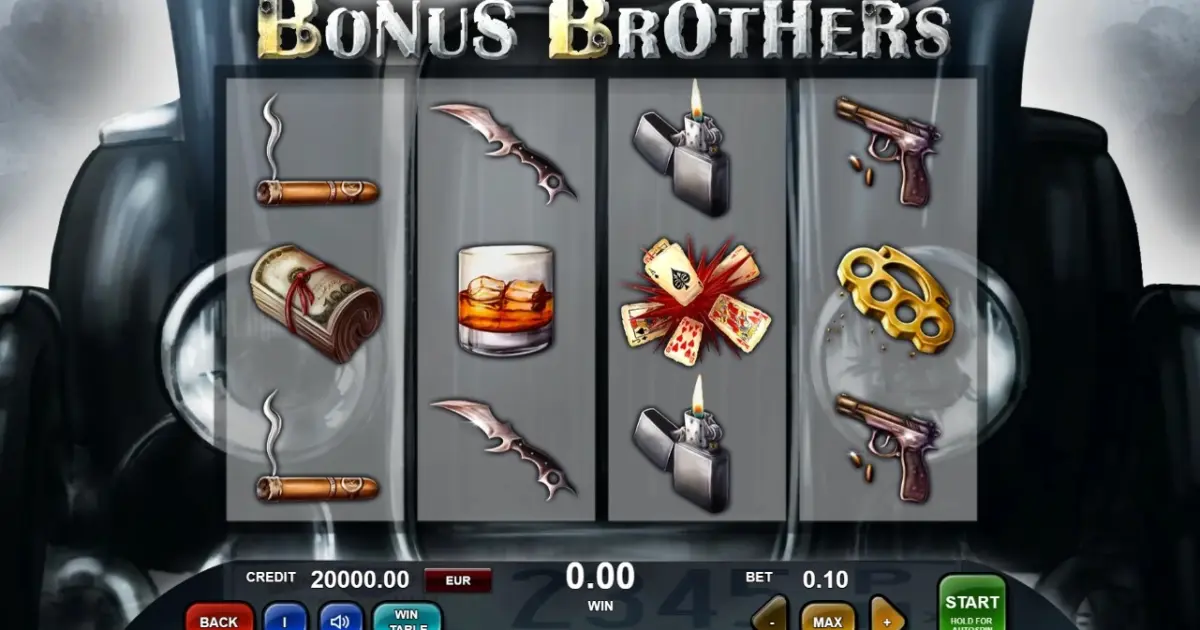
The payline or ways count for this title is not in the published data, so you will need to read it off the in-game paytable. That paytable is also where the symbol set, any special symbols and any feature rules are defined, and it is the only reliable source for them. Nothing about the theme label or reel count tells you what those features are.
Stake range and sizing a bankroll
The minimum and maximum stake are not on record here, so check them in the game before you plan a session. The arithmetic of sizing a bankroll does not change.
Decide how long you want to play, not how much you want to win. If a game runs roughly 500 spins an hour and you want an hour, a 10p stake commits about £50 of turnover and a £1 stake commits about £500. Your budget should be a figure you are content to lose entirely, divided by the number of spins you want, which gives you the stake to set. Working in that order keeps the decision in your hands rather than the game’s.
One thing worth being clear about: every spin is independent. No staking pattern, session length or timing changes the expected return of the next result, and a run of blanks does not make anything more likely to follow. Stake size affects how fast your budget moves, nothing else.
Playing the Bonus Brothers demo before you commit
A Bonus Brothers free demo is available, and given how little of the maths is published, it is the sensible starting point. Use it to read the paytable properly, check the stake steps, and see how the 4-reel grid resolves wins in practice.
What a demo cannot do is predict real-money outcomes. Demo results are a small sample drawn from the same independent random process, so a good or bad run in free play carries no information about what follows with money at stake. Judge the demo on whether you enjoy the game and understand its rules, not on what the balance did.
Play only if you are 18 or over, set a budget before you start and treat the cost as the price of entertainment rather than an investment. If tracking the spend stops being comfortable, stop.
Worth a look alongside it: other Adell slots such as Way To Hell share the studio’s design habits, though no RTP is published for that one either.
Verdict: who should play Bonus Brothers
This one comes down to how much you need to know before you spin. The structure is clear enough, a 4-reel gangster slot from a studio with a 32-game catalogue and a 95.22% average return, and the popularity rank suggests the presentation lands for a lot of people.
But three of the figures that actually shape a session, RTP, volatility and stake range, are absent from the public data. If those matter to you, and for most players planning a budget they should, there are rated alternatives in the same 101-game Gangsters category. Cred publishes 96.12%, the highest of the theme comparisons here, while Headhunter sits at 94.00% and shows how wide the spread within one theme can be.
Try the demo, read the paytable, and make the call from there. Going in with money before you have checked those numbers in-game means accepting an unknown edge, and that is a choice worth making deliberately rather than by default.
Frequently Asked Questions
Can I play Bonus Brothers for free?
A free demo is available, and it is the most useful way to approach this title given that the RTP, volatility and stake range are all unpublished. The demo lets you read the in-game paytable, check the stake steps and see how the 4-reel grid resolves wins, all without committing any money.
What is the RTP of Bonus Brothers?
Adell has not published an RTP figure for this game, so any percentage quoted elsewhere is unverified. For context, Adell's 32-game catalogue averages 95.22% and the site-wide average is 95.71%. At 95.22%, 1,000 spins of 20p returns £190.44 on average across a very large sample, not within one session.
Is Bonus Brothers high or low volatility?
No volatility rating has been published, so the risk profile should be treated as unknown. Low volatility means frequent small returns and longer sessions on a set budget; high volatility means long dry stretches and wider swings needing a bigger bankroll. A demo run gives an impression only, never a measurement.
Who is Adell and what else do they make?
Adell is the studio behind this title, with 32 games on record here and an average RTP across them of 95.22%, slightly under the 95.71% site-wide average. Other Adell releases include Way To Hell, Neon Lines and Mega Cross 4+, though no RTP figures are published for those three either.
How does Bonus Brothers compare to Cred?
Cred publishes a 96.12% RTP, while this game publishes none, which is the main practical difference between them. Both sit in the same 101-game Gangsters category. If you want a documented return figure before staking money, Cred gives you one; Headhunter, by contrast, sits lower at 94.00%.