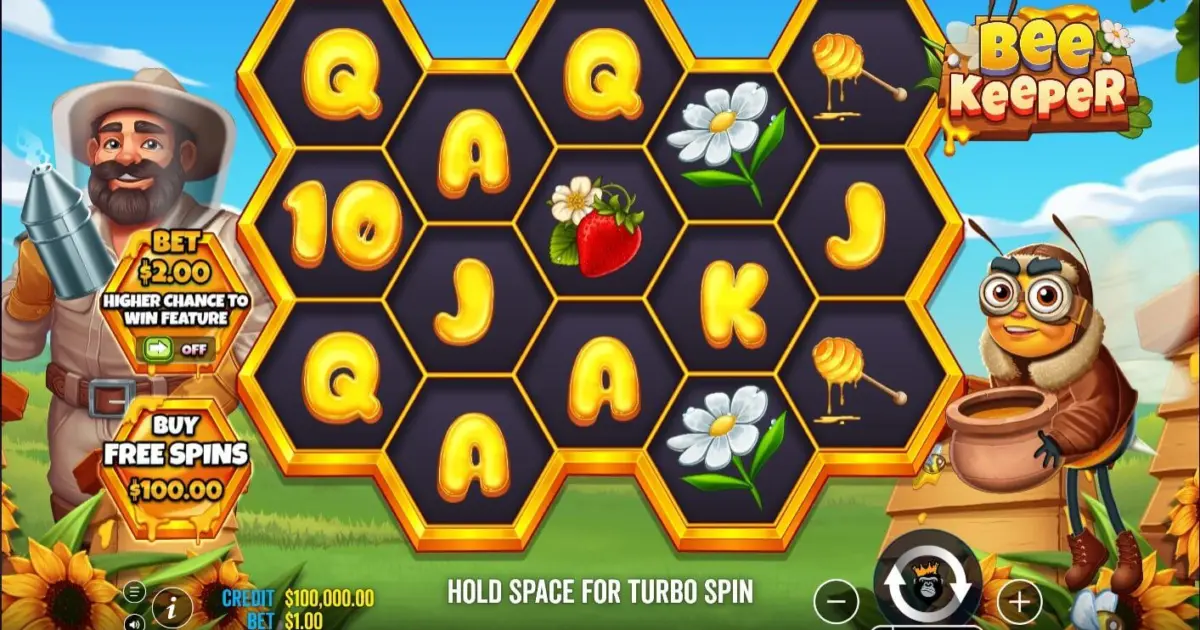
The single number worth knowing before you load the bee keeper slot is 96.53% — a return-to-player figure that sits above the Pragmatic Play house average of 96.32% and 0.82 percentage points above the 95.71% average across the games catalogued here. That is a genuine, if small, mathematical edge over the typical title you could open instead. What you will not find is a published volatility rating, payline count, max win multiplier or stake range, and that absence matters as much as the RTP when you are deciding whether to commit a session to it.
Is Bee Keeper worth playing?
It is worth a look if your shortlisting criterion is RTP, and worth caution if you need to know the risk profile before you stake anything. The return figure is the strongest thing on its spec sheet. Ranked 2,715 for popularity, it sits in the 86.4th percentile of games tracked here — not a headline release, but not obscure either. Plenty of games with far weaker returns get far more attention.
The gaps are the honest problem. Pragmatic Play has not published a volatility rating, a paytable, a hit frequency or a maximum win figure for this title. That means nobody — including this review — can tell you how large the swings are or what the ceiling on a single spin looks like. If you see a specific max win multiplier quoted for Bee Keeper elsewhere, treat it as unsourced until the studio confirms it.
What is confirmed: five reels, a Slot Machine subcategory, a Relax-led theme, and a free demo. The demo is the practical answer to the missing data. You can watch how the game actually behaves without funding anything, which is more informative than any number a third-party page invents for you.
What 96.53% RTP means over 1,000 spins
RTP is a long-run statistical average, not a session promise. A 96.53% figure means that across an extremely large sample of spins — millions, not thousands — the game is designed to return £96.53 for every £100 wagered. The remaining £3.47 is the house margin. That margin is baked into the maths and does not change with time of day, stake size or how long you have been playing.
Run the arithmetic on 1,000 spins at £0.20 and you have wagered £200. The theoretical return on that turnover is £193.06, for an expected cost of £6.94. At £1 a spin, the same 1,000 spins turn over £1,000 and carry a theoretical cost of £34.70. Those are expectations, not forecasts. A thousand spins is a tiny sample in statistical terms, so your actual result will land somewhere either side — possibly a long way either side.
The comparison is where the number earns its keep. 96.53% against a 95.71% corpus average means roughly £8.20 less theoretical cost per £1,000 wagered than the typical game in this catalogue. Small per spin. Meaningful over a few thousand.
How volatile is Bee Keeper?
Unknown, and worth stating plainly: no volatility rating has been published for this game, so any review claiming it is low, medium or high is guessing. Volatility describes how a game distributes its returns rather than how much it returns. Two titles can both run at 96.53% and feel nothing alike.
In general terms, low-volatility slots pay smaller amounts more often. Sessions last longer on a given bankroll, the balance moves in small steps, and a modest stake stretches further. High-volatility slots do the opposite: long stretches with little back, punctuated by rarer and larger returns, which is why they need deeper bankrolls to survive the flat spells. Medium sits between the two. None of this changes the expected cost of play — it changes how bumpy the road to that expectation feels.
Because the rating is missing here, the demo is doing double duty. Two or three hundred demo spins will give you a rough feel for whether the balance drifts gently or lurches. Judge it as texture, not as prediction: demo results tell you nothing about what a real-money session will do, and each spin is independent of every spin before it.
What the Relax theme brings to the Bee Keeper slot
The theme labels are Relax, Nature and 5-Reels, and Relax is the primary one. That points to a calmer presentation rather than a specific set of features — the Relax category covers 380 games in this catalogue, which tells you it is a broad tonal grouping rather than a mechanic. Nature aligns with the beekeeping premise the name implies, but the specific symbols, animations and audio are not documented, so treat any detailed description you read of them with suspicion.
Theme labels do not affect the maths. A Nature slot and a mythology slot running at identical RTP and identical volatility will cost you the same over the long run. What a theme does change is whether you enjoy sitting with the game, and enjoyment is the only thing you are actually buying. If a slower, quieter presentation is what keeps a session pleasant for you, the Relax grouping is a reasonable filter to search by.
Worth noting what is not claimed here: no wild behaviour, no scatter rules, no free-spin round and no buy feature have been documented for this title. Many slots include some or all of those. Whether this one does is something only the paytable in the game itself will tell you.
Stakes, session length and bankroll
No minimum or maximum stake has been published for this game, so the practical step is to open the free demo, check the bet selector, and work from the real numbers you see there. Stake range is the single most useful figure for session planning, and it is the one most often omitted from review pages.
The planning maths is straightforward once you have it. Decide the total you are willing to spend, then divide by the number of spins you want the session to last. A £40 budget across 400 spins means £0.10 a spin. Want 400 spins from £40 at £0.50 instead? The arithmetic does not allow it. Set the spin count first and let the stake follow, rather than picking a stake and hoping.
Two things to keep in mind. Higher stakes do not improve RTP — the percentage is the same whether you bet £0.10 or £10. And no stake pattern, progression or timing changes expected value, because each spin is resolved independently by the random number generator with no memory of what came before.
Alternatives if Bee Keeper is not for you
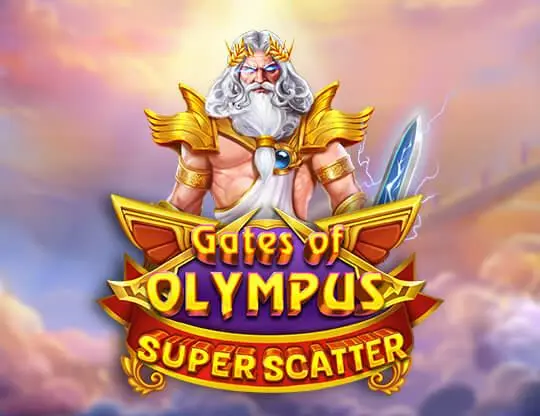
If the missing volatility rating bothers you, Pragmatic Play’s better-documented titles are the obvious pivot. Gates of Olympus runs at 96.50%, a fractionally lower return but with a widely discussed high-variance profile, so you know what you are buying. Sweet Bonanza sits at 96.51% and is the studio’s most recognisable release, which means its behaviour is far more thoroughly reported. Pragmatic Play has 739 games in this catalogue, so there is no shortage of alternatives from the same developer.
For a straight RTP upgrade within a similar Nature-leaning space, Big Bass Splash returns 96.71% — 0.18 points better than Bee Keeper, worth about £1.80 less theoretical cost per £1,000 wagered. Small, but it is in your favour rather than against you.
Some related titles have no published RTP at all, including Frutinions and the Arrow’s Edge version of Cleopatra. An unpublished return is a reason to be more careful, not less: if you cannot see the percentage, you cannot compare it, and a game withholding that figure has given you nothing to weigh against the 96.53% you already know about here.
Final take
| Detail | Value |
|---|---|
| Provider | Pragmatic Play |
| RTP | 96.53% |
| Reels | 5 |
| Primary theme | Relax |
| Type | Slot Machine |
| Popularity rank | 2,715 (86.4th percentile) |
| Provider average RTP | 96.32% |
| Catalogue average RTP | 95.71% |
| Free demo | Available |
A published 96.53% RTP from a studio averaging 96.32% is a solid starting point, and the Bee Keeper no download demo lets you fill in the blanks the spec sheet leaves. Those blanks are real, though: no volatility rating, no paytable detail, no stake range and no max win figure. That makes this a game you test before you fund, not one you can size up from numbers alone.
Slots are paid entertainment, not income. Play only if you are 18 or over, decide your budget before the first spin, and stop when you reach it rather than when the session feels finished. If the spending stops feeling optional, step away and use the deposit limits and self-exclusion tools your operator provides.
Verdict: a reasonable above-average-RTP option for a short session, held back by a thin public spec sheet rather than by its maths.
More from Pragmatic Play
- Book of Monsters — 96.5% RTP
- Big Bass Secrets of the Golden Lake — 96.07% RTP
- Wisdom of Athena — 96.07% RTP
- Wild West Gold — 96.51% RTP
- Extra Juicy — 96.52% RTP
- Queenie — 96.51% RTP
- Jelly Express — 96.5% RTP
- Lobster Bob’s Crazy Crab Shack — 96.03% RTP
Frequently Asked Questions
Can I play Bee Keeper for free?
A free demo is available, which is the most useful thing about this title given how little else is documented. Demo play runs on the same random number generator as real money but uses fake credits, so you can check the bet selector, the paytable and the general rhythm of the game without risking anything.
What is the RTP of Bee Keeper?
The published RTP is 96.53%, meaning the game is designed to return £96.53 per £100 wagered across a very large sample. That beats the 96.32% Pragmatic Play average and the 95.71% figure across all games tracked here. Over 1,000 spins at £0.20, the theoretical cost works out at roughly £6.94.
Is Bee Keeper high or low volatility?
No volatility rating has been published for this game, so any source stating one is guessing. Volatility controls swing size and bankroll requirements rather than long-run return, so its absence is a genuine gap. Running a few hundred demo spins is the only practical way to get a feel for how the balance moves.
Who makes Bee Keeper and what else do they produce?
Pragmatic Play developed it, and the studio has 739 titles in this catalogue at an average RTP of 96.32%. Their best-known releases include Sweet Bonanza at 96.51%, Gates of Olympus at 96.50% and Joker's Jewels at 96.50%. Those three are far better documented if you want published feature detail before playing.
How does Bee Keeper compare to Big Bass Splash?
Big Bass Splash returns 96.71% against 96.53% here, a 0.18-point advantage worth about £1.80 less theoretical cost per £1,000 wagered. Both sit in nature-leaning theme groupings. The bigger difference is documentation: Big Bass Splash has a widely reported feature set, while this title's paytable and volatility remain unpublished.