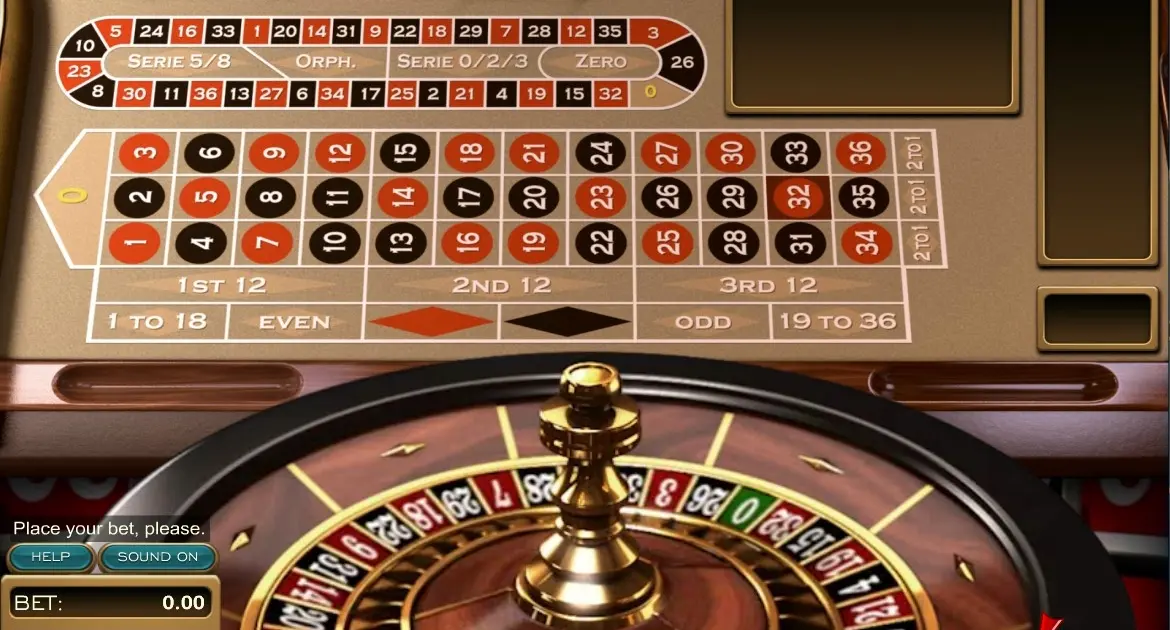
Zoom Roulette is worth your time if you want a single-zero European-style wheel with a clean 97.3% return, backed by a provider whose average across its roulettes sits at 96.44%. The headline number is solid, but the real questions are which bets carry that return and how the variance behaves. This review walks through the maths you can rely on, the paytable you should verify, and the one thing no system will ever fix.
What kind of roulette is Zoom Roulette?
The name and the 97.3% RTP figure both point to a single-zero (European) wheel, which has 37 pockets and a standard house edge of 2.70% on every regular bet. That is the same structure as the classic European table: one green zero plus 36 numbered pockets, with inside bets paying 35:1 on a straight-up and even-money bets paying 1:1.
Be careful with one thing: the title alone does not confirm the rules. A 97.3% return is exactly what a plain single-zero wheel delivers with no special rules, but it is also possible the game layers on a side bet or a rule tweak that shifts the effective return. The safe move is to open the game’s own rules or paytable screen and confirm the pocket count and any special features before you put real money down. The demo is the perfect place to do exactly that, at no cost.
What Zoom Roulette is not, based on the available facts, is a double-zero American wheel — that format carries a 5.26% house edge and would show an RTP near 94.74%, not 97.3%. It is also not a multiplier format like Lightning Roulette, which funds its bonuses by cutting the base straight-up payout. Nothing in the facts suggests such a structure here.
Return to player and house edge
The confirmed RTP for Zoom Roulette is 97.3%. That is 0.33 percentage points above the average of the wider corpus of roulette games on this site (96.97%), and it matches the provider’s own European Roulette table exactly. By contrast, Nucleus Gaming’s American Roulette sits at 94.73% — a full 2.57 points lower. If you are choosing between this provider’s wheels, the European-style tables are the ones the maths favours.
That 2.70% house edge is the price of every standard bet on a single-zero wheel. It comes from a single pocket: a straight-up number pays 35:1, but true odds are 36:1 against, and that one-pocket gap is the entire edge. It applies to red/black, odd/even, dozens, columns, splits and corners alike. The shape of the bet changes how often you win and how big the swings are, but it never changes the expected value.
The one genuine exception on a European wheel is French rules — La Partage or En Prison — which return half your stake on even-money bets when zero lands. That cuts the even-money house edge to about 1.35%, the best standard bet in the game. Nothing in the facts confirms Zoom Roulette offers those rules, so treat this table as a standard 2.70% edge until you verify otherwise on the rules screen.
Reading the Nucleus Gaming paytable before you bet
Before you place real money, open the paytable and check three things. First, confirm the straight-up payout is 35:1 — if it is anything lower, the effective RTP shifts and the 97.3% headline no longer applies evenly. Second, look for any side bet or bonus feature; a side bet with its own paytable can drag the overall return in either direction depending on how it is priced. Third, check whether French rules apply to even-money bets; as noted, that changes the picture materially.
Nucleus Gaming is the provider here, and its roulette range spans three titles on this site with an average RTP of 96.44%. That average is pulled down by the American wheel’s 94.73%, so the two European-style tables at 97.3% are the stronger half of the range. If you want to compare directly, European Roulette (Nucleus) carries the identical 97.3% return, making it the natural point of reference for this wheel.
The paytable is also where you settle the “is this really European?” question. The facts point to a single-zero wheel, but the rules screen is the only authority. If the pocket count or a special rule differs from the standard 37-pocket layout, the maths in this review stops applying and you should read the return from the game’s own numbers.
Bet coverage, variance and session length
Inside versus outside bets on a single-zero wheel is a variance choice, not a value choice. A straight-up number pays 35:1 but lands roughly once in 37 spins, so your bankroll swings hard. Even-money bets like red/black pay 1:1 and land close to half the time, giving you longer sessions with smaller, steadier swings. Both carry the same 2.70% house edge. The table below lays out the standard single-zero payouts and true odds.
| Bet type | Payout | True odds (37 pockets) | House edge |
|---|---|---|---|
| Straight-up (single number) | 35:1 | 36:1 | 2.70% |
| Split (two numbers) | 17:1 | 17.5:1 | 2.70% |
| Street (three numbers) | 11:1 | 11.33:1 | 2.70% |
| Corner (four numbers) | 8:1 | 8.25:1 | 2.70% |
| Dozen / column | 2:1 | 2.083:1 | 2.70% |
| Even-money (red/black, odd/even, high/low) | 1:1 | 1.056:1 | 2.70% |
For a given total stake, spreading across outside bets shortens the swings and extends your session; concentrating on inside bets makes the session shorter and more volatile. Neither approach changes what you expect to lose over time — that is fixed at 2.70% of every dollar you cycle through the wheel. Choose coverage for comfort, not for edge.
Patterns, hot numbers and the gambler’s fallacy
No betting system — Martingale, Fibonacci, D’Alembert, “wait for five reds” — changes expected value. Spins are independent; the wheel has no memory. Each spin on an RNG wheel is a fresh event with the same probabilities, so a number that has not landed in fifty spins is exactly as likely to land on the next spin as any other number. Tracking previous results has zero predictive value.
Progressions like Martingale do one thing reliably: they redistribute variance and accelerate table-limit risk. Doubling after a loss feels like it recovers, but a long losing streak hits the table limit or your bankroll first, and the loss is then larger than the sum of the small wins that preceded it. The expected value of the whole sequence is the same as flat betting — negative, at the house edge — with bigger swings attached.
If you arrived here hoping a system makes this wheel beatable, the honest answer is the valuable one: it does not. The 97.3% RTP is a long-run average over many spins, not a guarantee for your session. Treat the game as entertainment with a known cost, and let the variance be part of the fun rather than something to outsmart.
Trying the demo
Zoom Roulette has a free demo available, and that is the right place to start. Play it without money to confirm the wheel layout, check the paytable against the figures above, and get a feel for how the bet types behave in practice. The demo is also where you verify the pocket count and any special rules before you ever commit real funds — the facts point to a single-zero wheel, but the game’s own screen is the final word.
Play Zoom Roulette free in the demo to test the table’s pace and your preferred bet coverage. Since the demo carries the same 97.3% RTP structure as the real-money game, it is a fair preview of the odds you will face — though remember that any individual short session, in demo or real money, can end well above or below that average. If you enjoy this format, European Roulette (Red Tiger) offers a comparable single-zero experience from a different provider worth a look.
18+. This is entertainment, not a way to make money. Set a budget you can afford to lose before you start, and stop when it is gone. If gambling stops being fun, seek help from a recognised support service in your jurisdiction.
Verdict on Zoom Roulette
Zoom Roulette is a straightforward single-zero table with a strong 97.3% RTP, matching the best of its provider’s range and sitting above the site average. For a player who wants classic roulette maths without gimmicks, that is a genuinely good foundation. The key caveat is verification: confirm the European layout and standard 35:1 straight-up payout on the paytable, since the name alone is a hint, not a contract.
The honest bottom line is that this wheel is a fair, well-priced version of a game whose edge you cannot beat. Choose it for the clean single-zero structure and the solid return, play the demo first to confirm the details, and go in with a budget and no system. Compare it against American Roulette (Nucleus) if you want to see the cost of a double-zero wheel — at 94.73% RTP, that table costs you materially more over time.
If you want the best standard bet available in roulette, look for French rules with La Partage; absent that, Zoom Roulette’s even-money bets at a 2.70% edge are as good as it gets on a standard single-zero wheel. That is the whole story — and it is a good one.
Frequently Asked Questions
Is there a free demo of Zoom Roulette?
Yes, Zoom Roulette has a free demo available. You can play it without risking money to confirm the wheel layout, check the paytable, and verify the pocket count before deciding whether to play for real. The demo carries the same 97.3% RTP structure as the paid game.
What is the RTP of Zoom Roulette?
Zoom Roulette has an RTP of 97.3%, confirmed in the game's facts. That is 0.33 percentage points above the site's average roulette RTP of 96.97%, and it matches Nucleus Gaming's European Roulette exactly. The American Roulette from the same provider sits lower at 94.73%.
Is Zoom Roulette a European or American wheel?
The facts point to a single-zero European wheel with 37 pockets and a 2.70% house edge, consistent with the 97.3% RTP. An American double-zero wheel would carry a 5.26% edge and roughly 94.74% RTP. Confirm the pocket count on the game's rules screen to be certain.
Does any betting system work on Zoom Roulette?
No. Martingale, Fibonacci, and other progressions do not change expected value because spins are independent and the wheel has no memory. They only redistribute variance and increase table-limit risk. The 2.70% house edge applies no matter how you stake, so treat any system as a way to lose faster.
What is the best bet on Zoom Roulette?
On a standard single-zero wheel every bet carries the same 2.70% house edge, so the "best" bet depends on your goal. Even-money bets give longer, steadier sessions; straight-ups give bigger payouts with higher variance. If French rules apply, even-money bets drop to about 1.35% edge — the best in the game.




