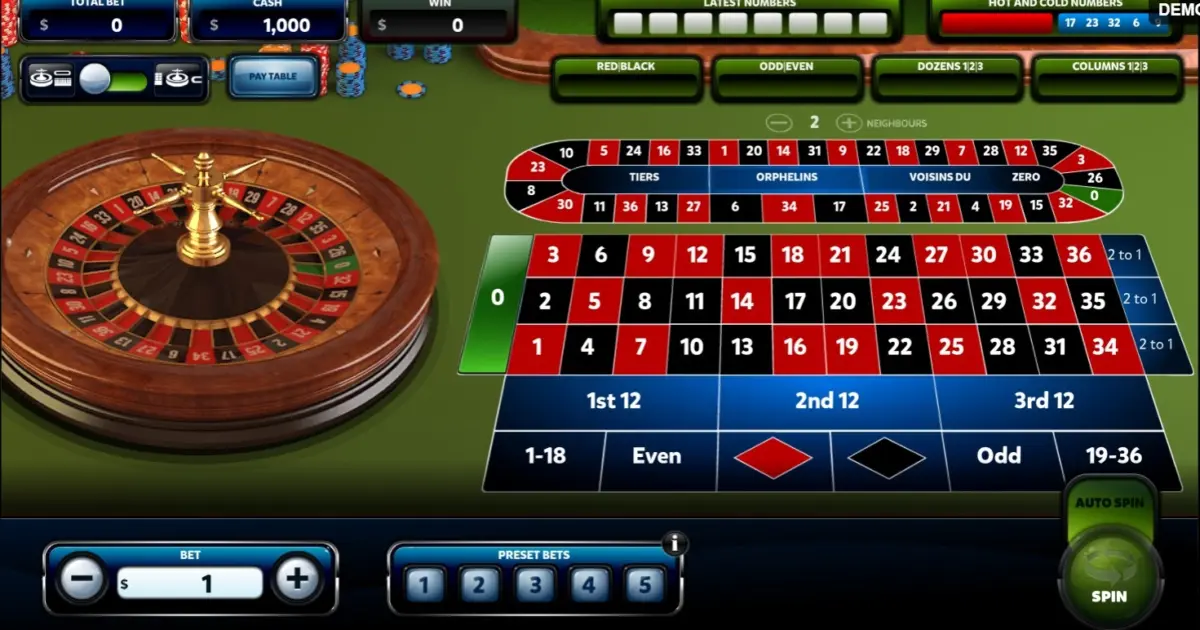
VIP Roulette (Red Rake) carries a published RTP of 97.3%, which is the same figure Red Rake Gaming lists for both its European and French tables. That number is consistent with a single-zero wheel, and it tells you the maths here is ordinary in the best sense: no exotic payout structure quietly taking a bigger cut. What FACTS does not tell you is the pocket count, the table limits, or whether any French rule applies, so check the game’s own rules screen before you stake real money.
VIP Roulette (Red Rake) and the Red Rake Gaming roulette range
Red Rake Gaming has four games in this collection, and three of them sit alongside this one as direct comparisons. European Roulette (Red Rake) is listed at the same 97.3% RTP, which makes it the closest like-for-like check if you want to see whether the VIP table differs in anything beyond presentation. French Roulette (Red Rake) also shows 97.3%, and it is worth opening because French tables conventionally apply La Partage or En Prison on even-money bets — a rule that halves the even-money house edge to roughly 1.35% where it exists. FACTS does not confirm whether that rule is present in Red Rake’s version, so read the paytable rather than assuming.
The outlier is American Roulette (Red Rake) at 97.74%, a higher published figure than the other three despite American wheels normally carrying the worse house edge. That is a reminder that a single published RTP percentage does not always map cleanly onto wheel type, and that the rules screen is the only reliable arbiter. The provider’s four games average 97.41% RTP.
The wheel, the pockets and the edge
Here is the honest position: FACTS gives you a 97.3% RTP figure for this table and nothing about its wheel layout. It does not state whether there are 37 or 38 pockets, whether a racetrack or call bets are available, or whether any side bet exists. The word VIP in a title usually signals higher table limits rather than a different wheel, but that is a convention, not a fact about this game.
Why the pocket count matters more than almost anything else: a single-zero wheel has 37 pockets and a 2.70% house edge on every standard bet. A double-zero wheel has 38 pockets and a 5.26% edge on standard bets, rising to 7.89% on the five-number basket bet. That is roughly double the cost per spin for an identical-looking game. The published 97.3% return here is consistent with single-zero maths, which is a useful signal, but the rules screen is where you confirm it.
The mechanism behind the edge is simple and worth internalising. On a 37-pocket wheel a straight-up number has true odds of 36:1 and pays 35:1. That one-pocket gap, applied across every bet type on the layout, is the entire house advantage. Nothing you do with bet placement removes it.
97.3% in practice
A 97.3% RTP means that over an extremely large number of spins the game is modelled to return 97.3 units for every 100 staked, with 2.7 retained. Two things about that figure are commonly misread. First, it is a long-run average across millions of spins, not a description of your session. Second, it is calculated on total turnover, not on your deposit — if you stake £1 a spin for 300 spins, your turnover is £300, and the modelled cost is around £8.10, regardless of how many times your balance cycled up and down along the way.
Against the wider set of tables on this site, which average 96.97%, this figure sits 0.33 percentage points higher. That is a real but modest advantage. It also matches the provider’s European and French tables exactly, so within the Red Rake range you are not paying a premium for the VIP framing in return figures.
What 97.3% cannot tell you is how a session will feel. Variance does that. Betting one number at a time and betting red produce identical expected costs over the long run but wildly different session shapes: long dry stretches punctuated by 35:1 hits in the first case, frequent near-even swings in the second.
Building a bet you understand
Payouts and true odds are fixed by the layout, not by the provider, so the table below holds for any 37-pocket single-zero wheel. Confirm the pocket count on this table before applying it.
| Bet | Numbers covered | Payout | True odds (37 pockets) | Win chance |
|---|---|---|---|---|
| Straight up | 1 | 35:1 | 36:1 | 2.70% |
| Split | 2 | 17:1 | 17.5:1 | 5.41% |
| Street | 3 | 11:1 | 11.33:1 | 8.11% |
| Corner | 4 | 8:1 | 8.25:1 | 10.81% |
| Line | 6 | 5:1 | 5.17:1 | 16.22% |
| Dozen / Column | 12 | 2:1 | 2.08:1 | 32.43% |
| Red / Black, Odd / Even, High / Low | 18 | 1:1 | 1.06:1 | 48.65% |
Read down the right-hand column and the trade-off is clear. Every row carries the same 2.70% expected cost on a single-zero wheel. What changes is how often you win and how large the win is. Choose the row that matches the session you want, not the row you believe is overdue.
Systems, streaks and independent spins
No betting system changes expected value. Not Martingale, not Fibonacci, not D’Alembert, not waiting for five reds before backing black. This is not a matter of opinion or of finding the right variation — it follows directly from the fact that each spin is independent. The wheel has no memory, and an RNG wheel has no physical bias to track.
What progressions actually do is reshape variance. Martingale converts a pattern of small frequent losses into rare large ones, which feels like winning right up until the sequence runs long enough to hit the table maximum or empty the balance. Doubling from £1 needs £1,024 on the eleventh step. Because FACTS does not list this table’s limits, you cannot even calculate how many steps you would get, which is itself a reason to check them.
Ignore any interface element or history strip showing recent results. No number, colour or sector is ever due, hot or cold. Past outcomes carry zero predictive information about the next spin, and treating them as signal only encourages larger stakes at exactly the wrong moment.
Free demo and staying in control
A free demo is available for this table, and it is genuinely useful for the mechanical things: learning where chips sit on the layout, seeing what bet types the interface actually offers, checking whether a racetrack or call-bet panel exists, and reading the paytable and rules screen at your own pace. Since FACTS leaves the pocket count and limits unstated, the demo is the fastest way to fill those gaps yourself. The game runs in-browser with no download.
What demo play cannot do is predict real-money outcomes. A good or bad run in free mode tells you nothing about the next session, because each spin is independent in both modes.
Roulette is 18+ entertainment, not a way to make income. Decide what you are willing to lose before you open the game, treat that figure as the cost of the entertainment, and stop when it is gone rather than reaching for a stake increase to recover it. If chasing losses starts to feel reasonable, close the table.
Who should play VIP Roulette (Red Rake)
This table suits you if you want a straightforward wheel with a published return of 97.3%, slightly above the 96.97% average across the tables reviewed here, and you are comfortable checking the rules screen yourself for the details FACTS does not cover. It also suits anyone comparing the four Red Rake tables, since three of them share the same headline figure.
Look elsewhere if you specifically want confirmed La Partage on even-money bets, because that rule cuts the even-money edge to about 1.35% and is the single best standard bet in roulette when present. Nothing here confirms it. And if you arrived looking for a system that beats the wheel, the useful answer is that none exists at any table, from any provider.
Frequently Asked Questions
Can I play VIP Roulette (Red Rake) free with no download?
Yes. A free demo is available for this table and runs directly in the browser with no download or registration needed. Demo mode is the practical way to check the bet types, layout and rules screen at your own pace. It cannot predict real-money results, since every spin is independent in both modes.
What is the VIP Roulette (Red Rake) RTP?
Red Rake Gaming publishes a 97.3% RTP for this table. That means the game is modelled to return 97.3 units per 100 staked over an extremely large number of spins, leaving a 2.7% cost on turnover. It sits 0.33 percentage points above the 96.97% average across tables reviewed on this site.
How many pockets does the wheel have and what is the house edge?
The available information does not confirm the pocket count for this table, so check its rules screen. The 97.3% published RTP is consistent with single-zero maths, where 37 pockets produce a 2.70% house edge on every standard bet. A 38-pocket double-zero wheel would instead carry 5.26%, roughly double the cost per spin.
Does the Martingale or any pattern work on this table?
No. Spins are independent and the wheel has no memory, so no progression changes expected value. Martingale simply trades frequent small losses for rare large ones and runs into the table maximum, doubling from £1 requires £1,024 by the eleventh step. Table limits are not listed here, so verify them in-game.
How does it compare to French Roulette (Red Rake)?
Both are published at 97.3% RTP, so the headline figures match. French tables conventionally apply La Partage or En Prison, halving the even-money house edge to around 1.35%, but that rule is not confirmed for Red Rake's version. If even-money betting is your main plan, read the French table's rules screen before choosing.




