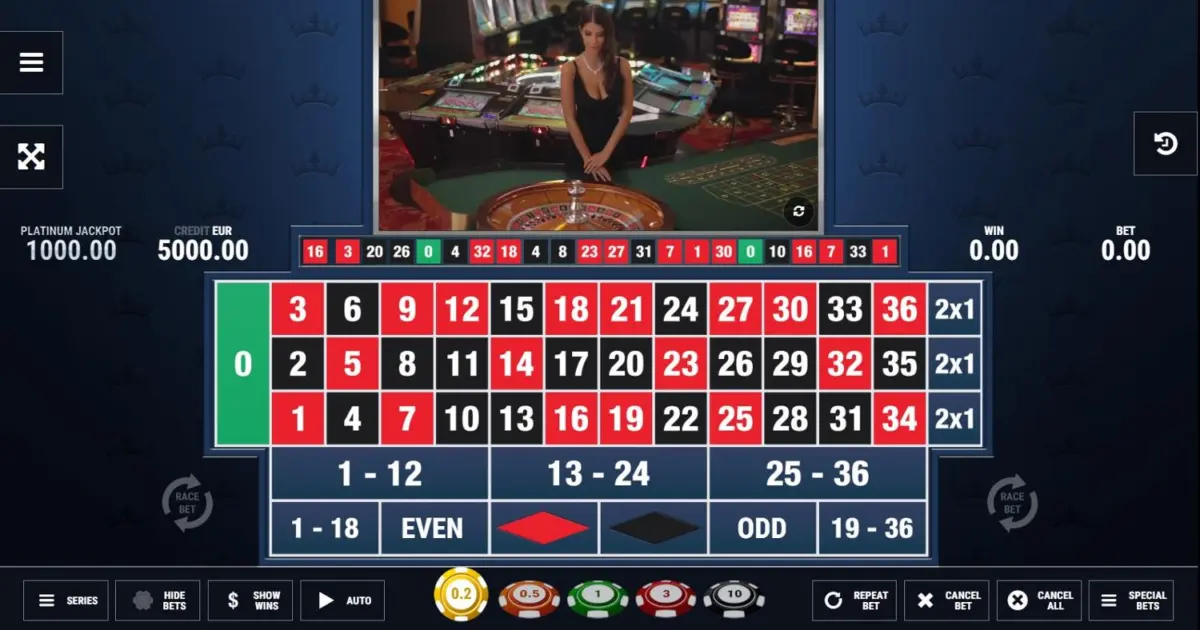
The published RTP on this table is 97.3%, and that single number tells you more than any amount of styling or table dressing. It sits marginally above the 96.97% average across the roulette tables in this collection, and it is close enough to the classic single-zero figure to be worth a look. A free demo is available, so you can read the rules screen and test the bet layout without risking anything.
V.I.P. Roulette (Fazi) at a glance
Fazi is the studio behind this table, and it is one of just three roulette titles listed from them here. All three carry the same 97.3% RTP figure, which suggests a shared maths model across the range rather than three separately tuned wheels. The table ranks 72nd in this collection and sits in the 68th percentile for popularity, so it gets steady traffic without being a headline draw.
What FACTS does not tell you matters just as much. There is no confirmed pocket count here, no confirmed statement on whether La Partage or En Prison applies to even-money bets when zero lands, no table limits, and no information on whether a racetrack or call bets are available. Those are not cosmetic details. La Partage alone roughly halves the house edge on red/black, odd/even and high/low, which is the difference between the best standard bet in roulette and an ordinary one. Table limits decide whether a stake plan survives a losing run at all. You will find all of it on the game’s own rules and paytable screens, and it takes less than a minute to check.
Which wheel is this, and what it costs you
The title gives no variant away. “V.I.P.” describes presentation, not layout, so it tells you nothing about the number of pockets. The 97.3% RTP figure is the useful clue: a standard single-zero wheel returns 97.30% on every regular bet, because 36 winning pockets out of 37 paying at 36-for-1 leaves a house edge of exactly 2.70%. That match is a strong hint, not a confirmed rule.
Here is why the distinction is worth caring about. A double-zero wheel has 38 pockets and a house edge of 5.26% on every standard bet, plus 7.89% on the five-number basket bet that only exists on that layout. That is nearly double the cost per spin for an identical-looking game. If French rules are in play on even-money bets, half your stake comes back when zero hits, and the even-money edge drops to about 1.35%.
So the range of possibilities on any unconfirmed roulette table runs from roughly 1.35% to 5.26% depending on layout and zero handling. The RTP figure here points at the middle of that band, but open the rules screen and count the pockets before you bet real money. It is the single most valuable thing you can do in this game.
What a 97.3% RTP means per spin
RTP is a long-run average, not a promise about your session. At 97.3%, the theoretical house edge is 2.7%: for every 100 units wagered across a very large number of spins, the model returns 97.3 and keeps 2.7. Wager 1 unit per spin for 100 spins and the expected cost is around 2.7 units, but the actual outcome will scatter widely around that figure in either direction.
The important part is that this figure applies per bet resolved, not per hour or per session. Betting five separate numbers each spin puts five units at risk, not one, so the expected cost rises in proportion to total turnover. Fast spinning multiplies exposure the same way. If you want to slow the maths down, bet less per spin or spin less often; nothing else in the interface changes the rate.
At 0.33 percentage points above the collection average, this table is a reasonable but unremarkable figure. Roulette (Fazi) and Lux Roulette both list the same 97.3%, so choosing between the three Fazi tables is a question of layout and presentation rather than return.
Inside versus outside bets
Switching between inside and outside bets changes how wildly your balance swings, not what it costs you. On a single-zero wheel every standard bet carries the same 2.70% edge, because every payout is short of true odds by the same single-pocket margin. Straight-up numbers pay 35:1 against true odds of 36:1; that one-pocket gap is the whole house edge, repeated in a different shape on every other bet.
| Bet | Pockets covered | Payout | True odds (37-pocket wheel) |
|---|---|---|---|
| Straight up | 1 | 35:1 | 36:1 |
| Split | 2 | 17:1 | 17.5:1 |
| Street | 3 | 11:1 | 11.33:1 |
| Corner | 4 | 8:1 | 8.25:1 |
| Line (six) | 6 | 5:1 | 5.17:1 |
| Dozen / column | 12 | 2:1 | 2.08:1 |
| Red / black, odd / even, high / low | 18 | 1:1 | 1.06:1 |
These figures assume 37 pockets. On a 38-pocket layout every true-odds column shifts against you while the payouts stay the same, which is exactly how the edge doubles. Confirm the pocket count and this table becomes the reference you need.
Why no betting system changes the maths
Every spin is independent. The wheel has no memory, and an RNG wheel has no physical bias to track, so the result of the previous spin carries zero information about the next one. No number, colour or sector is ever due. Recording past results changes nothing about the probability of what comes next.
That is why Martingale, Fibonacci, D’Alembert, Labouchere and “wait for five reds then bet black” all fail in the same way. Each one is a rule for resizing bets, and resizing bets cannot change the expected value of a bet whose edge is fixed. Add a 2.70% cost to every wager and the total cost scales with total turnover, whatever order the stakes come in.
What progressions genuinely do is reshape variance. Martingale converts a wide spread of small results into many tiny wins and rare catastrophic losses, and it collides with the table maximum precisely when you most need to double again. Seven straight losses on a doubling plan means the eighth bet is 128 times your starting stake. Flat betting is not a winning strategy either, but it is honest about what it is.
Playing the V.I.P. Roulette (Fazi) demo
The free demo is the right first stop, and the best use of it is not practice but inspection. Open the paytable and rules screen and answer three questions: how many zero pockets are on the wheel, does anything happen to even-money bets when zero lands, and what are the minimum and maximum stakes on each bet type. All three are unconfirmed here, and all three change what a session costs.
Demo results predict nothing about real-money play. A hot demo run is a short sample, not a signal. Use the demo to learn the layout and the bet placement, then decide separately whether to stake anything at all.
Roulette is entertainment, not income, and the maths guarantees a long-run cost to the player. Play only if you are 18 or over, set a budget in advance that you can lose without consequence, and stop when it is gone rather than chasing it. If play stops feeling optional, take a break and use the deposit limits and self-exclusion tools your operator provides.
Verdict
A 97.3% RTP is a fair figure and the free demo makes this an easy table to try. The gaps are the issue: no confirmed pocket count, no confirmed zero rule, no published limits. Check them in-game before staking. If you want a table whose layout is named up front, European Roulette (Red Tiger) lists the same 97.3% with the wheel family stated in the title, which removes the guesswork entirely.
Frequently Asked Questions
Can I play V.I.P. Roulette (Fazi) free with no download?
Yes, a free demo is available for this table and runs in the browser, so there is nothing to install. Use it to open the rules and paytable screens, since the pocket count, zero-handling rule and table limits are not published in the listing and all three affect what real-money play costs.
What is the V.I.P. Roulette (Fazi) RTP?
Fazi lists this table at 97.3%, which is 0.33 percentage points above the 96.97% average across the roulette tables in this collection. That implies a theoretical house edge of 2.7%, so roughly 2.7 units returns to the house per 100 units wagered over a very large number of spins.
Is this a European or American wheel?
FACTS does not confirm it, and the title does not say. The 97.3% RTP matches the exact figure a standard single-zero wheel produces, which is a strong hint but not proof. A double-zero layout carries 5.26% on standard bets instead of 2.70%, so count the pockets on the rules screen first.
Does the Martingale system work on this table?
No. Spins are independent and the wheel has no memory, so resizing bets after a loss cannot change a fixed house edge. Martingale trades many small wins for rare large losses and runs into the table maximum fast: seven consecutive losses on a doubling plan makes the eighth stake 128 times your first.
Which bet should I choose if I want longer sessions?
Even-money bets like red/black or odd/even cover 18 pockets and win close to half the time, so your balance moves in smaller steps than it does on straight-up numbers. The expected cost per unit staked is identical on a single-zero wheel, but the swings are far narrower.




