If you want a roulette table that looks and feels like a filmed studio session rather than a spreadsheet, real roulette with matthew delivers that, and its listed return figure of 97.3% sits slightly above the average for the games in our database. What the available data does not tell you is which wheel is under the ball, and on roulette that single detail matters more than anything else on the page. Read the section below on pockets before you decide.
Real Roulette with Matthew and the Real Dealer Studios roulette range
Real Dealer Studios builds pre-filmed dealer games: a real presenter shot in a studio, stitched to an RNG outcome, so you get the pacing and the human face of a live table without a live stream. Matthew is one host in a named series, and the studio has 30 titles in our database with an average listed return of 97.25%.
Within that range, the closest comparisons are easy to line up. Roulette with Rachael carries the same 97.3% listing if you want the identical maths with a different presenter, and Real Auto Roulette also lists 97.3% but strips out the host entirely, which suits players who want faster rounds. If you would rather see how the studio handles a non-roulette format, Fortune Finder with Holly sits lower at 96.6%.
Ranked 185th by popularity here, this table sits in the 17.5th percentile. That is a niche audience, not a broken game: filmed-dealer roulette appeals to a specific taste.
The wheel, the pockets and the edge
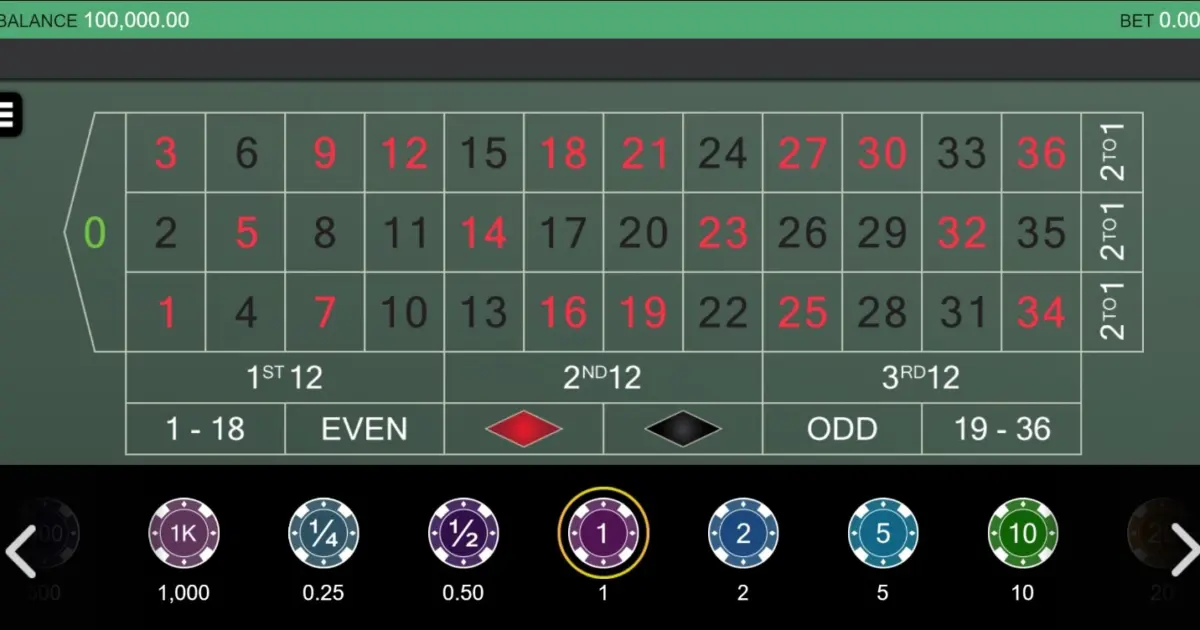
Here is the honest gap in what we can tell you. The data available for this table does not state the pocket count, whether the wheel is single-zero or double-zero, or whether La Partage or En Prison apply. Nothing in the title hints at a wheel family either. That absence is the most decision-relevant fact on this page, so treat the rules screen inside the game as required reading.
Why it matters is pure arithmetic. A single-zero European wheel has 37 pockets and a house edge of 2.70% on every standard bet. A double-zero American wheel has 38 pockets and an edge of 5.26% on every standard bet, plus 7.89% on the five-number basket bet. That is nearly double the cost per spin for an identical-looking layout. If French rules are in force, half your stake comes back on even-money bets when zero lands, dropping the even-money edge to roughly 1.35% — the best standard bet roulette offers anywhere.
So the same session, played the same way, can cost you 1.35% or 5.26% of turnover depending on details you cannot read from the game’s name. Open the rules panel, count the zeros on the wheel graphic, and check whether the even-money bets mention a half-stake return on zero.
97.3% in practice
A 97.3% return means the game is modelled to pay back 97.3 units for every 100 staked over an enormous number of spins, keeping 2.7. That is 0.33 percentage points above the 96.97% average across the games in our database, and marginally above the 97.25% Real Dealer Studios average.
Two things about that number. First, it is a long-run figure, not a session promise. Across a few hundred spins your actual result will land anywhere in a wide band, and on inside bets that band is very wide indeed. Second, 97.3% corresponds to a 2.7% deduction, which is the signature of a single-zero wheel on standard bets. That is a strong arithmetic hint, but it is not a confirmed statement about this table’s pockets or rules — the listed RTP could reflect a specific bet type or configuration. Verify it in the game.
Practically, treat 2.7% as the running cost of the entertainment. Stake 1 unit per spin at 40 spins an hour and the modelled cost is a little over 1 unit an hour. Raise your stake and that scales directly.
Building a bet you understand
Inside and outside bets do not change what a spin costs you on a single-zero wheel; they change the shape of the ride. A straight-up number pays 35:1 against true odds of 36:1, and that one-pocket gap is the entire edge. Every other standard bet is built from the same gap.
| Bet | Pockets covered | Payout | True odds (37-pocket wheel) |
|---|---|---|---|
| Straight up | 1 | 35:1 | 36:1 |
| Split | 2 | 17:1 | 17.5:1 |
| Street | 3 | 11:1 | 11.33:1 |
| Corner | 4 | 8:1 | 8.25:1 |
| Line | 6 | 5:1 | 5.17:1 |
| Dozen or column | 12 | 2:1 | 2.08:1 |
| Red/black, odd/even, high/low | 18 | 1:1 | 1.06:1 |
Read that table as a variance menu. Even-money bets win close to half the time and produce long, flat sessions. Straight-up bets lose most spins and occasionally return 36 units at once. Neither is smarter; they suit different tolerances. Whether call bets, a racetrack or neighbour betting exist on this table is not something the available data covers, so check the interface.
Systems, streaks and independent spins
No betting system changes expected value. Not Martingale, not Fibonacci, not D’Alembert, not waiting for five reds. This is not caution or hedging — it is a consequence of how the game works.
Each spin is independent. The wheel has no memory, and on an RNG-resolved outcome there is no physical bias to find either. Past results carry no information about the next spin, which means no number, colour or sector is ever due, warm or cold. A history display is decoration.
What progressions actually do is move your risk around. Martingale converts many small wins into one rare, very large loss, and it runs into the table maximum or your balance exactly when you most need another double. The average outcome per unit staked is unchanged; you have only made the distribution lumpier. If you enjoy the structure of a progression as a way to pace your betting, that is fine — just do not mistake it for an edge, and set the loss limit before you start rather than in the middle of a losing run.
Free demo and staying in control
Real Roulette with Matthew free demo play is available here, and for this table it is genuinely useful. Use it to check the things the data does not tell you: count the zeros, read the rules panel for La Partage or En Prison, look at the minimum and maximum stakes, and see how the filmed dealer sequences affect round length. That is reconnaissance, not practice — demo results tell you nothing about how a real-money session will go, because both are just samples from the same distribution.
Roulette is 18+ entertainment, not income. Decide what you are prepared to lose before you open the game, treat that amount as the price of the evening, and stop when it is gone rather than raising stakes to chase it back. If the session stops being fun, close it.
Who should play Real Roulette with Matthew
This table suits players who want the atmosphere of a dealer-led game without a live stream, and who are comfortable playing standard roulette bets at a listed 97.3% return. The cinematic presentation is the differentiator, so if a filmed host adds to your enjoyment, that is the reason to pick it over a plain RNG wheel.
It suits you less if you want speed. Filmed sequences take time, and if you would rather fit more spins into the same session, the auto version of the studio’s roulette is the better fit. It also suits you less if you need confirmed wheel details up front, because you will have to open the game to get them.
Come for the presentation, take the 2.7% figure as the running cost, verify the wheel before you stake, and ignore anything that promises a pattern.
Frequently Asked Questions
Can I play Real Roulette with Matthew for free?
Yes, a free demo is available on this page with no download required. It runs the same game logic as the real-money version, so it is the best way to check the wheel type, the rules panel and the stake limits before you commit money. Demo results do not predict real-money outcomes.
What is the RTP of Real Roulette with Matthew?
The listed figure is 97.3%, meaning the game is modelled to return 97.3 units per 100 staked over a very large number of spins. That is 0.33 points above the 96.97% average across our database and just above the 97.25% Real Dealer Studios average. It is a long-run model, not a session forecast.
Is this a European or American wheel?
The data available here does not state the pocket count or whether French rules apply, so check the game's own rules screen. It matters: a 37-pocket single-zero wheel costs 2.70% per standard bet, a 38-pocket double-zero wheel costs 5.26%, and La Partage cuts even-money bets to about 1.35%.
Does the Martingale system work on this table?
No. No progression changes expected value, because every spin is independent and the wheel has no memory. Martingale trades frequent small wins for one rare large loss and collides with table limits or your balance during a losing run. It reshapes variance, nothing more, and no number or colour is ever due.
Who makes Real Roulette with Matthew, and how does it compare to Roulette with Rachael?
Real Dealer Studios, which specialises in pre-filmed dealer games and has 30 titles in our database. Roulette with Rachael carries the same 97.3% listing, so the difference is presentation and host rather than maths. Choose on which studio sequence you prefer watching over a long session.




