Fu 88 is worth a look if you want a bingo room with a published return rather than a blank paytable line. Neko Games states 95.1% for this game, which sits marginally above the 94.41% average across the titles catalogued here and almost exactly on the studio’s own 95.22% average. There is a free demo, so the cost of finding out whether the pace and presentation suit you is nothing.
What follows sticks to what Neko Games actually publishes about this room, plus the maths that applies to every online bingo draw. Where a detail is not published, it is flagged as unpublished rather than guessed at.
Fu 88 and the Neko Games room range
Neko Games has twelve games in this catalogue, and their returns cluster tightly. The studio average is 95.22%, and Fu 88 lands at 95.1% — inside a rounding error of the house style rather than an outlier in either direction. That consistency is worth something when you are choosing between rooms from the same developer: you are not hunting for the one generous title in a spread of mean ones.
If you want a direct comparison, Catrina carries the identical 95.1% figure, so the choice between the two comes down to presentation and pace rather than published value. Amazing Pharaoh sits a shade lower at 95.0%, a difference small enough that it should not drive your decision on its own. Bingote has no published return in this catalogue at all, which is a genuine point in Fu 88’s favour — a stated percentage lets you make a comparison, an absent one leaves you working blind.
Fu 88 currently ranks 34th here and sits in the 79.6th percentile for popularity, so it is well-played without being one of the handful of rooms everyone defaults to.
| Provider | Neko Games |
|---|---|
| RTP | 95.1% |
| Free demo | Yes |
| Site-wide average RTP | 94.41% |
The 95.1% figure and what a shared draw means for it
A bingo return is not the same animal as a slot RTP, and reading it as one will mislead you. In a slot, the percentage falls out of symbol weighting on reels spun for you alone. In bingo, the figure describes how much of the money taken in ticket sales comes back out as prizes across the room. The remaining share is what the operator keeps.
So 95.1% means that, over a very large number of ticket sales, roughly 95.1p of every pound staked is returned as prizes to the room collectively — not to you individually, and not on any given round. Your personal result is far more lumpy than that: in most rounds you win nothing and someone else takes the prize, and occasionally the reverse happens. The percentage is a long-run property of the prize pool, not a forecast for your session.
The practical use of the number is comparison. Against the 94.41% catalogue average, Fu 88 keeps about 0.69 percentage points more of your stake in the prize pool. That is a real edge over a long horizon and an invisible one over an evening.
Neko Games does not publish a ticket price, a card limit, or a prize-tier breakdown for this room in the data available here. Check the room’s own rules and paytable page before you buy in, because those details shape what a win is actually worth to you.
How a round actually resolves
Online bingo works on a shared draw. Numbers are called at random and every ticket in the room is marked against the same sequence — there is no personal spin, no individual RNG event happening just for your card. Whoever holds the ticket that completes the winning pattern first on that sequence takes the prize.
Because the calls are shared and modern rooms auto-daub your tickets, there is essentially no skill involved. You are not marking faster than anyone else and you cannot miss a number. Every decision that affects your result is made before the first ball is called: which tickets you hold and how many. After that, the draw does the rest.
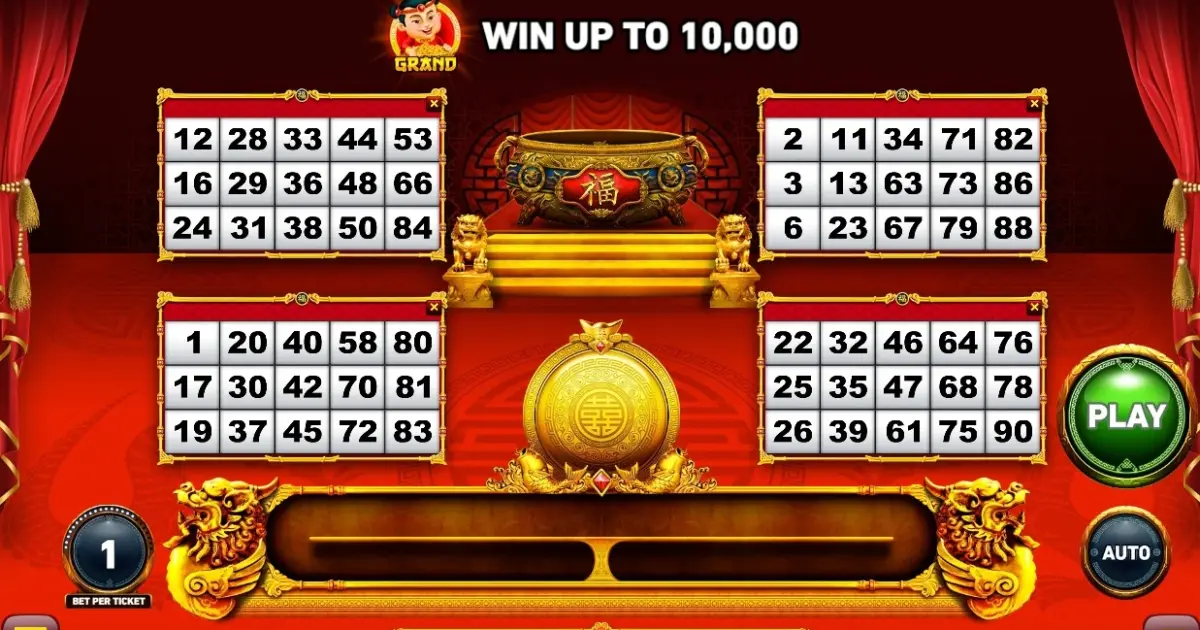
Neko Games has not published the ball range, prize-tier structure, or call speed for Fu 88 in this dataset, so this review will not guess at whether it runs as a 90-ball game with line and full-house tiers, a 75-ball pattern game, or a compressed speed format. Those three resolve quite differently — 90-ball spreads the pool across three tiers within one game, 75-ball pays on patterns across a 5×5 grid, and speed variants collapse to a single full-house win on a smaller card. The free demo answers this in about thirty seconds of watching, which is a better source than an assumption.
What makes one bingo room better value than another
Four things, roughly in order of how much they matter.
- The published return — Fu 88’s 95.1% tells you the share of stakes flowing back as prizes. A room with no published figure tells you nothing at all.
- Ticket price relative to the prize pool. A cheap ticket in a thinly attended room and an expensive one in a busy room can produce very different expected outcomes, and neither is visible from the return percentage alone.
- How many tiers the prize pool splits into. More tiers mean more frequent, smaller wins from the same pool; fewer tiers concentrate it.
- Room size. More players means bigger pools and longer odds of being the one who wins. Neither is strictly better — it changes the shape of your results, not the house edge.
One thing that does not improve value: buying more cards. Extra tickets cover more of the possible outcomes, so your chance of being the winner this round genuinely goes up. But each additional ticket faces the same 95.1% return, so your expected value per pound staked is unchanged. You have bought more exposure to the same edge, not a better rate on it.
Variance in bingo versus other casino games
Bingo variance has a distinctive shape. In a slot, small wins land often enough to stretch a balance out, and the distribution is smooth-ish. In bingo, most rounds return you exactly nothing — the prize goes to one ticket, or a handful, out of everyone in the room. Then a win arrives and it is a multiple of your ticket cost, not a fraction of it.
That makes bankroll behaviour spikier than the 95.1% figure suggests. A long stretch of nothing is the normal case, not a sign that anything is off with the room. No number, card, or room is ever “due” — each draw is independent of every draw before it, and past results carry no information about the next sequence of calls.
The free demo is a reasonable way to get a feel for that rhythm without money on it. Just be clear about the limit: demo play uses the same mechanics, but a demo session tells you nothing about what your real-money results will be. It shows you the format and the pace, not your future.
Playing responsibly
Fu 88 is an 18+ product. Decide what the session is worth to you before you buy your first ticket, and treat that number as the cost of the entertainment rather than a float you expect to grow. With 95.1% returned to the prize pool across the room, the maths does not run in your favour over time, and no amount of ticket volume changes that. If you find yourself buying in to recover earlier losses, that is the moment to close the tab. Deposit limits, session reminders, and self-exclusion tools exist at every licensed operator, and using them early is easier than using them late.
Verdict on Fu 88
Fu 88 does the two things that matter most for a bingo room: it publishes a return, and that return is a fraction above the catalogue average at 95.1%. Against Neko Games’ own 95.22% studio average it is unremarkable, but unremarkable within a consistent range is a decent place to be. Ranked 34th and in the 79.6th percentile for popularity, it has enough traffic behind it to suggest the rooms fill.
The gaps are real. Ticket price, prize tiers, ball format, and call speed are all unpublished in the data available here, and those details determine what a win is worth and how often one lands. Open the free demo, watch a round or two resolve, then read the room’s own paytable page before you commit money. If it turns out you prefer the presentation elsewhere, Catrina offers the same 95.1% return for the comparison.
Frequently Asked Questions
Can you play Fu 88 for free?
Yes, a free demo of Fu 88 is available, so you can watch how the room fills and how a round resolves before spending anything. The demo runs the same mechanics as the paid version, but a demo session does not predict your real-money results — treat it as a look at format and pace only.
What does the 95.1% RTP on Fu 88 actually mean?
It means roughly 95.1% of the money taken in ticket sales is returned to the room as prizes over a very large sample. In bingo that figure describes the prize-pool structure, not a per-spin return, and the prizes go to whichever tickets win — not evenly to every player.
Does choosing your cards improve your chances in Fu 88?
No. Numbers are called at random and every ticket in the room is marked against the same sequence, so with auto-daub there is no skill element. Which ticket completes the pattern first is decided by the numbers each ticket happens to hold, all fixed before the first call.
Who makes Fu 88 and are their other rooms similar?
Neko Games, which has twelve titles in this catalogue averaging 95.22% return. Fu 88's 95.1% sits right on that house average, so the studio's rooms are consistent rather than varied. Catrina matches Fu 88 exactly at 95.1%, while Amazing Pharaoh sits fractionally lower at 95.0%.
Does buying more cards in Fu 88 give you better value?
It improves your chance of being the player who wins a given round, because more tickets cover more possible outcomes. It does not improve value per pound — every ticket faces the same 95.1% return, so extra cards mean more exposure to the same house edge, not a better rate on your stake.