Disco Nights bingo is worth a look if you want a Red Rake Gaming room you can try without paying anything, since a free demo is available. The decision point is the return figure: at 93.97% it sits below Red Rake’s own six-game average of 95.3% and a little under the wider bingo field average of 94.41%. It is also one of the more played rooms in this collection, sitting in the 92.6th popularity percentile, so plenty of people are clearly happy with it despite the numbers.
How Disco Nights plays
Online bingo works differently from a slot or a card game, and that difference matters before you buy a single ticket. Numbers are called at random and every ticket in the room is marked against the same sequence of calls. You are not spinning a private reel; you are holding a set of numbers in a shared draw. Whoever holds the ticket that completes the required line or pattern first takes the prize, and that is decided by which numbers landed on which ticket before any calling began.
In practice, standard online bingo auto-daubs for you. Numbers are marked off as they are called, so there is no missing a number and no advantage in being quick with the mouse. Your involvement ends when you have chosen how many tickets to hold and confirmed the buy-in.
FACTS for this room does not include a ticket price, a card count, a call speed or a jackpot structure, so this review will not guess at them. Those numbers are set in the room’s own paytable and rules page, and they are the single biggest thing to check before you commit real money, because ticket price and prize tiers together decide what a round actually costs you and what it can pay.
| Provider | Red Rake Gaming |
|---|---|
| RTP | 93.97% |
| Free demo | Yes |
| Site-wide average RTP | 94.41% |
Red Rake Gaming and this room
Red Rake Gaming has six bingo titles in this collection, which makes it a modest but not tiny presence. The studio average across those six is 95.3% RTP, and Disco Nights at 93.97% is the weaker end of that spread rather than a representative sample of what Red Rake publishes.
If the return figure is what you care about most, the same studio gives you better options. Muertitos publishes 95.93%, the highest of the Red Rake bingo set, and Mega Money! follows at 95.88%. The Gold of Poseidon sits at 95.69%. All three return roughly two percentage points more of staked money as prizes than Disco Nights does, and all three come from the same studio, so you are not trading away familiarity to get there.
None of that makes Disco Nights a bad room. Popularity data puts it well ahead of most of the field, which suggests the theme and the round structure land well with players. It does mean that if you are picking purely on published numbers, it is not the Red Rake room to pick.
Reading the 93.97% figure
A bingo RTP is not the same animal as a slot RTP, and reading it that way will mislead you. A slot’s return comes from symbol weighting inside the reels: the maths is baked into the game itself. In bingo, the return comes from how the operator structures the prize pool against ticket sales. The 93.97% figure means that, across a very large number of rounds, roughly 93.97% of the money staked on tickets is expected to come back to players as prizes. The remaining share is the operator’s margin.
Two consequences follow. First, the figure is a long-run average across the whole player base, not a promise about your session or your ticket. A single round pays one winner or a handful of winners; most tickets in any given game return nothing. Second, because the prize pool depends on how many tickets sell, the payout on any individual round can look very different from the headline percentage.
Compared against the bingo rooms on this site, 93.97% is 0.44 points below the 94.41% average. That is not a dramatic gap, but it is a gap in the wrong direction, and it compounds the longer you play.
90-ball, 75-ball or speed: what the format changes
The format shapes how a session feels more than anything else, so it is worth knowing which one you are buying into. FACTS for Disco Nights does not specify a ball count, and the name does not tell you either, so treat the format as unconfirmed until you read the room rules.
Here is what each option would mean. A 90-ball game runs three prize tiers inside one round: one line, two lines, then full house, so a single ticket has three shots at something. A 75-ball game is pattern-based on a 5×5 grid, where you are chasing a specific shape rather than lines, and these formats often let you pick your own cards. Speed and 30-ball variants shrink the card and pay a single full house, which makes rounds fast and outcomes blunt.
None of these formats changes the underlying return. The 93.97% figure applies regardless of how the prizes are split up. What changes is the rhythm: three-tier games spread small wins across more players, single-prize formats concentrate the money into fewer, larger payouts.
Does skill matter here? An honest answer
No. In standard auto-daub online bingo, your skill contribution is essentially zero. The numbers are called at random, every ticket in the room is marked against that same sequence, and the software does the marking for you. There is no decision to make once the round starts and no way to play a ticket better or worse than the next person holding it.
The one lever you have is how many tickets you hold, and it is worth being precise about what that lever does. Holding more tickets covers more of the possible number combinations, so it genuinely raises your chance of being the player who completes the pattern first in a given round. It does not improve your expected value per pound. Each additional ticket is exposed to the same 93.97% return, so more tickets means more money running through the same margin, faster. More chance to win this round, not better value per pound.
Nor is any number, room or draw ever “due”. Each call is independent of everything that came before it.
Free play before real money
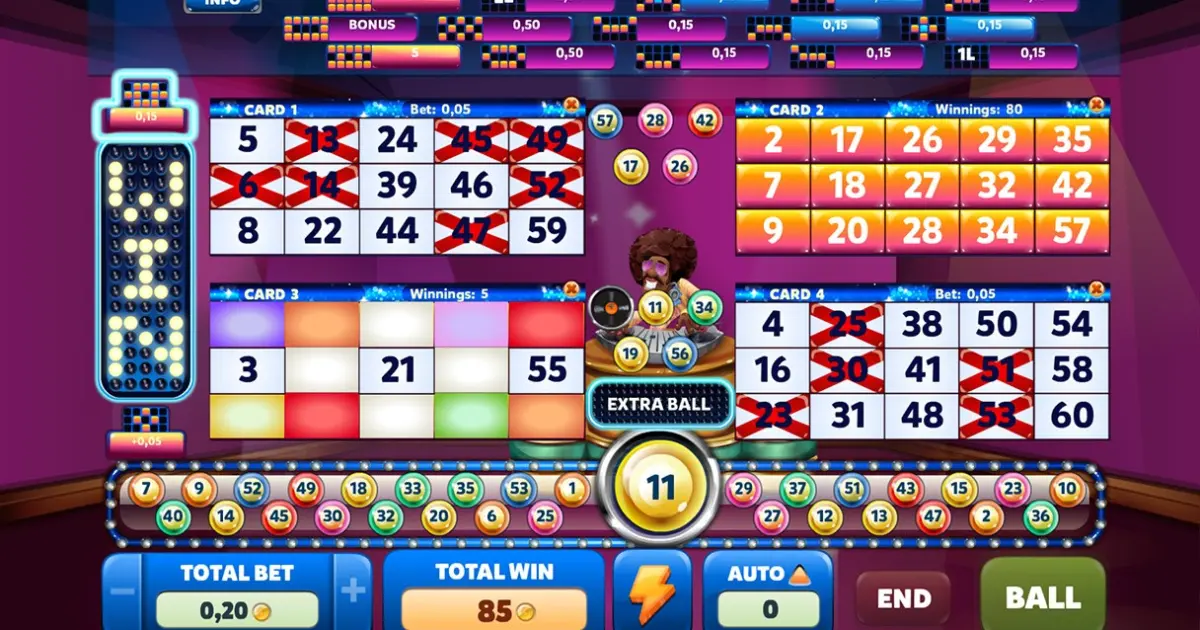
A free demo is available for this room, and using it costs you nothing. The demo is the cheapest way to find out what this review cannot tell you: the ticket price, how many cards you can hold, the prize tiers and the call speed. Read the paytable while you are in there.
What the demo cannot do is predict real-money results. Demo rounds run on the same random calling, but no sequence of free rounds tells you anything about what a paid session will do. Treat it as a tour of the interface, not a preview of outcomes.
Bingo is for players aged 18 and over. Set a budget before you buy in, and treat it as money spent on entertainment rather than money you expect back. If the number you set stops feeling like a number you are comfortable losing, stop for the day.
Final take on Disco Nights
Disco Nights is a widely played Red Rake Gaming bingo room with a confirmed free demo and a published return of 93.97%. That return is the honest sticking point: it is below the studio’s 95.3% average and below the 94.41% average across the bingo rooms here, so on numbers alone there are better places to spend the same ticket money, including three from Red Rake itself.
The case for playing it anyway is preference. The 92.6th popularity percentile says the room clearly works for a lot of people, and a couple of percentage points of RTP will not be visible in a short session. If you like the theme, the demo lets you check the ticket price, card count and prize structure before any money moves, and that check is the most useful thing you can do here.
Frequently Asked Questions
Can you play Disco Nights bingo for free?
Yes, a free demo is available for this room, so you can see the interface, ticket layout and prize structure without spending anything. Use it to check the details this review cannot confirm, including ticket price and call speed. Demo rounds do not predict real-money results, but they do tell you whether you like the room.
What is the Disco Nights rtp and what does it mean in bingo?
The published figure is 93.97%. In bingo that means roughly 93.97% of all money staked on tickets is expected to return to players as prizes over a very large number of rounds, because the return comes from prize-pool structure rather than reel weighting. It is a long-run average, not a per-round expectation.
Does choosing cards or playing well improve your odds?
No. Standard online bingo auto-daubs your tickets against a random call sequence shared by every player in the room, so there is no decision to make once a round begins. The outcome depends entirely on which numbers happen to sit on which ticket, and those were fixed before calling started.
Who makes Disco Nights bingo?
Red Rake Gaming, which has six bingo titles in this collection with an average return of 95.3%. Disco Nights at 93.97% sits at the lower end of that range. Popularity data places the room in the 92.6th percentile, so it is one of the better-played Red Rake bingo rooms despite the softer figure.
How does it compare to Muertitos?
Muertitos, also from Red Rake Gaming, publishes 95.93% against Disco Nights at 93.97%, so it returns close to two percentage points more of staked money as prizes. If the published return is your deciding factor, Muertitos is the stronger pick of the two. Disco Nights wins on popularity, sitting in the 92.6th percentile.