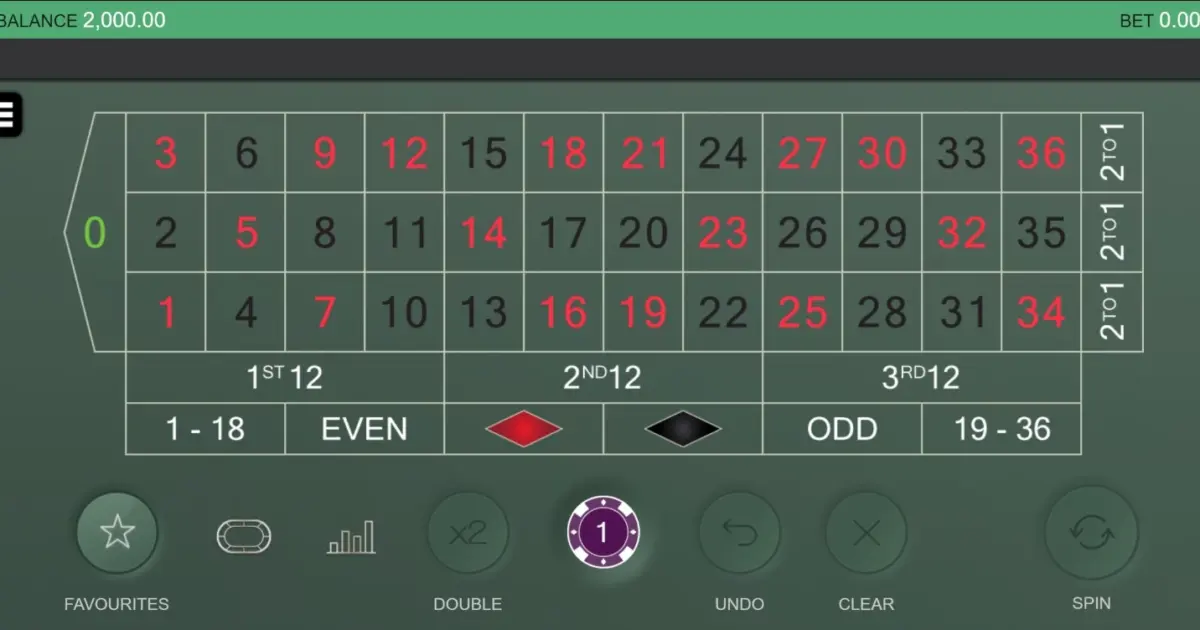
Real Spooky Roulette sits at 97.3% RTP, which places it just above the Real Dealer Studios average of 97.25% and above the corpus average of 96.97%. That figure corresponds to the standard house edge on a single-zero wheel, meaning this table likely carries a 2.70% edge on every bet. The catch is that the game’s listing does not confirm the pocket count, and you should verify it on the rules screen before playing for real money.
Real Spooky Roulette at a glance
Real Dealer Studios built this table around a Halloween theme layered onto a conventional roulette layout. The studio operates roughly 30 roulettes and live-casino hybrids, and Real Spooky Roulette ranks at the 17th popularity percentile, so it is a mid-tier title in their catalogue rather than a flagship release.
The RTP of 97.3% is the single most important number here. It is identical to what you will find on Real Auto Roulette and Roulette with Rachael, two other Real Dealer Studios roulettes that share the same mathematical foundation. The theme does not appear to alter the maths in any detectable way from the data available on this listing. No multiplier layer, no side-bet modification, and no French-rules return is documented. You are almost certainly looking at a standard single-zero game wearing a costume.
Which wheel is this, and what it costs you
The FACTS block for this table carries no variant_hints field, which means the wheel layout is not confirmed in the source data. You should treat the following as an inference rather than a stated fact.
A 97.3% RTP matches a house edge of 2.70%, which is the exact figure for a standard single-zero European wheel on all common bets. A double-zero American wheel produces 94.74% RTP, so the gap between 94.74 and 97.3 rules that layout out for the main bets. If the five-number basket (0-00-1-2-3) exists on an American wheel, it pushes the edge to 7.89%, which would pull a blended RTP further down. None of that is consistent with 97.3%.
However, multiplier variants and bonus-round games sometimes advertise a “top-line” RTP that blends base-payout reductions against multiplier upside. Without a published paytable or rules screenshot, you cannot exclude that possibility. Open the game, go to the information or rules screen, and look for two things: the total number of pockets on the wheel, and whether the straight-up payout is 35:1 or something lower. Those two answers tell you whether the wheel is what the RTP implies.
Also check whether La Partage or En Prison applies. If it does, the even-money house edge drops to 1.35%, making those bets the best available anywhere in roulette. If it does not, even-money bets carry the same 2.70% edge as every other standard bet. Confirming this single detail before you play changes which bets you should be placing.
What a 97.3% RTP means per spin
RTP is a long-run statistical average calculated over millions of spins. It is not a guarantee of any individual session. On a single spin, you either win or you lose. Over ten thousand spins at a steady stake, your cumulative loss should trend toward 2.70% of total amount wagered, assuming the wheel is confirmed single-zero and the maths is standard.
Concretely: if you wager $1 per spin on red for 10,000 spins, you are staking $10,000 total. The expected return is $9,730, meaning an expected loss of $270. Your actual result will scatter widely around that figure because the variance of even-money bets on a 37-pocket wheel is substantial even over four digits of spins. A session of 200 spins tells you almost nothing about whether the underlying maths matches the published RTP.
The 0.33 percentage-point advantage over the corpus average of 96.97% translates to $33 extra return per $10,000 staked over the very long run. That is a real difference, but it is small compared to the variance noise in any single sitting. Do not select games by RTP alone when the spread across available titles is fractions of a percent.
Inside versus outside bets
The payout/true-odds gap is the house edge made visible. On a confirmed single-zero wheel with 37 pockets, here is how the common bets compare:
| Bet type | Payout | Winning pockets (of 37) | True odds against |
|---|---|---|---|
| Straight-up (one number) | 35:1 | 1 | 36:1 |
| Split (two numbers) | 17:1 | 2 | 17.5:1 |
| Street (three numbers) | 11:1 | 3 | 11.33:1 |
| Corner (four numbers) | 8:1 | 4 | 8.25:1 |
| Dozen or Column | 2:1 | 12 | 2.083:1 |
| Even-money (red, black, odd, even, high, low) | 1:1 | 18 | 1.056:1 |
The pattern is identical across every row: the payout is always one pocket short of the true odds, and that one pocket is zero. Inside bets give you high variance and large single-hit payouts; outside bets give you lower variance and smaller per-spin swings. The expected loss per dollar wagered is the same 2.70% regardless of which row you choose, assuming no La Partage applies.
Why no betting system changes the maths
Each spin on an RNG wheel is independent. The generator does not store your previous results, does not rebalance reds against blacks, and does not owe you a zero after a streak of non-zeros. Every bet on every spin carries the identical 2.70% edge (or whatever the confirmed figure turns out to be).
Martingale, Fibonacci, D’Alembert, Labouchere, and colour-streak tracking all share one property: they redistribute the timing of wins and losses without altering the expected value. Martingale doubles your exposure after each loss, which means you will eventually hit either a table limit or your own bankroll cap before a recovery spin arrives. The wheel does not know your sequence. No progression converts a negative-EV bet into a positive-EV bet. This is not a matter of opinion or style. It is arithmetic.
Playing the Real Spooky Roulette free demo
A free demo is available for this title, so you can learn the layout, test the rules screen, and confirm the pocket count without staking anything. Use the demo for exactly one purpose: verification. Check the wheel for single-zero versus double-zero, read the paytable for straight-up payouts, and look for La Partage or En Prison text. None of that information transfers into prediction for real-money spins, because the demo and the real-money game are the same RNG running at the same maths. You are confirming facts, not finding edges.
Play is intended for entertainment only. If you transition to real money, set a budget before you begin and treat the entire amount as spent the moment you start. You must be 18 or over to gamble in your jurisdiction. Chasing losses to recover a session deficit is the most common path to harm, and it never works as a strategy because no strategy changes the house edge.
Verdict
Real Spooky Roulette is a standard-odds roulette table in a seasonal wrapper. If the 97.3% RTP reflects a confirmed single-zero wheel with no multiplier or bonus modifications, you are getting exactly the same maths as every other European-format game on this site, including Roulette with Rachael, which also pays 97.3%. The theme may suit your mood, but it does not alter the cost of play.
The honest summary: there is no mathematical reason to prefer or avoid this specific table over any other confirmed single-zero game with the same RTP. Confirm the wheel type in-game, check for La Partage, and if both look standard, choose by aesthetics and go no further than the free demo if you have not set a real-money budget in advance.
Frequently Asked Questions
Is Real Spooky Roulette free to play?
Yes, a free demo is available. You can open the game without depositing money to explore the layout, read the rules screen, and confirm the wheel structure. The demo runs on the same RNG maths as real money, so it is useful for verification but tells you nothing predictive about future results.
What is the RTP of Real Spooky Roulette?
The published RTP is 97.3%, which corresponds to a 2.70% house edge. That figure matches the standard return on a single-zero European roulette wheel across all common bets. The game sits slightly above the Real Dealer Studios average of 97.25% and above the corpus average of 96.97% for roulettes on this platform.
Which wheel does Real Spooky Roulette use, and what is the house edge?
The listing does not carry a confirmed variant_hints field, so the exact pocket count is not stated in the available data. However, 97.3% RTP is consistent only with a single-zero (37-pocket) wheel at a 2.70% edge, because a double-zero American wheel produces 94.74% RTP. Check the in-game rules screen to confirm before staking real money.
Can I use the Martingale system to beat Real Spooky Roulette?
No. Every spin on an RNG roulette wheel is independent, and the house edge of approximately 2.70% applies to each individual bet regardless of what you wagered on the previous spin. Martingale doubles your exposure after each loss without changing expected value, and it will eventually hit either a table limit or your bankroll ceiling. The arithmetic is identical for all progressive systems.
How does Real Spooky Roulette compare to other Real Dealer Studios roulettes?
Real Spooky Roulette pays 97.3% RTP, identical to Real Auto Roulette and Roulette with Rachael, which are both Real Dealer Studios titles at the same return figure. The maths appears to be the same across all three. Your choice between them comes down to theme preference and dealer style rather than any measurable difference in expected loss.




