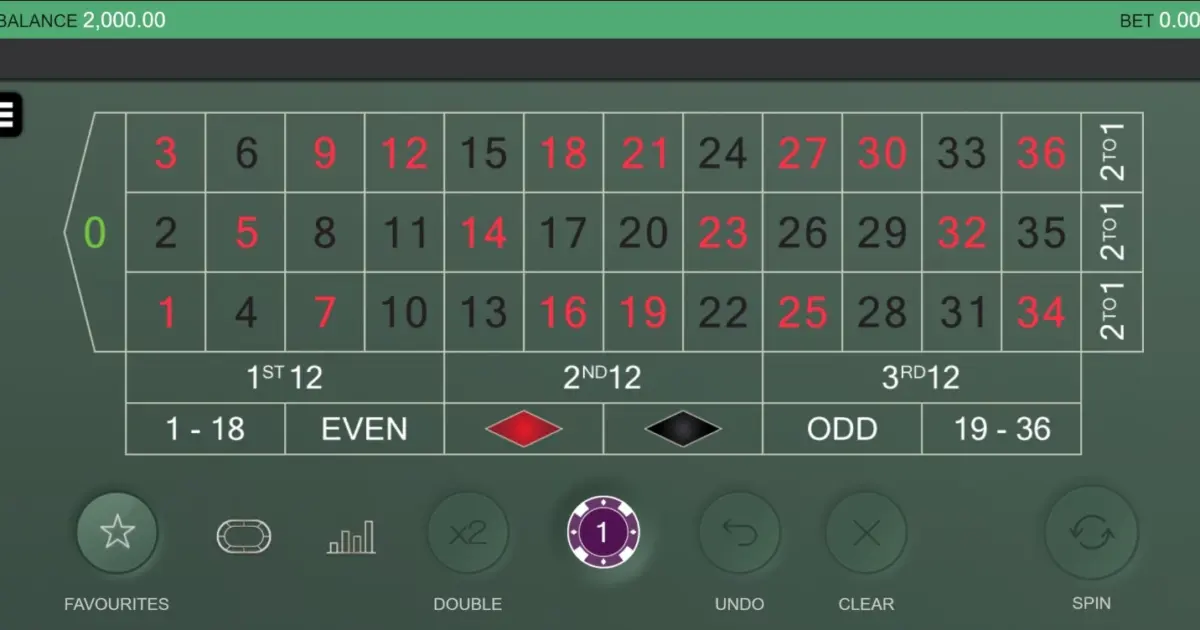
If you want a dealer-led roulette table you can try without spending anything, real roulette with rishi is a reasonable place to start: the free demo is available, and the published return to player is 97.3%. What the available information does not tell you is the pocket count, whether French rules apply, or what the table limits are.
Those three gaps matter more than any presentation detail, because on a roulette wheel the pocket count sets the entire cost of playing. Read the rules screen inside the game before you stake anything real, and use the demo to do it.
How Real Roulette With Rishi plays
This is a Real Dealer Studios release in the Roulette subcategory, with a named dealer in the title. Real Dealer’s format is pre-filmed cinematic footage driven by a random number generator, rather than a live stream, so what you see is a real person and a real wheel on video while the outcome itself is generated by RNG. That distinction matters for one reason above all: an RNG result is independent on every spin, and no sequence of previous outcomes carries information about the next one.
Beyond that, the specifics are not in the information available here. There is no confirmed detail on the bet types offered, whether a racetrack or call bets are included, what the minimum and maximum stakes are, or whether any side bets or multipliers sit on top of the base game. Do not assume a racetrack is present just because the table looks premium.
The practical route is the free demo. It costs nothing, it shows you the actual betting layout, and it puts you one click from the rules and paytable screen where the pocket count and limits are stated. Treat the demo as a fact-checking tool, not a preview of results — demo play tells you nothing about how a real-money session will run.
The pocket count is the whole story
Roulette maths is fully known and does not vary between operators. A single-zero European wheel has 37 pockets. A straight-up number pays 35:1 when the true odds are 36:1, and that one-pocket gap produces a house edge of 2.70% on every standard bet. A double-zero American wheel has 38 pockets, which pushes the same bets to a 5.26% edge, and the five-number basket bet to 7.89%.
French rules change the picture again. Where La Partage or En Prison applies, an even-money bet returns half the stake when zero lands, cutting the even-money edge to roughly 1.35% — the best standard bet available anywhere in the game.
None of this is confirmed for this table. The name gives no wheel-family hint, and there is no pocket count in the available information. That gap is worth roughly two percentage points of cost per bet between the best and worst realistic outcomes, which over a few hundred spins is the difference between a cheap evening and an expensive one.
So find the number before you bet. Open the rules screen, count the zeros, and check whether zero triggers a half-stake return on even-money bets. Everything else about the table is decoration next to that answer.
Reading the 97.3% figure
The published RTP here is 97.3%. Real Dealer Studios averages 97.25% across its 30 catalogued games, and the wider corpus average is 96.97%, so this sits about a third of a point above the general field and dead on its own provider’s norm. Two sibling tables, Real Auto Roulette and Roulette with Rachael, carry the same 97.3%.
Read that figure carefully. It is a long-run average across an enormous number of spins, not a session forecast. Over a hundred spins, results scatter widely in both directions, and a 97.3% return does not mean you will end an evening down 2.7% of your turnover. It means the expected cost, averaged over volume you will never personally play, is that shape.
The figure also does not identify the wheel on its own. A 97.3% RTP corresponds to a 2.70% house edge, which is what a single-zero wheel produces on standard bets — but a figure quoted in a database is not the same as a rules screen confirming the pocket count. Verify it in the game rather than inferring backwards from an RTP number.
Choosing bets for the session you want
Inside and outside bets do not change what a spin costs you. On a wheel with a uniform edge, a straight-up number and a red/black bet carry the same expected value per unit staked. What changes is variance — the shape of the ride, not the price of the ticket.
| Bet type | Pays | True odds (37-pocket wheel) | Win chance per spin |
|---|---|---|---|
| Straight up (1 number) | 35:1 | 36:1 | 2.70% |
| Split (2 numbers) | 17:1 | 17.5:1 | 5.41% |
| Corner (4 numbers) | 8:1 | 8.25:1 | 10.81% |
| Dozen / column | 2:1 | 2.083:1 | 32.43% |
| Red / black, odd / even | 1:1 | 1.056:1 | 48.65% |
The right-hand column is the useful one. Even-money bets resolve in your favour just under half the time, so a bankroll lasts longer and swings stay small. Straight-up numbers hit under 3% of spins, so long dry stretches are normal rather than unusual. If you want a slow session, weight outside bets. If you want the chance of a large single result and accept a faster drawdown, weight inside bets. If this table uses a double-zero wheel, the true-odds column shifts and every figure above gets slightly worse — another reason to confirm the pocket count.
Martingale and friends: the honest answer
No betting system improves your expected result. Not Martingale, not Fibonacci, not D’Alembert, not Labouchere, and not waiting for five reds before backing black. This is not a matter of opinion or execution quality — it is arithmetic. Each spin is independent, the wheel has no memory, and adding together bets that each carry a negative expectation produces a total that also carries a negative expectation.
What progressions actually do is redistribute variance. Martingale converts a small number of large losses into a large number of small wins, which feels like success right up to the point it does not. Doubling after each loss also runs into the table maximum quickly: eight consecutive losses from one unit needs a 256-unit bet, and the ninth needs 512. Since the table limits here are not stated in the available information, you cannot even calculate where that wall sits until you read the rules screen.
No number, colour or sector is ever due, hot or cold. Tracking previous results on an RNG wheel has zero predictive value, and any presentation of past spins is a display feature rather than information you can act on.
Bankroll and table limits
Because the minimum and maximum stakes are not confirmed here, the first thing to check in the demo is the betting range. That range determines how many spins your bankroll buys, and how much room a progression has before it breaks. A useful working figure: divide your session budget by the table minimum to get your rough spin count, then decide whether that number matches how long you actually want to sit there.
Roulette is 18+ entertainment, not income. Set a budget before you open the game, treat it as money already spent, and stop when it is gone rather than adjusting the plan mid-session. If play stops feeling like entertainment, close it and use the deposit limits, time reminders and self-exclusion tools your operator provides.
One more practical point: spin speed multiplies everything. An RNG-driven table resolves faster than a live-dealer stream, so the same budget covers the same number of spins in less time, and the long-run average asserts itself sooner. Slower play is cheaper play per hour, even though it is identical per spin.
Verdict on Real Roulette With Rishi
The case for this table is straightforward. A published 97.3% RTP is slightly above the corpus average of 96.97%, the cinematic dealer format is a genuine step up from a plain graphic wheel, and a free demo means you can assess the whole thing at no cost. If you like the presentation, there is nothing here that argues against it.
The case for caution is the missing detail. Pocket count, French rules and table limits are all unconfirmed, and those are exactly the things that decide what roulette costs you. If you want a comparison point from the same studio, Roulette with Rachael carries the same 97.3% figure with a different dealer, while Real Auto Roulette strips the presentation back for faster spins at the same published return. For something outside the roulette format entirely, Fortune Finder with Holly sits at 96.6%.
Play the demo, read the rules screen, and only then decide whether the real-money version earns your budget.
Frequently Asked Questions
Can you play Real Roulette With Rishi free?
Yes. A free demo is available, so you can open the table, look at the betting layout and read the rules screen without staking anything. Use it specifically to confirm the pocket count and table limits, which are not published elsewhere. Bear in mind that demo results tell you nothing about how a real-money session will go.
What is the Real Roulette With Rishi RTP?
The published return to player is 97.3%. That is marginally above the 96.97% corpus average and in line with Real Dealer Studios' own 97.25% average across 30 games. Treat it as a long-run figure across huge spin volumes, not a prediction for your session, where results scatter widely in both directions.
Is this a European or American wheel?
The available information does not confirm it, and the title gives no hint either way. The difference is substantial: a 37-pocket single-zero wheel carries a 2.70% house edge on standard bets, while a 38-pocket double-zero wheel carries 5.26%. Check the rules screen inside the game before you bet real money.
Does the Martingale system work on this table?
No. Martingale does not change expected value on any roulette wheel, because spins are independent and each individual bet carries a negative expectation. It converts small frequent wins into occasional large losses and hits the table maximum fast — eight straight losses from one unit already requires a 256-unit bet.
Which bet should I use to make my bankroll last?
Even-money bets like red/black or odd/even resolve in your favour just under 49% of spins on a 37-pocket wheel, so they produce the smallest swings and the longest sessions. They do not reduce the house edge, only the variance. If French rules apply here, even-money bets also become the cheapest option available.




