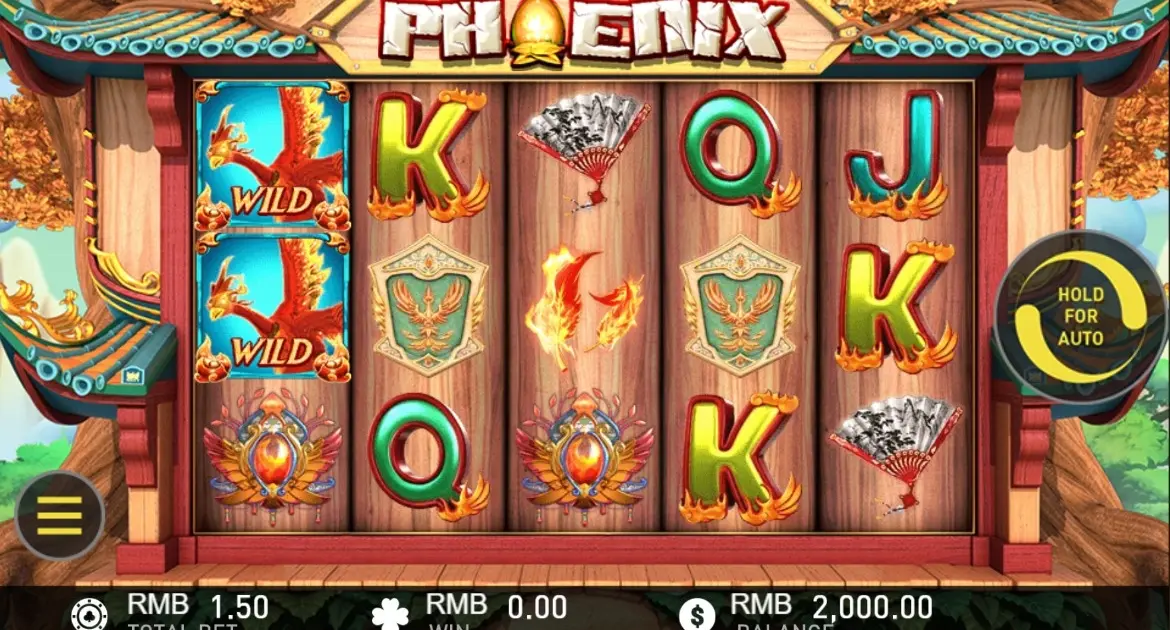
The single most important thing to know about the phoenix slot is what is missing: Gameplay Interactive has not published an RTP percentage, a volatility rating, or a maximum win figure for this title. That absence matters, because those three numbers are what let you judge a game before you spin it. What you do get is a free demo, a studio with a measurable track record across its catalogue, and a popularity position that puts this game ahead of roughly 86% of the slots ranked alongside it.
Phoenix versus the average slot
Across the slots catalogued here, the average return to player sits at 95.71%. Gameplay Interactive’s own titles average 96.69% — almost a full percentage point better than the corpus as a whole. That is a genuinely meaningful gap at the studio level. On £100 of total wagering, the difference between 95.71% and 96.69% is about £1 in expected return, and across a long session of small stakes that compounds into a real difference in how long your balance lasts.
The problem is that a studio average tells you about the studio, not about this game. Individual titles inside a provider’s range can sit several points either side of the house average. A studio averaging 96.69% will still have titles at 94% and titles at 97%, and nothing in the published data says which end of that spread this one occupies. Treat the 96.69% figure as a reason to take the developer seriously, not as a number you can attach to this particular game.
On popularity, the game ranks 2,732nd, placing it in the 86.3rd percentile. Plenty of players find it. That reflects traffic and interest rather than generosity — popularity and return percentage are unrelated measures, and a widely played game is not a better-paying one.
RTP breakdown: the missing phoenix slot figure in context
There is no published RTP for this game, so any specific percentage you see quoted for it elsewhere should be treated with suspicion unless the source names the operator’s own configuration. Some studios ship a single mathematical model; others supply multiple RTP builds and let each casino pick one, which means the same title can return 96% in one lobby and 94% in another.
Here is what RTP actually describes, so you can judge the number if it ever appears. An RTP of 96.5% means that across a very large sample of spins — millions, not thousands — the game returns £96.50 for every £100 staked. It is a long-run statistical average, not a schedule. Over 500 spins at £0.20, a £100 turnover, your actual result can land anywhere from zero to a large multiple of that, and the average tells you nothing about where.
Every spin is independent. Previous outcomes have no influence on the next result, and no amount of play brings a game closer to “paying out”. The house edge is the inverse of the RTP figure, and it applies identically to the first spin and the ten-thousandth.
| Detail | Value |
|---|---|
| Game | Phoenix |
| Provider | Gameplay Interactive |
| Type | Slot Machine |
| Published RTP | Not disclosed |
| Provider average RTP | 96.69% |
| Catalogue average RTP | 95.71% |
| Titles from this studio | 118 |
| Popularity rank | 2,732 (86.3rd percentile) |
| Free demo | Available |
Volatility profile
No volatility rating has been published for this game either, which leaves the demo as your only practical read on it. The good news is that volatility is the one characteristic you can estimate yourself in free play, provided you give it enough spins.
Low volatility means frequent small returns, a balance that drifts down slowly, and sessions that feel steady. High volatility means long stretches of nothing punctuated by larger returns, a balance that can halve before anything notable happens, and a much greater bankroll requirement for the same playing time. Medium sits between the two. Crucially, volatility says nothing about return percentage — a low-volatility game and a high-volatility game can share an identical RTP and feel like completely different products.
To gauge it, play 200 to 300 demo spins at a fixed stake and watch two things: how often any return lands at all, and how far the balance swings from its starting point. A balance that rarely moves more than 20% either way suggests lower variance. Deep troughs followed by sharp recoveries suggest the opposite. That read is about feel and pacing, not about what real-money play would return.
Gameplay Interactive as a studio
Gameplay Interactive has 118 titles in this catalogue, which is a substantial range by any measure, and their average return across those games is 96.69%. A studio with that much output and that average is generally worth a look, because the volume suggests a stable production pipeline rather than a one-off release.
The catalogue is also where you can find titles with figures actually on record. Fountain of Fortune publishes a 97.0% RTP, comfortably above both the studio average and the 95.71% catalogue average, and if a confirmed return percentage is what you care about most, it is the more informative starting point. Pharaoh and Monsters Cash come from the same studio but, like this game, carry no published RTP — so they sit in the same evidence gap.
That pattern is worth noting on its own: this developer discloses inconsistently. It is not unusual in the industry, but it does mean you should check for a stated percentage title by title rather than assuming the studio average applies.
Three alternatives worth comparing
No theme label has been recorded for this game, and there are no thematically matched titles in the data to point you towards, so theme-based comparison is not possible here. What is available is a comparison on numbers, which is more useful anyway.
Ranked by how much you can actually verify before playing, Fountain of Fortune leads on the strength of its 97.0% published return. Pharaoh and Monsters Cash are the two closest same-studio comparisons in terms of available information, meaning you would be assessing all three primarily through demo play rather than through disclosed figures.
The wider point for anyone shortlisting games: a published RTP is a small piece of information that rules out a lot of guesswork. Where two otherwise similar games sit side by side and only one states its return percentage, the disclosed one is the easier decision. That is not a judgement on quality — it is simply that one gives you something to work with.
Getting the most out of the free demo
The Phoenix free demo runs without a deposit and without registration at most demo hosts, so the cost of finding out whether the game suits you is your time alone. Use it deliberately: fix a stake, run a few hundred spins, and note the rhythm of returns and the depth of the swings. Check the paytable and the stake range directly in the game, since neither has been published in the data available here.
What a demo cannot do is forecast real-money results. Demo balances carry no value, and the outcomes you see in free play have no bearing on any future session, because each spin is generated independently of every other.
Slots are paid entertainment, not income. Play only if you are 18 or over, decide on a budget before you start and treat it as the price of the session, and stop when it is gone rather than topping up. If play stops feeling like a choice, step away and use the deposit limits and self-exclusion tools your operator provides.
Should you play Phoenix?
It depends entirely on how much you need to know before you commit money. The case in favour: it comes from a studio with 118 titles and a 96.69% average return, it sits in the 86.3rd percentile for popularity, and there is a free demo so you can form your own view at no cost.
The case against: there is no published RTP, no volatility rating and no maximum win figure for this title, which means every judgement about how it behaves has to come from your own demo play. If you want verified numbers up front, the 97.0% figure attached to Fountain of Fortune makes it the stronger pick from the same catalogue.
The sensible route is to try the demo first, decide whether the pacing suits you, and only consider real stakes once you have set a budget you are comfortable losing. Absent data is not evidence of a bad game — but it is a reason to go in with your eyes open.
Frequently Asked Questions
Can I play Phoenix for free without downloading anything?
Free demo play is available for this Gameplay Interactive title, and demo versions typically run in the browser with no download and no registration. The demo balance has no cash value, so it is a way to judge pacing and stake range rather than a route to winnings of any kind.
What is the RTP of Phoenix?
Gameplay Interactive has not published an RTP figure for this game, so treat any specific percentage quoted elsewhere with caution. For context, the studio's titles average 96.69% and the wider catalogue here averages 95.71%, but a studio average cannot be assumed to apply to an individual release.
Is Phoenix high or low volatility?
No volatility rating has been published, which leaves demo play as the practical test. Run 200 to 300 spins at a fixed stake and watch the balance: shallow, frequent movement points to lower variance, while long dry stretches broken by larger returns point to higher variance and a bigger bankroll requirement.
Who is Gameplay Interactive and what else do they make?
Gameplay Interactive is the studio behind this release, with 118 titles catalogued here and an average return of 96.69% across them. Other titles include Fountain of Fortune, which publishes a 97.0% RTP, plus Pharaoh and Monsters Cash, both of which carry no disclosed return percentage.
How does Phoenix compare to Fountain of Fortune?
Fountain of Fortune is the better-documented option, with a published 97.0% RTP against no disclosed figure for this game. Both come from Gameplay Interactive. If a confirmed return percentage matters to your decision, Fountain of Fortune gives you something concrete to work with before you stake anything.