The case for this game is a number: 96.46%. That is the published return on the new year rising slot, and it sits above the average of the titles catalogued here by three-quarters of a percentage point. What you do not get is a published volatility rating, a max win multiplier or a stake range, so a chunk of the session planning you would normally do up front has to happen in the demo instead.
Who makes New Year Rising
Ruby Play is the studio behind it, and there are 145 Ruby Play titles in this catalogue. That is a mid-sized library by industry standards, large enough that the studio has a house style and a measurable average return, small enough that individual releases are not lost in a flood of monthly output.
That average return is the useful part. Across those 145 games, Ruby Play averages 96.4%. A studio average tells you something a single game cannot: it shows where the provider habitually sets its maths. Some studios cluster tightly around one figure; others ship a spread from 94% to 97% and leave you to check every title individually. With Ruby Play sitting at 96.4% on average and this game at 96.46%, the spread here is narrow enough that you can treat the studio figure as a rough guide when you pick up an unfamiliar release from the same catalogue.
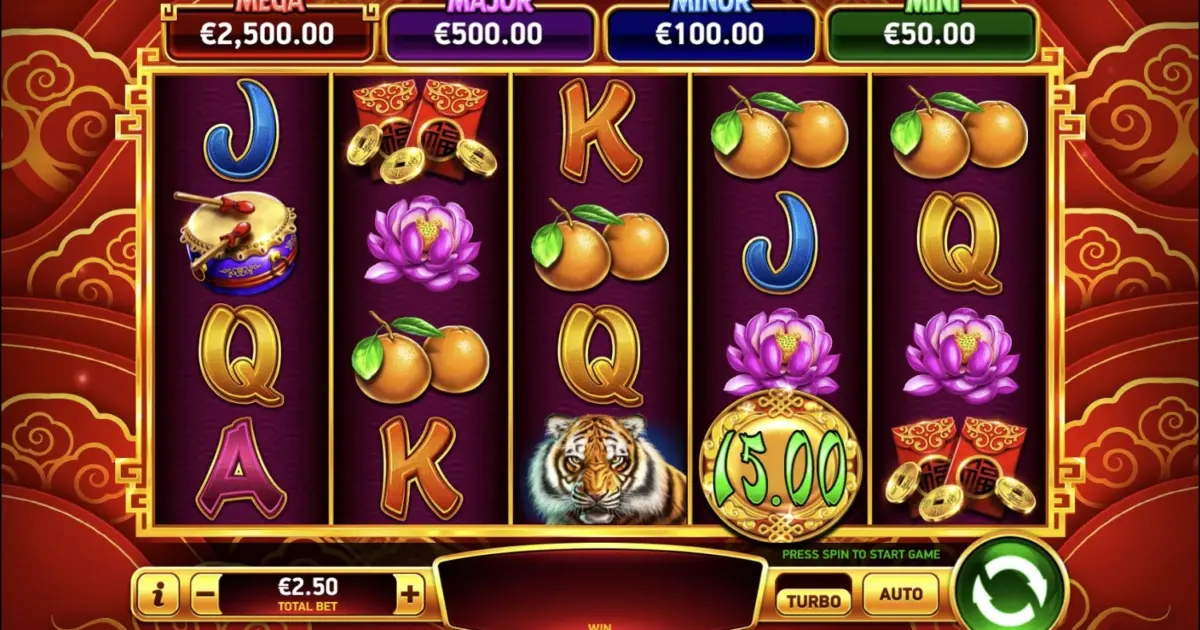
The game is filed as a slot machine built on 5 reels, with Japan as the primary theme and Asian styling alongside it. The theme label is all that has been published, so anything you read elsewhere describing specific symbols, characters or soundtrack detail is not coming from the provider’s own spec sheet.
Where New Year Rising sits in the Ruby Play catalogue
Compared against its siblings, this release lands in the upper-middle of the studio’s published returns rather than at either extreme. Volcano Rising carries exactly the same 96.46% figure, which makes it the closest like-for-like within the catalogue if you want to see whether the studio’s maths feels different in practice across two games with identical theoretical returns. It will not, over a long enough sample, but short sessions are not long samples, and that gap between theory and a hundred spins is worth experiencing rather than reading about.
If you want the higher number, Rush Fever 7s publishes 96.9%, which is 44 hundredths of a point better. On £100 of total wagering that difference is about 44p in expected return. Across £10,000 staked over many sessions it is roughly £44. Whether that matters depends entirely on how much you plan to wager in total, and for most casual players the difference is smaller than the swing a single session produces either way.
The game ranks 2501 by popularity here, which puts it in the 87.5th percentile. Traffic is a measure of attention, not of return, and a popular game with a poor RTP is still a poor RTP.
RTP: 96.46% against a 96.4% house average
RTP is a long-run average, not a session forecast. A 96.46% figure means that across an extremely large number of spins, the game is modelled to return £96.46 for every £100 wagered, with the remaining £3.54 forming the house margin. That average is computed over millions of spins. Your two hundred spins on a Tuesday evening are statistical noise by comparison, and every spin is independent of the one before it.
Against the corpus average of 95.71%, this game is 0.75 percentage points better than the typical title in this database. Framed in money, wagering £1,000 in total carries a modelled house margin of about £35.40 here, against roughly £42.90 at the corpus average. That is a real edge, and it is also small relative to variance.
| Figure | Value |
|---|---|
| Provider | Ruby Play |
| RTP | 96.46% |
| Reels | 5 |
| Primary theme | Japan |
| Type | Slot machine |
| Provider average RTP | 96.4% |
| Database average RTP | 95.71% |
| Popularity rank | 2501 (87.5th percentile) |
| Free demo | Available |
Volatility and who it suits
Ruby Play has not published a volatility rating for this title, so nobody can tell you in advance whether sessions will grind along in small increments or sit flat for long stretches. Treat any specific low, medium or high label you see quoted elsewhere as unsourced.
What volatility does is well established, though. A low-volatility game pays smaller amounts more often; bankrolls last longer, the graph wobbles rather than cliff-dives, and the ceiling on any single spin is modest. A high-volatility game pays rarely and larger. Its long dry runs are not the game malfunctioning, they are the design, and the bankroll needed to sit through them without running out is substantially bigger. Many slots pair high volatility with a free-spin round that carries most of the total return, which is why the base game can feel thin.
Two games with identical 96.46% returns can therefore produce completely different sessions. Because the label is missing here, the practical approach is to run a few hundred demo spins and watch the shape of the results: how often something lands at all, and how far the balance travels between those moments. That behaviour is observable even when the spec sheet is silent.
Playing New Year Rising Slot for free
A free demo is available, which means you can load it with play-money credits and no download, and see the mechanics before any money is involved. Given the missing volatility, stake range and max win figures, the demo is doing more work here than it would on a fully documented release. Use it to answer the questions the data sheet cannot: how often wins land, how deep the quiet spells run, and whether the pace suits you.
One caveat that matters. Demo results do not predict real-money results. A good run in play money is the same statistical noise as a bad one, and it carries no information about what happens next.
Slots are paid entertainment, not income. Games are for adults aged 18 and over. Decide what your session is worth to you before you start, treat that figure as the cost of the evening, and stop when it is gone. No stake pattern, timing or progression changes the maths, because each spin is independent and the return stays at 96.46% regardless of what you do with your bet size.
Similar picks
Japan and Asian styling is a crowded corner, with 434 titles on that theme in this catalogue, so there are close alternatives with published numbers. Mystic Fortune Deluxe returns 96.71%, a quarter-point above this game, which makes it the stronger choice on pure maths if theme is your main filter. Starlight Princess publishes 96.5%, effectively level with this release once you account for how little four hundredths of a point moves in practice.
Comparing on RTP alone is a reasonable starting filter but a poor finishing one. Two games separated by 0.25 percentage points differ by £2.50 per £1,000 wagered in modelled return, which most players will never notice. Mechanics, hit pattern and how the game feels over a few hundred spins will shape your session far more than that gap does.
Verdict
Worth a look, with a caveat. The 96.46% return is genuinely above average for this database and consistent with Ruby Play’s 96.4% house figure, so the maths is not working against you any harder than the market norm. It is also not the best number available among its close relatives.
The weak spot is documentation. No volatility rating, no max win, no stake range published means you cannot judge bankroll requirements from the spec sheet. That is not a mark against the game’s fairness, just against the information available before you play. Run the demo, watch the rhythm of the results, and decide from there. If the sheer absence of published detail bothers you, a better-documented title with a similar return is an easy substitute.
Frequently Asked Questions
Can I play New Year Rising for free?
A free demo is available, so you can try it with play-money credits and no deposit or download. That matters more than usual here, because Ruby Play has not published a volatility rating, stake range or max win for the game. The demo is the only way to see how the sessions actually behave.
What is the RTP of New Year Rising?
The published RTP is 96.46%, meaning the game is modelled to return £96.46 per £100 wagered across an extremely large sample. That is 0.75 percentage points above this database's 95.71% average and roughly in line with Ruby Play's 96.4% house figure. It is a long-run average, not a session prediction.
Is New Year Rising high or low volatility?
No volatility rating has been published for this title, so any specific label quoted elsewhere is unsourced. Low volatility generally means smaller, more frequent wins and longer bankroll life; high volatility means rarer, larger outcomes and deeper dry spells. A few hundred demo spins will show you which pattern this one resembles.
Who is Ruby Play and what else do they make?
Ruby Play is the studio behind this release, with 145 titles in this catalogue averaging 96.4% RTP. Other Ruby Play slots here include Volcano Rising, which publishes the identical 96.46% figure, Rush Fever 7s at 96.9% and Immortal Ways Magic Gems at 96.3%. The studio's returns cluster in a narrow band.
How does it compare to Mystic Fortune Deluxe?
Mystic Fortune Deluxe publishes 96.71% against this game's 96.46%, so it holds a quarter-point edge on theoretical return, worth about £2.50 per £1,000 wagered. Both sit in the same Japan and Asian theme group. On numbers alone the difference is small enough that mechanics and pacing should decide it.