Should you add Glass Slipper to your shortlist? If you want a 5-reel game from a high-volume studio and you are comfortable trying a title without published return or volatility figures, it is worth a look in free demo. If you prefer to compare numbers before you stake real money, the missing data here is the deciding factor. The glass slipper slot comes from Ka Gaming, a studio with 602 titles to its name, and sits at rank 2143 in the current corpus with a popularity percentile of 89.3, which means it is more played than most but far from the top tier.
First look at Glass Slipper slot
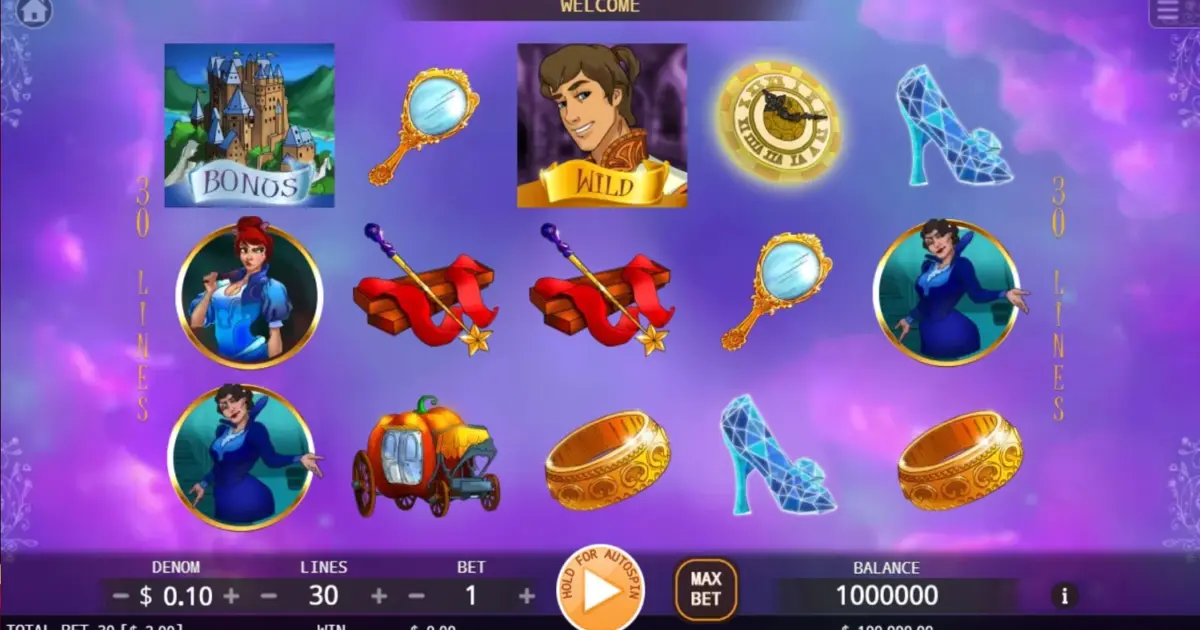
Glass Slipper is listed as a Slot Machine with a 5-Reels theme tag and a 5-reel layout. That is the full extent of the concrete, verifiable detail available in the supplied fact set. Ka Gaming has not published a return-to-player figure, a volatility rating, a stake range, a payline or ways count, or a max win figure for this title in the data provided, and no specific bonus mechanics are documented. The provider count of 602 gives useful context: this is a studio that releases at scale, so its catalogue covers many maths models rather than a single house style. Rank 2143 with an 89.3 popularity percentile tells you two things at once. On absolute rank it is outside the most-played few hundred, yet on percentile it still sits above almost nine in ten games in the corpus, which suggests a steady, modest audience rather than a breakout hit. The free demo is marked as available, so you can see the reel layout, pacing and interface for yourself without staking. When a fact set is this lean, the honest approach is to treat everything you see quoted elsewhere about features, multipliers or jackpots with caution unless Ka Gaming itself confirms it, and to base any comparison on the numbers you can verify: reels, provider scale, rank, and the averages that surround them.
How a round plays out
With five reels confirmed, you can expect the basic structure familiar from many 5-reel slots: reels spin, symbols land, and wins are evaluated against a paytable and a defined set of paylines or ways. Because no payline count, ways count, hit frequency, wild behaviour, scatter behaviour, free-spin rule or buy-feature price is supplied for Glass Slipper, nothing specific can be stated about how this particular game evaluates wins or triggers features. That absence is itself information, because it prevents a reliable read on session rhythm. In general terms, many slots use wilds to substitute for other symbols and scatters to trigger bonuses, and many modern titles use either fixed paylines or a ways mechanic where matching symbols on consecutive reels from the left pay regardless of exact line. Without a stated mechanic for this title, you cannot assume either. You also cannot infer volatility, hit rate or bonus frequency from the reel count alone; a 5-reel game can be built to pay small amounts often or large amounts rarely, and the reel count does not lock in one profile. The demo is the practical way to observe the fundamentals that are not documented here: how many symbols appear per reel, whether wins require three or more in a line, how the paytable is accessed, and how the game communicates wins and losses. Every spin remains independent, with no memory of previous results, so demo observations show presentation, not predictive patterns.
Reading the return figure
No RTP has been published for Glass Slipper in the fact set provided, so there is no specific percentage to interpret for this game. Ka Gaming has not published a max win figure for this title either, so treat any number you see quoted elsewhere with caution. Rather than invent a figure, it helps to understand what an RTP would tell you if it were available, and what you can use as a loose backdrop in the meantime. RTP is a long-run statistical average, not a promise for a session. A 96% RTP, to take a common reference point, means £96 returned per £100 wagered across a very large sample — millions of spins — including the contribution of infrequent larger wins. Over 100 or 1,000 spins your actual return can diverge sharply from that average because of variance. In the absence of a title-specific figure, the only verified averages you can lean on are contextual: the provider average RTP across Ka Gaming’s 602 games is 94.47%, and the corpus average across all tracked games is 95.71%. That provider average sits 1.24 percentage points below the corpus average, which suggests that, on average, Ka Gaming titles in this data set return slightly less per £100 wagered over the long run than the overall market average. It does not tell you what Glass Slipper itself returns, and you should not use a provider average as a stand-in for a game’s own RTP. Until Ka Gaming publishes a game-specific figure, bankroll planning cannot be anchored to a known edge.
Why volatility changes your bankroll maths
Volatility is not published for Glass Slipper, so no risk label can be attached to this specific title. The concept still matters because it is the other half of the maths alongside RTP, and understanding it helps you see why the missing label limits planning. In general, low volatility tends to produce smaller swings, more frequent but modest wins, and longer sessions on a fixed budget, because the game smooths returns. High volatility tends to produce larger swings, longer losing stretches punctuated by bigger wins, and a higher chance that a given budget runs out before a significant win appears. Medium volatility sits between those poles. Volatility does not change expected value; it changes distribution. Two games with the same RTP can feel very different because volatility reshapes when and how that return arrives. Without a stated volatility for Glass Slipper, you cannot estimate the bankroll you would need to ride out dry spells, nor the realistic session length for a given stake and budget. You can only apply general discipline: set a total entertainment budget, divide it into a session stake that allows a meaningful number of spins at your chosen bet level, and expect that actual results will vary around the theoretical average over any small sample. The independence of each spin means no pattern of wins or losses makes the next spin more or less likely to pay.
Bet sizing from stake range upwards
No minimum bet, maximum bet or default stake range is supplied for Glass Slipper, so no specific bet-size advice can be tied to this title’s own limits. What can be explained is how stake interacts with bankroll once a range is known, so you can apply the same arithmetic the moment you open the paytable in demo. Your spin count is your budget divided by your stake. A £20 session budget at £0.20 per spin buys 100 spins; at £0.40 it buys 50; at £1.00 it buys 20. Fewer spins mean less exposure to the game’s average behaviour and more influence from short-term variance. More spins mean more smoothing, but also more total amount staked, which matters because theoretical loss over time is driven by total amount wagered, not by time spent. When a game’s volatility is unknown, as it is here, keeping stake small relative to budget is the only way to preserve choice: you stay in the game long enough to form a view in demo and, if you later play with real money, you reduce the chance that a normal cold streak ends the session early. Always check the in-game rules for the actual minimum and maximum, whether the game allows you to adjust coin value or bet level, and whether changing stake affects the number of active lines or ways where that concept exists. Use demo to confirm those controls before you commit funds.
Where Glass Slipper sits among 5-Reels slots
The theme tag for Glass Slipper is 5-Reels, which in this data set is a structural label rather than a narrative theme. No theme game count is supplied for this tag, so no density comparison can be made, but the 5-reel format itself is the industry standard and therefore tells you little about distinctiveness on its own. More informative anchors are provider scale and relative popularity. With 602 games, Ka Gaming is a volume provider; its average RTP of 94.47% sits below the corpus average of 95.71%, a gap of 1.24 points that is worth noting when you compare titles across studios. Glass Slipper’s rank of 2143 and 89.3 popularity percentile place it in the long tail that still sees regular play. For direct catalogue comparisons on the same provider, the fact set lists Monkey Heist, Miss Tiger and The Primeval Rainforest as related Ka Gaming titles. None of the three has a published RTP in the supplied data, so none offers a numeric edge over Glass Slipper on return; the comparison is instead about sampling the provider’s range in demo to see which pacing and presentation you prefer. If you want a numbers-led shortlist, you would normally favour a title with a published, higher RTP and a disclosed volatility that matches your bankroll, but within the Ka Gaming slice shown here the data does not provide that separator. Use the free demo to compare reel behaviour side by side and let disclosed maths be the tie-breaker when it is available.
| Item | Figure |
|---|---|
| Game name | Glass Slipper |
| Provider | Ka Gaming (602 games, avg RTP 94.47%) |
| Reels | 5 |
| Themes / subcategory | 5-Reels / Slot Machine |
| Corpus rank / percentile | 2143 / 89.3% |
| Corpus average RTP | 95.71% |
| Free demo | Available |
| Published RTP / volatility / stake range / max win | Not published in supplied data |
The honest verdict
Glass Slipper is a 5-reel Slot Machine from a prolific provider that you can try as a free demo, but it currently offers no published RTP, volatility or stake range to support a clear, numbers-based verdict. That does not make it unplayable; it makes it a game to approach as an informed observer rather than a calculated selection. If you enjoy sampling Ka Gaming’s catalogue and you are comfortable forming a view from demo alone, there is no barrier to loading it and seeing whether its pacing suits you. If you prefer to choose games where the maths is transparent, the missing return figure and missing risk rating are material drawbacks, and you may want to shortlist alternatives that disclose both so you can match volatility to your budget and compare RTPs directly. Popularity at the 89.3rd percentile shows it is not ignored, yet rank 2143 confirms it is not a market leader on play volume. The most responsible way to handle any slot, including this one, is to treat it as paid entertainment for adults: set a budget you can afford to lose, set a time limit, use deposit and loss limits if you play with real money, and stop when either limit is hit. 18+ only. If you feel play is becoming harmful, use a self-exclusion tool and seek support from a recognised problem-gambling help service in your jurisdiction. Every spin is independent, demo play does not predict real-money results, and no staking pattern changes the house edge.
More from Ka Gaming
- Atlantide
- 5 Heroes — 96.0% RTP
- Miss Tiger
Frequently Asked Questions
Can I try Glass Slipper for free without downloading anything?
Free demo is marked as available for Glass Slipper, so you can load it in your browser and see the 5-reel layout and interface without staking. Demo uses play money, so wins do not pay real cash and results do not predict real-money outcomes. Use the demo to check the paytable and controls before you consider any other mode.
What is the RTP of Glass Slipper and what does it mean for my session?
No RTP has been published for Glass Slipper in the supplied data, so there is no game-specific percentage to quote. If a figure were available, it would mean the theoretical return per £100 wagered over millions of spins, not a promise for 100 or 1,000 spins. For context, Ka Gaming averages 94.47% across 602 games versus a corpus average of 95.71%.
What volatility does Glass Slipper have and how would that affect risk?
Volatility is not published for Glass Slipper, so no low, medium or high label can be verified. Volatility describes how wins are distributed: low tends to mean smaller, more frequent swings and longer sessions on a fixed budget, high tends to mean larger swings and longer dry spells. Without a rating you cannot estimate bankroll needed to ride variance.
Who makes Glass Slipper and what else does the studio offer?
Glass Slipper is made by Ka Gaming, a provider with 602 games tracked in this data set and an average RTP of 94.47%. Related titles from the same studio in the data include Monkey Heist, Miss Tiger and The Primeval Rainforest, all without published RTP in this set. Sampling them in demo helps you compare presentation and pacing within the same catalogue.
How does Glass Slipper compare to Monkey Heist on the numbers?
On the numbers you can verify, Glass Slipper shows 5 reels, rank 2143 and percentile 89.3, with no published RTP or volatility; Monkey Heist is also a Ka Gaming title with no published RTP in this set. Neither offers a numeric edge on return in the data, so the practical comparison is to try both in free demo and let disclosed RTP and volatility decide when available.