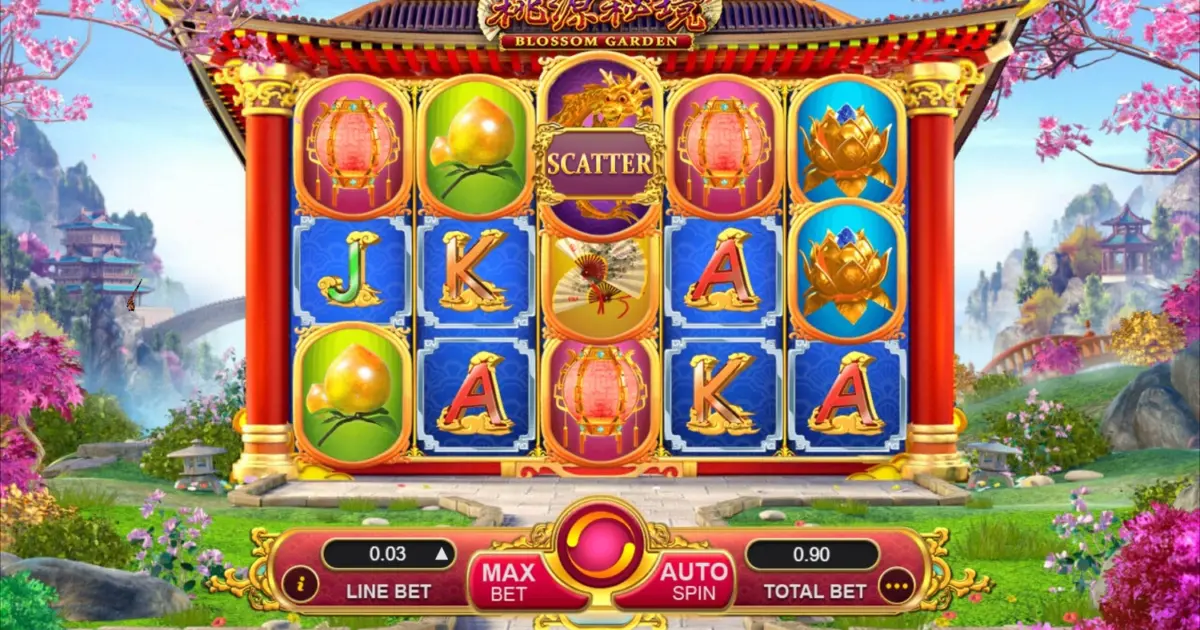
Should you bother with the blossom garden slot? The headline number says yes if you weight return-to-player heavily: at 97.01% it beats the 95.71% site average by 1.3 points and clears Gameplay Interactive’s 96.69% studio mean. What the published figures do not give you is a volatility rating or a max-win figure, so the risk profile stays an unknown until you spin it yourself. That unknown is the honest caveat attached to an otherwise strong number.
Blossom Garden slot versus the average slot
The gap that matters is 1.30 percentage points. Blossom Garden sits that far above the 95.71% average across the slots in this catalogue, and 0.32 points above the 96.69% mean for Gameplay Interactive titles. In plain terms, over a very large sample you would expect roughly £97.01 back for every £100 wagered, against £95.71 for the average game in the corpus — a difference of £1.30 per £100 that compounds meaningfully the longer you play.
That edge is the single most decision-relevant fact on this page, which is why the title deserves a look before flashier games do. It does not make individual sessions predictable. A 97% long-run figure still produces real losing streaks and winning streaks; it describes the average over hundreds of thousands of spins, not the result of your next fifty, and any sequence you personally observe is just a sample of that distribution.
Popularity adds mild support. The game sits at an 89.1 percentile and rank 2180 in this catalogue — a solid mid-field showing rather than a runaway success. Treat it as a sign the game is known and playable, not as evidence about how it behaves at the table. The numbers about its return are what matter, and they lean in its favour.
| Figure | Value |
|---|---|
| Provider | Gameplay Interactive |
| RTP | 97.01% |
| Site average RTP | 95.71% |
| RTP vs site average | +1.30 points |
| Provider average RTP | 96.69% |
| Provider game count | 118 |
| Popularity percentile | 89.1 |
| Catalogue rank | 2180 |
| Free demo | Available |
| Volatility | Not published |
| Max win | Not published |
RTP breakdown: 97.01% in context
RTP is a statistical average computed over a very large number of spins, and almost any individual session will land somewhere else. A headline figure of 97.01% mostly changes your expectation over the long run: the drain on your bankroll is slower per £100 wagered than on a slot returning 95%, which is the practical effect players actually feel. The difference is a gentler decline, not a licence to win.
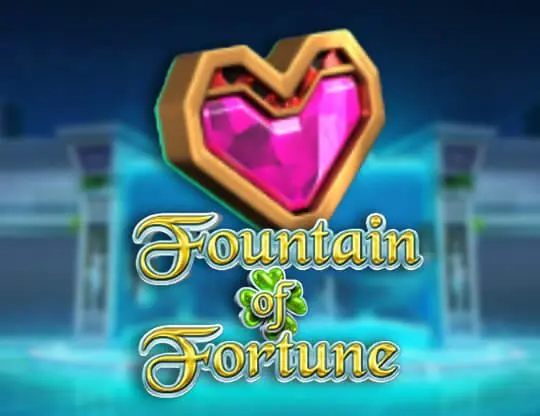
Context sharpens the picture. The provider average is 96.69%, so Blossom Garden runs above most of what Gameplay Interactive ships. Among the comparable titles in the related set, Fountain of Fortune posts 97.0% — effectively the same number within rounding — which suggests 97% is a level this studio hits routinely rather than an isolated fluke.
One figure is absent. No max-win ceiling is published for Blossom Garden, so treat any number you see quoted elsewhere with caution, and do not assume a high RTP implies a large top prize. It does not. Return rate and prize ceiling are independent properties, and a slot can return well while paying modestly.
Volatility profile
Gameplay Interactive has not published a volatility rating for Blossom Garden, and this review will not invent one. In a market where paylines, ways mechanics and bonus structures shape how a session feels, a missing volatility figure is real information: you cannot rely on a label to tell you whether this game swings gently or hard.
Volatility describes how results distribute around the RTP when it is published. High-volatility slots pay infrequently but in larger clumps, stretching bankrolls thin between hits; low-volatility slots pay more often in smaller amounts, so sessions last longer on the same stake. Without a rating you can only gauge this empirically, and the free demo is precisely the tool for that job.
Watch the shape of a session rather than the size of any single win. If the game drifts up and down in small steps across long stretches, you are looking at a gentle profile; if it bleeds quietly and then jumps, expect the hard-swing version. Either way, budget for the possibility that the unknown is high-volatility, because that is the expensive direction to be wrong in.
Gameplay Interactive as a studio
Gameplay Interactive is prolific — 118 titles in this catalogue alone — with a healthy 96.69% average RTP, 0.98 points above the corpus mean. Blossom Garden at 97.01% sits comfortably above the studio’s own average, so if you already trust this provider’s output, this is one of its better-returning entries.
Two related games lack published RTP figures, which makes head-to-head comparison harder but the titles no less worth a look. Pharaoh (Gameplay Int.) and Monsters Cash both sit in the same related set as Blossom Garden. When a game ships without an RTP number, the honest move is to evaluate it on its own merits rather than guess — and to prefer a published figure like this one when you have the choice.
The Gameplay Interactive slots catalogue averages above the site baseline, which signals the studio’s output skews toward solid returns on the numbers side. That consistency is worth something: a provider that routinely ships average-or-better RTP gives you fewer surprises on the figures, even if each individual game still needs its own volatility check before you commit money to it.
Three garden-themed alternatives worth comparing
Here the data runs dry, and that is worth saying plainly. This catalogue lists no other garden-themed titles in the related set — the theme count is effectively zero — so Blossom Garden cannot be benchmarked against a direct garden-to-garden rival on this site. Rather than invent comparisons, the useful yardstick is the closest RTP neighbour among its related games.
Fountain of Fortune posts 97.0%, essentially identical to Blossom Garden’s 97.01%. Running both demos side by side is a genuinely useful exercise: it isolates theme and mechanics from the return variable, which is the cleanest comparison you can make between two games at the same level. If they feel very different in play, you have learned something about how each game spends its returns.
Because no garden-themed comparators appear in the data, treat the visual theme as a preference rather than a decision factor. How often a game pays and how large the swings are matter more for your bankroll than what the art depicts, and those are the properties worth comparing across titles before you choose where your stake goes.
Getting the most out of the free demo
The free demo for Blossom Garden is available instantly, which makes testing cheap. You can play Blossom Garden free and gauge pacing, the frequency of small returns and how long a stake lasts — the practical things a published RTP can never tell you. Set yourself a fixed number of spins, say two hundred, and note how far the balance swings before you form a judgement.
The demo is a diagnostic, not a prophecy. It uses the same mathematics as the real-money game, so you can learn how the slot behaves, but a lucky or unlucky demo run proves nothing about future results on the paying version. Every spin is independent; no sequence of outcomes makes the next spin more or less likely to pay. No timing, stake progression or pattern changes the expected value.
One honest limitation: a short demo session cannot reveal the full variance a real-money stretch would, because you will not sit through the long losing runs a high-volatility game eventually delivers. Use it to learn the game’s shape and pace, not to estimate what you would get back over hundreds of spins.
This is a gambling product. You must be 18 or over to play for real money. Set a budget you can afford to lose before you start, treat every session as paid entertainment, and stop when that budget is gone — never chase a loss by raising your stake, since no approach changes the odds.
Should you play Blossom Garden?
If you weight return-to-player heavily, Blossom Garden earns its place: 97.01% is 1.3 points ahead of the catalogue average and ahead of its own provider’s mean, and that is a genuine edge over a long sample. The gaps — no published volatility and no max-win figure — mean you should verify the risk profile yourself in the free demo rather than assume it.
The verdict is a qualified yes. Play it for the strong headline RTP and the low barrier to testing; hold off on committing real money until you have confirmed the swing size suits your bankroll. On the numbers it clears the field; on the unknowns it asks you to check before you trust.
Frequently Asked Questions
Can I play Blossom Garden for free?
Free demo play is available and starts instantly, so there is no download or upfront cost. The demo uses the same maths as the real-money game, making it a low-risk way to test pacing and swing size before you bet. It will not pay out winnings — it is practice only.
What RTP does Blossom Garden have and what does it mean?
Blossom Garden returns 97.01%, which is 1.3 points above the 95.71% site average. Over a very large number of spins you would expect about £97.01 back per £100 wagered. Individual sessions vary widely around that average, so treat it as a long-run figure rather than a guarantee.
Is Blossom Garden high or low volatility?
No volatility rating has been published for Blossom Garden, so there is no reliable label to go on. The practical way to gauge it is the free demo: watch how far the balance swings and how often small returns land. Budget as if it may be high-volatility, since that is the costly direction.
Who makes Blossom Garden and what else do they offer?
Gameplay Interactive makes Blossom Garden. The provider has 118 titles in this catalogue with a 96.69% average RTP, above the 95.71% corpus mean. Related games include Pharaoh (Gameplay Int.) and Monsters Cash, though neither has a published RTP figure to compare directly.
Can the Blossom Garden demo pay out real money?
No. The free demo uses play credits and cannot pay real-money winnings or fund withdrawals. It shares the same mathematics as the real-money game, so it is useful for learning how the slot behaves, but a strong or weak run there tells you nothing about future paying results.