Here is the short version. Anton’s Family is a five-reel slot machine from GMW (Game Media Works), and the publicly available data on it is thin: no RTP percentage, no volatility rating, no payline count, no stake range, no max win figure. What you do get is a free demo, which is the only reliable way to see how the game actually behaves. If you like knowing the numbers before you commit money, this one asks you to look rather than read.
First look at Anton’s Family
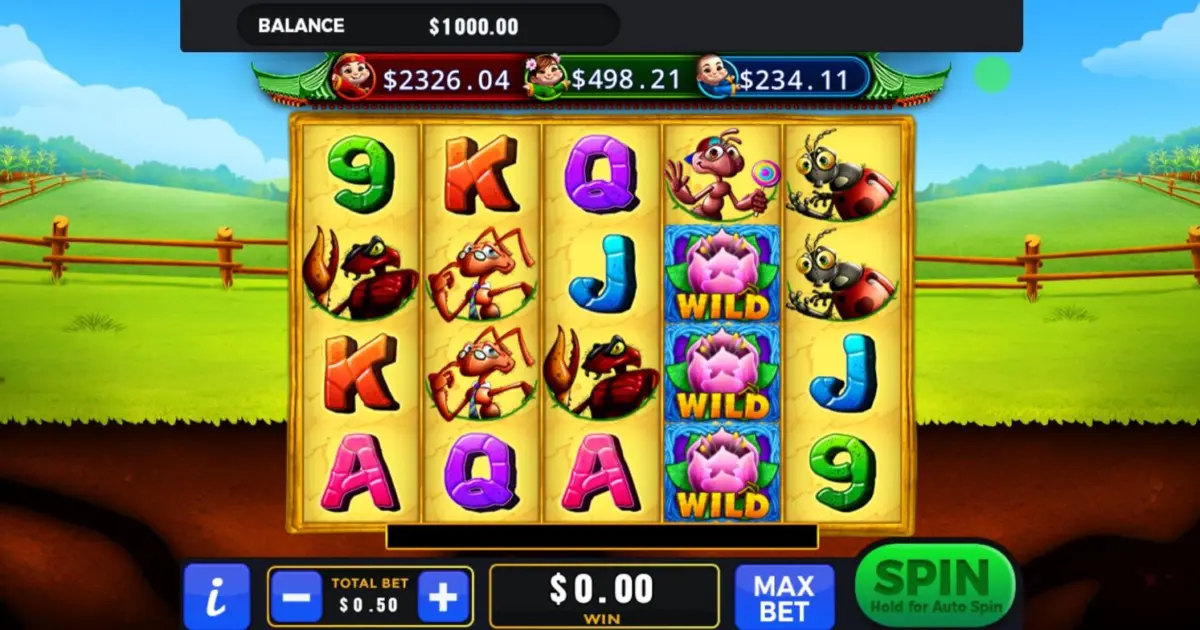
The anton’s family slot sits in GMW’s catalogue of 152 titles and carries two theme tags: Relax and 5-Reels. Relax is a mood label rather than a subject label, so it tells you something about intended pace and not much about what is on the reels. There is no character description, symbol list or artwork detail in the published data, and inventing one would not help you.
What is documented is the popularity picture. The game ranks 1657 across the corpus, which places it in the 91.7th percentile — higher traffic than roughly nine in ten titles in the same database. That is a signal about attention, not quality. Popular slots get played because they are visible, bundled into lobbies, or genuinely enjoyable, and the ranking cannot tell you which. Treat it as evidence that other people found the game, nothing more.
The absence of a published return figure is the headline fact. When a provider or database does not list RTP, you cannot compare the game on maths, and you should discount any number you see quoted for it on a third-party page unless that page cites an operator’s own paytable.
| Provider | GMW (Game Media Works) |
|---|---|
| Reels | 5 |
| Theme | Relax |
| Free demo | Yes |
How a round plays out
Five reels is the only mechanical detail confirmed here, and the payline or ways count is not published. That gap matters more than it sounds. On a five-reel game, the number of active lines drives how often you land something, how the stake divides across the grid, and how the base game feels minute to minute. A 10-line layout and a 243-ways layout can share identical RTP and still play nothing alike.
Many five-reel slots build around a familiar toolkit: wilds that substitute for other symbols, scatters that trigger a free-spins round when enough land, and multipliers applied inside that round. Some modern releases add a buy-feature button that skips straight to the bonus for a fixed multiple of the stake. None of those are confirmed for this title, so read the paytable in the demo before assuming any of them exist here.
Whatever the feature set turns out to be, one thing is fixed by the maths. Each spin resolves independently, using a fresh random result. A run of dead spins does not build pressure toward a win, and a good run does not borrow from the next one.
Reading the missing % return figure
RTP is a long-run average, and the useful way to read it is per hundred units wagered. A game at 96% returns roughly £96 for every £100 staked across a very large sample — hundreds of thousands of spins, not a session. Over a few hundred spins the actual outcome scatters widely around that line, which is why RTP predicts the shape of the distribution, not your evening.
For Anton’s Family there is no figure to read. GMW’s catalogue averages 95.61% across its 152 games, and the wider corpus average is 95.71%, so the provider sits fractionally below the general baseline. That is useful context and nothing more: a house average cannot tell you where a single unlisted title falls, and individual games in any portfolio spread well above and below their provider’s mean.
Practical consequence: you cannot rank this game against a titled competitor on return. If RTP is a deciding factor for you, pick a game that publishes one. Big Bass Splash lists 96.71%, a full point above GMW’s house average, which is a real and checkable difference.
Why unrated volatility changes your bankroll maths
Volatility describes how returns arrive rather than how much comes back. Low-volatility games pay small amounts often, so a fixed bankroll stretches across more spins and the balance drifts down gently. High-volatility games pay rarely and larger, so the same bankroll can vanish in twenty minutes or survive an hour, and the outcome swings hard either way. Medium sits between the two.
No rating is published here, which means you cannot size a bankroll in advance with any confidence. The workaround is to observe. Run a few hundred demo spins at a fixed stake and watch two things: how often a spin returns anything at all, and how large the biggest single return is relative to your stake. Frequent small returns point low. Long droughts broken by occasional larger hits point high.
That observation tells you about pattern, not about profit. Demo results come from the same random process as real play but a few hundred spins is far too small a sample to estimate return, and a good demo run predicts nothing about a funded session.
Bet sizing from unpublished minimums upwards
Stake range is not listed for this game either, so you will see the actual minimum and maximum in the demo interface or in the operator’s game panel. Check it before you fund anything, because the floor varies enormously between studios and a game with a high minimum stake quietly shortens every bankroll.
The arithmetic that matters is spins per session. Divide the money you have set aside by your chosen stake and you get the number of spins it buys at worst case, assuming nothing comes back. A £40 budget at £0.20 a spin buys 200 spins; at £2 a spin it buys 20. Nothing about the stake size changes the expected return as a percentage — it only changes how fast the outcome resolves and how much variance you absorb per spin.
No stake pattern, progression or timing rule alters that. Raising stakes after losses does not recover anything, and lowering them after wins does not protect anything, because each spin is independent of every spin before it.
Where Anton’s Family sits among Relax slots
The Relax tag covers 380 titles, so this is a crowded shelf and Anton’s Family competes on feel rather than on documented numbers. Two comparisons are worth making. Frutinions shares the same theme tag and, like this game, has no published RTP — so if you are comparing the pair, you are comparing two unknowns and the demo is the only test available. Cleopatra (Arrow’s Edge) is the same-theme alternative from a different studio, again without a listed return figure.
If a published RTP is what you actually want from this shelf, the comparison narrows to one name. Big Bass Splash carries a documented 96.71%, and a game with a number beats a game without one when you are trying to make an informed choice. Within GMW’s own range, Sugar Bang lists 95.0%, which is below both the studio average of 95.61% and the corpus average of 95.71%.
The honest verdict
Anton’s Family is hard to recommend on evidence and easy to try for free. The data vacuum is the whole story: without RTP, volatility, paylines, stake range or a max win figure, there is nothing to compare and no way to plan a bankroll before you open it. The 91.7th-percentile popularity ranking says people find it. It does not say the game is generous, and no ranking ever does.
So treat the free demo as the review. Spin a few hundred rounds at a fixed stake, read the paytable properly, and note the hit pattern. If the game feels right and the numbers in the operator’s panel look acceptable, you have made a decision on information rather than marketing copy. If it feels flat, a documented alternative like Big Bass Splash costs you nothing to compare.
Slots are 18+ and priced entertainment, not income. Decide what the session is worth to you before you start, stake only that, and stop when it is gone. If the amount you are betting starts to matter more than the time you are spending, that is the moment to close the tab.
Frequently Asked Questions
Can you play Anton's Family for free?
A free demo of Anton's Family is available, and it runs in the browser with no download and no account funding required. Given that GMW has not published an RTP percentage, volatility rating or stake range for this five-reel title, the demo is genuinely the most informative way to assess it before committing money.
What is the RTP of Anton's Family?
No RTP figure has been published for Anton's Family, so treat any percentage quoted elsewhere with caution unless it comes from an operator's own paytable. For context, GMW's 152-game catalogue averages 95.61% and the wider corpus average is 95.71%, but a portfolio average cannot tell you where one unlisted game falls.
How volatile is Anton's Family?
There is no published volatility rating for Anton's Family, which means you cannot size a bankroll for it in advance. Run a few hundred demo spins at a fixed stake and watch the hit pattern: frequent small returns suggest low volatility, long dry stretches broken by larger hits suggest high.
Who makes Anton's Family and what else do they produce?
GMW (Game Media Works) developed Anton's Family and has 152 titles in its catalogue, averaging 95.61% RTP across the range. Sugar Bang is one of its documented releases at 95.0%, slightly below both that house average and the 95.71% corpus average. Other GMW titles, including Big 5 Baby 5, have no published return figure.
How does Anton's Family compare to Big Bass Splash?
Big Bass Splash publishes a 96.71% RTP while Anton's Family publishes none, so on documented return there is no contest — a known figure beats an unknown one. Both carry the same Relax theme tag from a shelf of 380 titles, so the comparison comes down to whether you value transparent maths or the feel of the game itself.