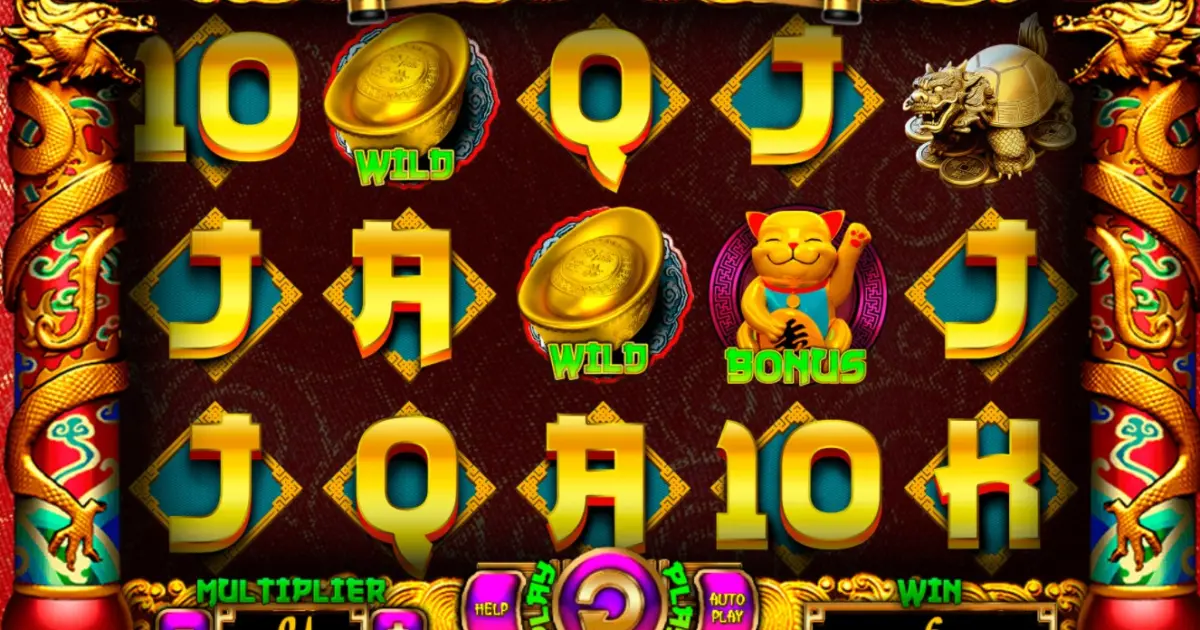
The number that matters most on the 88 lucky charms slot is its return-to-player figure: 91.79%. That sits well below both the Spinomenal catalogue average of 95.11% and the site-wide average of 95.71%, which means the theoretical cost of playing this five-reel game is higher than for most alternatives you could load instead. If you are here for the free demo and the novelty, that is one thing. If you are comparing titles on maths, this one starts at a disadvantage.
| Detail | Figure |
|---|---|
| Game | 88 Lucky Charms |
| Provider | Spinomenal |
| Reels | 5 |
| Category | Slot Machine |
| RTP | 91.79% |
| Provider average RTP | 95.11% across 548 titles |
| Site-wide average RTP | 95.71% |
| RTP vs site average | -3.92 percentage points |
| Popularity rank | 2363 (88.2nd percentile) |
| Free demo | Available |
Who makes 88 Lucky Charms
Spinomenal is the studio behind this release, and it is a prolific one — 548 titles from the developer are catalogued here. That volume tells you something useful. A studio shipping at that rate tends to work in families of games, reusing engines and mechanics across many releases rather than building each title from scratch. For you as a player, the practical consequence is that individual titles vary a lot in configuration, including the return figure, so the studio name alone is not a reliable quality signal in either direction.
It also means the average is worth knowing. Across those 548 games, Spinomenal’s mean RTP is 95.11%. This particular title comes in 3.32 percentage points below its own developer’s typical setting, so it is not representative of the catalogue — it is an outlier within it. Nothing else about the studio’s history, licensing or release schedule is recorded in the data available for this page, so treat claims you see elsewhere about awards, launch dates or player numbers with appropriate scepticism unless the source shows its working.
Where 88 Lucky Charms sits in the Spinomenal catalogue
By traffic, this game ranks 2363 overall, putting it in the 88.2nd percentile for popularity — more played than the large majority of slots listed, without being a headline title. That is a fairly common profile for games from high-output studios: steady, broad exposure across many casino lobbies rather than concentrated attention.
Within the Spinomenal range, the obvious comparison on pure return is 1 Reel – Demi Gods 7, which is listed at 95.42% RTP. That is 3.63 percentage points better, and over any meaningful number of spins that gap is the difference between a slow burn and a faster one. If your priority is stretching a fixed budget across a longer session, the higher figure is the rational starting point.
Two other Spinomenal titles worth noting have no published return figure at all. Hades’ Infernal Blaze has no RTP recorded in the data here, which is a reason for caution rather than excitement — an unpublished figure is an unknown cost, and unknown costs are not a bargain. Where a number is missing, the honest position is that you cannot compare, so comparison should not be attempted.
RTP: 91.79% against a 95.11% house average
Return to player is a long-run statistical average, not a promise about your session. At 91.79%, the theoretical return is £91.79 for every £100 wagered, measured across a sample far larger than any individual will ever play. The flip side is the house edge: 8.21% of everything staked, in theory, over that same very large sample.
Put numbers on it. Stake £1 a spin for 1,000 spins and you have wagered £1,000; the theoretical cost at 91.79% is £82.10. Run the same 1,000 spins on a 95.11% game and the theoretical cost is £48.90. Same stake, same session length, roughly £33 difference in expected cost. Against the 95.71% site-wide average the gap widens to 3.92 percentage points, or about £39 over that same £1,000 of turnover.
Two caveats keep this honest. First, short sessions are dominated by variance, not by the RTP figure — over a few hundred spins almost anything can happen, in either direction. Second, every spin is independent, settled by its own random outcome. The published percentage never adjusts to catch up, and no sequence of results makes the next spin more or less likely to pay.
Volatility and who it suits
There is no volatility rating published for this game in the data available, and no hit frequency figure either. That absence matters, because volatility is what determines how a session actually feels. Rather than guess, here is what the two ends of the scale do in general terms.
Low-volatility slots pay smaller amounts more often. Balances drift rather than lurch, sessions last longer on a given budget, and the swings are shallow enough that a modest bankroll survives them. High-volatility slots do the opposite: long stretches with little return, punctuated by occasional larger outcomes, which means you need a deeper budget and a higher tolerance for flat patches to play them as intended. Medium sits between the two.
Because the rating is unknown here, the sensible approach is to watch the demo and judge for yourself how often outcomes land and how far the balance moves between them. Stake range is also not published for this title, so check the minimum and maximum in the game itself before deciding what a comfortable session size looks like. One thing the missing rating does not change: a 91.79% return is a 91.79% return at any volatility level.
Playing the 88 lucky charms slot for free
A free demo is available, which is the low-cost way to answer the questions the data cannot. You can see the reel layout in motion, get a feel for pacing, and check the stake range and any in-game information screens — all without staking anything. The 88 Lucky Charms free demo runs in the browser, so there is nothing to install.
What the demo cannot do is forecast money. Demo results are generated the same way as real-money results, which is to say randomly and independently, so a run of good outcomes in practice mode carries no information about what happens with real stakes attached. Treat it as a look at the mechanics and the presentation, nothing more.
If you do move to real money, slots are paid entertainment and nothing else. This is 18+ only. Decide the amount you are willing to spend before you start, treat it as spent the moment you begin, and stop when it is gone rather than topping up to chase it back. If that framing does not sit comfortably, the demo is the better place to stay.
Similar picks
The only descriptive label attached to this game is “5-Reels”, which is a format rather than a theme — it tells you the reel count and nothing about the setting, symbols or presentation. No other titles share that label in the catalogue here, so there is no theme cluster to send you to, and inventing one would not help you.
That leaves the developer’s own range as the honest comparison set. Story of The Little Mermaid is another Spinomenal release, though it carries no published RTP figure, so you would be choosing it on presentation rather than on numbers. The stronger like-for-like swap remains the 95.42% option noted earlier, simply because it is the one where the maths is both known and better.
More broadly, a five-reel game with a published return at or above the 95.71% site average will cost less to play over time than this one does. That comparison is worth making before you commit a budget anywhere.
Verdict
This is a widely distributed five-reel game from a very large studio, with a free demo and a return figure that undercuts both its own developer’s average and the wider market by a meaningful margin. At 91.79%, the theoretical cost per £100 staked is around £8.21 — roughly 68% more than on a 95.11% title from the same catalogue. That is the whole case against it, and it is a solid one.
The case for it is narrower: if the presentation appeals and you play modest stakes for short sessions, the RTP gap in cash terms stays small. But with no published volatility rating, no hit frequency and no stake range in the data, you are buying an unknown risk profile at a known premium. Try the demo, form your own view of the pacing, and compare it honestly against a higher-return alternative before any money is involved.
Frequently Asked Questions
Can you play 88 Lucky Charms for free?
A free demo of 88 Lucky Charms is available and runs in your browser with nothing to install. It uses the same random outcome generation as real-money play, so it is a genuine look at the reels and pacing. What it will not do is pay out, or indicate what real stakes would return.
What is the RTP of 88 Lucky Charms?
The published RTP is 91.79%, meaning a theoretical return of £91.79 per £100 wagered across a very large sample and a house edge of 8.21%. That is 3.32 points below Spinomenal's 95.11% catalogue average and 3.92 points below the 95.71% site-wide average, making it a comparatively expensive game to play long-term.
Is 88 Lucky Charms high or low volatility?
Spinomenal has not published a volatility rating or hit frequency for this title, so any figure quoted elsewhere is unverified. Low volatility means smaller, more frequent returns and longer sessions on a set budget; high volatility means deeper swings and a larger bankroll requirement. The demo is the practical way to gauge which it resembles.
Who is Spinomenal and what else do they make?
Spinomenal is the developer behind this release, with 548 titles catalogued here and an average RTP of 95.11% across them. That output includes 1 Reel - Demi Gods 7 at 95.42%, plus Hades' Infernal Blaze and Story of The Little Mermaid, neither of which has a published return figure recorded.
How does 88 Lucky Charms compare to 1 Reel - Demi Gods 7?
On return, 1 Reel - Demi Gods 7 is the better of the two at 95.42% against 91.79% — a 3.63 point gap. Over 1,000 spins at £1, that is roughly £36 less in theoretical cost. Neither game has a published volatility rating here, so the RTP figure is the clearest basis for choosing.