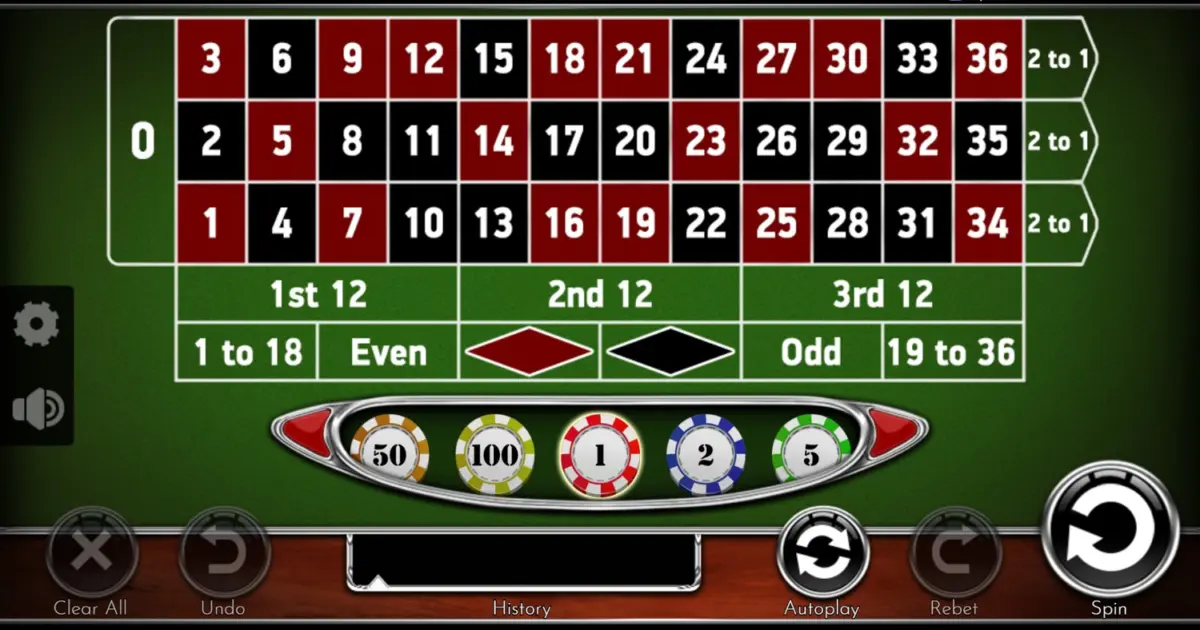
European Roulette (Spinomenal) delivers a single-zero wheel with a 97.3% RTP, which is the expected return for a 37-pocket table with no French rule modifiers. The name matches the format, the RTP matches the maths, and the demo lets you confirm both before committing real money. Spinomenal keeps three roulette tables in its catalogue, all carrying the same 97.3% figure.
European Roulette (Spinomenal) and the Spinomenal roulette range
Spinomenal offers three roulette variants, all built on the same 97.3% RTP foundation. Alongside this core table you will find European Roulette VIP and European Roulette – Christmas Edition, both carrying identical house edge figures but wrapped in different presentation layers. The VIP variant typically raises table limits for larger bets, while the Christmas edition applies seasonal theming without altering the underlying wheel structure. The consistency across the range means you can move between Spinomenal tables without recalculating edge or relearning payout structures. The provider keeps the portfolio narrow and focused rather than attempting novelty mechanics or side bet complications.
The wheel, the pockets and the edge
The variant hints in the game data point strongly toward a single-zero wheel, which would give you 37 numbered pockets: 1 through 36 plus a single green zero. On this configuration every standard bet carries a 2.70% house edge, derived from the one-pocket gap between true odds and the payout offered. A straight-up number pays 35 to 1, but the true chance of hitting it is 1 in 37, which equals 36 to 1 in fair odds. That single unit of shortfall across 37 pockets is where the house edge lives. Outside bets like red or black pay even money on an 18-in-37 chance, which again produces the same 2.70% disadvantage. The edge is uniform across the layout because every bet is paying against the same 37-pocket denominator. Confirm the pocket count and zero configuration on the game’s own rules screen before you place a real-money wager, because the RTP and the wheel structure must align for the 97.3% figure to hold.
97.3% in practice
An RTP of 97.3% means that over a large sample of spins the game returns £97.30 for every £100 wagered, leaving £2.70 with the house. This is not a session guarantee or a promise about your next hundred spins; it is a long-run statistical average derived from the paytable and the probability distribution. In any single session you may see results far above or far below that figure, because roulette variance is high and the sample size is small. A straight-up bet will miss 36 times out of 37 on average, so short-term swings are the norm rather than the exception. The 97.3% figure sits fractionally above the 96.97% corpus average for the broader game catalogue, a difference of 0.33 percentage points. This is a marginal edge in relative terms, worth perhaps £33 per £10,000 staked compared to the average table, but it does not transform the game’s volatility profile or alter the fact that the house edge applies to every spin independently.
Building a bet you understand
Roulette bets fall into two categories: inside bets on specific numbers or small groups, and outside bets on broader outcomes like colour or parity. The table below compares the standard European wheel payouts against true odds, showing where the house edge enters each bet type.
| Bet type | Payout | True odds (37 pockets) | Coverage |
|---|---|---|---|
| Straight up | 35:1 | 36:1 | 1 number |
| Split | 17:1 | 17.5:1 | 2 numbers |
| Street | 11:1 | 11.33:1 | 3 numbers |
| Corner | 8:1 | 8.25:1 | 4 numbers |
| Line | 5:1 | 5.17:1 | 6 numbers |
| Dozen / Column | 2:1 | 2.08:1 | 12 numbers |
| Red / Black / Even / Odd / High / Low | 1:1 | 1.056:1 | 18 numbers |
Every line in that table produces the same 2.70% house edge. The straight-up bet is the most volatile, paying 35 times your stake but landing once every 37 spins on average. The even-money bets are the least volatile, hitting close to half the time but paying only your stake back plus the original wager. Neither bet type is better or worse in expected value terms; they differ only in the shape of variance. If you want frequent small wins, bet red or a dozen. If you want rare large wins, bet a number or a corner. The cost per spin in expectation is identical.
Systems, streaks and independent spins
No betting system changes the house edge. Martingale, Fibonacci, D’Alembert, Labouchere, waiting for five reds before betting black—none of them alter the 2.70% disadvantage on a single-zero wheel. Each spin is an independent event; the wheel has no memory of what landed before, and past outcomes have zero predictive power for future results when the game runs on a properly functioning RNG. A progression system like Martingale doubles your bet after a loss, which increases the frequency of small wins but exposes you to catastrophic losses when a long streak hits and you run into the table limit or your own bankroll ceiling. You are not reducing risk; you are redistributing it, concentrating variance into low-probability, high-impact events. The mathematics of roulette are completely known and completely unforgiving. If you enjoy playing a system for the structure it provides, go ahead, but do so with the understanding that it will not make you profitable and it cannot reduce the house edge below 2.70% on any bet you place.
Free demo and staying in control
This table is available in free demo mode, which lets you test the interface, confirm the payout structure, and verify the wheel configuration before you deposit. Demo play is useful for understanding the game, but it does not predict real-money results and it should never be used to validate a betting system or test whether a progression works. If you choose to play for real money, set a budget in advance and treat that amount as the cost of entertainment, not an investment with expected returns. Roulette is a negative-expectation game; over time the house edge will assert itself, and no session, system, or streak changes that fact. Only play with money you can afford to lose, never chase losses, and never gamble under the influence of alcohol or when emotionally compromised. This game is restricted to players aged 18 and over in most jurisdictions. If gambling is causing you harm, seek help immediately through a service like GamCare or BeGambleAware.
Who should play European Roulette (Spinomenal)
This table suits players who want a clean single-zero wheel with transparent RTP and no side bet distractions. The 97.3% return is standard for the format, sitting fractionally above the broader game average but not offering any mechanical advantage over other European wheels. If you are comparing Spinomenal’s offering to European Roulette (Red Tiger), which also carries a 97.3% RTP, the decision comes down to interface preference and any table limit differences rather than mathematical edge. The free demo is the deciding tool: load both, place the same bets, check the limits, and choose the one that fits your session structure. Avoid this table if you are looking for French rule modifiers like La Partage, which cut the even-money house edge to 1.35%, or if you want multiplier mechanics like Lightning Roulette, which redistribute RTP across the paytable in exchange for jackpot potential. European Roulette (Spinomenal) is a straight implementation of the single-zero format, and that is exactly what it should be.
Frequently Asked Questions
Is European Roulette (Spinomenal) available in free demo mode?
Yes, the game offers a free demo. Use it to confirm the wheel structure, test the interface, and verify the payout table before committing real money. Demo play does not predict real-money results and should not be used to validate betting systems.
What is the RTP of European Roulette (Spinomenal)?
The confirmed RTP is 97.3%, which matches the standard return for a 37-pocket single-zero wheel with no French rule modifiers. This figure applies uniformly to every standard bet on the layout, producing a 2.70% house edge per spin.
Does the Martingale system work on this table?
No. Martingale and every other progression system leave the 2.70% house edge intact. Each spin is independent; the wheel has no memory. Martingale redistributes variance by increasing bet size after losses, which raises the frequency of small wins but exposes you to catastrophic losses when a streak hits the table limit.
What is the house edge on a straight-up bet?
The house edge is 2.70%, identical to every other standard bet. A straight-up number pays 35 to 1 against true odds of 36 to 1 on a 37-pocket wheel, and that one-unit shortfall produces the edge. Inside and outside bets have the same expected value; only variance differs.
How does European Roulette (Spinomenal) compare to other Spinomenal tables?
Spinomenal runs three roulette tables, all at 97.3% RTP. European Roulette VIP and European Roulette - Christmas Edition share the same house edge and wheel structure, differing only in table limits and visual theming. The consistency lets you switch between them without recalculating edge or relearning payouts.




