The number that should decide whether you open this game is 96.4%. That is the published return-to-player figure for the deal or no deal slot from Gaming1, and it sits above both the provider’s own 27-game average of 95.93% and the 95.71% average across the wider set of slots tracked here. A free demo is available, so you can look at the reels without staking anything.
What is missing is just as worth knowing. Gaming1 has not published a volatility rating, a paytable, a max win multiplier or a stake range for this title. That leaves a real gap in the planning you can do before you spin, and this review will not fill it with invented numbers.
First look at Deal Or No Deal Slot
This is a five-reel slot machine from Gaming1, a studio with 27 titles in the catalogue here. It carries the Deal Or No Deal licence, which is the reason most people search for it — the box-and-banker format is one of the most widely recognised game show brands in the world, and adaptations of it have appeared across bingo, lottery and slot formats for two decades.
What the FACTS do not tell you is how the licence is expressed on the reels. There is no confirmed symbol list, no named bonus round, no jackpot structure. Plenty of licensed slots build a picking round out of the source material, because that is the obvious fit, but the difference between “obvious fit” and “confirmed feature” matters when you are deciding where to put your money. Treat any feature description you read elsewhere without a provider source as unverified.
On popularity, the title ranks 1981 in the corpus, which places it in the 90.1st percentile — the top tenth by interest. That is a signal about search demand and brand recognition, not about how the game pays. Popularity and return are unrelated variables.
| Provider | Gaming1 |
|---|---|
| RTP | 96.4% |
| Reels | 5 |
| Free demo | Yes |
How a round plays out
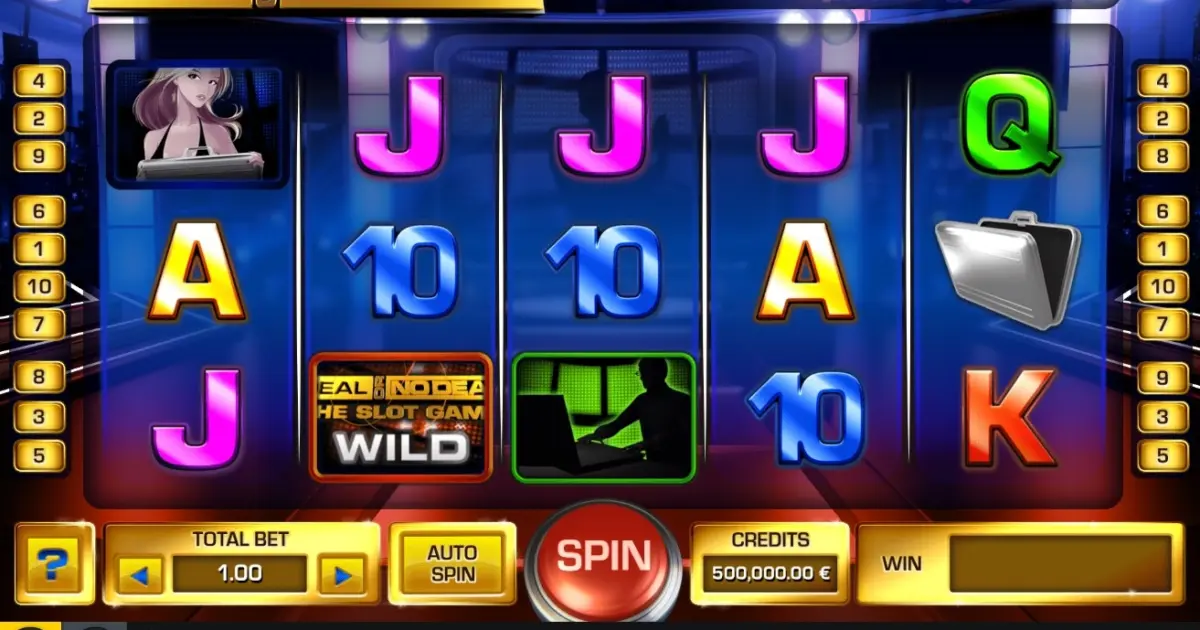
The confirmed mechanical facts are narrow: five reels, and a free demo you can load without depositing. There is no published payline count, no “ways” figure, and no confirmed feature set, so the honest answer to “what happens when I press spin” is that you will have to look.
In general terms, a five-reel slot resolves each spin independently. The random number generator selects an outcome the moment you commit the stake; the spinning reels are an animation of a result already determined. Nothing carries over between spins, and no sequence of previous results shifts the odds of the next one. That holds regardless of what features a game layers on top.
Most modern five-reel releases use some combination of wild substitutions, scatter-triggered free spins, and occasionally a purchasable feature entry. Those are conventions of the format, not statements about this game. Because the paytable is unpublished here, the demo is doing real work: it is the only way to see the actual symbol set, the actual trigger conditions, and how often the game gives you something back. Run it for a few hundred spins and you will learn more than any spec sheet would tell you.
Reading the 96.4% return figure
96.4% RTP means £96.40 returned per £100 wagered across a very large sample — millions of spins, not your session. The 3.6% house edge is the long-run cost of playing, and it is charged on turnover rather than on deposits, which is why stake size and spin count matter more than most players expect.
Put numbers on it. At £1 a spin and 500 spins, you have wagered £500 and the theoretical cost is £18. At £2 a spin over the same 500 spins, turnover doubles to £1,000 and the expected cost rises to £36. The percentage never changes; the amount you are exposed to does.
Against comparables, 96.4% is genuinely decent. It beats Gaming1’s own catalogue average by 0.47 points and the corpus average by 0.69 points. Over £1,000 of turnover, that 0.69-point gap is worth about £6.90 in reduced theoretical cost versus an average game. Small per session, meaningful over a year of play.
One caveat worth flagging: some providers ship multiple RTP configurations of the same game, and the operator chooses which one to run. The figure quoted here is the published one. It is worth checking the in-game help screen at the point of play.
Why unpublished volatility changes your bankroll maths
Gaming1 has not published a volatility rating for this title, and that absence is a genuine planning problem rather than a footnote. RTP tells you the long-run average; volatility tells you how violently your actual session will deviate from it. Two games at 96.4% can behave completely differently.
A low-volatility slot pays small amounts often. Balances drift down gently, sessions run long on a given bankroll, and the swings are shallow. A high-volatility slot does the opposite: long stretches of nothing, funded by rare large hits. The same £100 lasts a fraction as long, because the variance chews through it before an outlier lands — and outliers are not guaranteed to land at all within any finite session.
Without a rating, the sensible move is to assume higher variance than you would like and size accordingly. A practical rule of thumb is 200 to 300 spins of bankroll at your chosen stake. At £0.20 a spin that is £40 to £60; at £1 a spin it is £200 to £300. If a bankroll that size is uncomfortable, drop the stake rather than the spin count. The demo will also give you a rough read on hit frequency inside twenty minutes.
Bet sizing from an unpublished minimum upwards
No stake range is published for this game, so the floor and ceiling will only be visible in the game window at your chosen operator. Licensed five-reel slots commonly start somewhere around £0.10 to £0.20 and run up into the tens or low hundreds, but that is a description of the market, not a specification for this title.
The arithmetic that matters is independent of the range. Divide your session budget by the number of spins you want out of it, and that quotient is your stake. £50 across 300 spins is roughly £0.17 per spin. If the minimum stake sits above that figure, the game is not built for your budget and there is no adjustment that fixes it — a smaller number of larger spins carries more variance, not less.
Avoid stake progressions. Raising your bet after losses, or after wins, does not change the 3.6% house edge on any individual spin. Every spin is independently random, so a progression only reshapes the distribution of outcomes: it makes big swings more likely in both directions while leaving expected value untouched.
Where Deal Or No Deal Slot sits among 5-reel slots
Within Gaming1’s 27 titles, this one leads on published return. Glam Night is the closest at 96.11%, then Olympus Evolution at 96.06% and Hey Sweetie at 95.92%. The spread across the studio is narrow — under half a point between best and worst here — so if you have decided on Gaming1 slots, the RTP differences between these four are small enough that theme and feel should carry the decision.
The 5-Reels label is a format descriptor rather than a theme, and no other games share it in this dataset, so there is no like-for-like theme cohort to rank against. Judge it against the wider corpus instead: at 0.69 points above the 95.71% average, it is on the better side of the distribution without being an outlier. Plenty of games clear 97%.
The brand is the real differentiator. If the Deal Or No Deal format is the reason you are here, the alternatives above will not scratch that itch. If you simply want a competitive five-reel game from this studio, they are close substitutes on the numbers.
The honest verdict
The return figure is good and the brand recognition is strong. Those two things are solid. Against that, the disclosure is thin: no volatility rating, no paytable, no confirmed features, no published stake range and no max win figure. You are buying a known RTP attached to an unknown risk profile, which is an awkward combination for anyone who plans sessions properly.
That makes the free demo the obvious first step rather than a nice extra. Twenty minutes of unstaked play will tell you the hit frequency, the feature set and whether the licence has been used well — all things no spec sheet here can confirm. Demo results do not predict real-money outcomes, since every spin is independently random and short samples say nothing about the long run, but the demo does show you what the game actually is.
Slots are 18+ and priced entertainment, not a way to make money. Decide what a session is worth to you before you load it, treat that figure as spent, and stop when it is gone. If the amount you are staking has started to matter, that is the signal to close the tab.
Worth a demo run if the brand appeals; the 96.4% return justifies the click, and the missing volatility data justifies the caution.
Frequently Asked Questions
Can I play Deal Or No Deal Slot for free?
A free demo is available for this title, so you can spin the five reels with virtual credits and no deposit. That matters more than usual here, because Gaming1 has not published a paytable or feature list — the demo is the only reliable way to see what the symbols do and how often the game pays anything back.
What is the RTP of Deal Or No Deal Slot?
The published return is 96.4%, meaning £96.40 comes back per £100 wagered across a very large sample of spins. That sits 0.47 points above Gaming1's 27-game average of 95.93% and 0.69 points above the 95.71% corpus average. Your own session can land far above or below that figure.
Is Deal Or No Deal Slot high or low volatility?
Gaming1 has not published a volatility rating, so nobody can state it with confidence. That gap matters, because volatility determines how far a session swings from the 96.4% average. Until you have run the demo, plan as though variance is on the higher side — around 200 to 300 spins of bankroll at your stake.
Who is Gaming1 and what else do they make?
Gaming1 is the studio behind this release, with 27 titles in the catalogue here and an average published RTP of 95.93%. Other Gaming1 slots include Glam Night at 96.11%, Olympus Evolution at 96.06% and Hey Sweetie at 95.92%. This title leads the studio on published return.
How much bankroll do I need for Deal Or No Deal Slot?
No stake range is published, so check the minimum in the game window before planning. The arithmetic is simple regardless: divide your session budget by the spins you want. £50 over 300 spins is about £0.17 each. With volatility unrated, err toward the longer spin count rather than the larger stake.