The single most important thing to know about the duck of luck slot is what is missing: CT Gaming has not published an RTP percentage, a volatility rating, a stake range or a max win figure for this game. That leaves you judging it on feel rather than numbers. A free demo is available, so you can at least see how it plays without spending anything, but anyone who needs published maths before committing a bankroll should treat this one with caution.
Duck Of Luck versus the average slot
A comparison against the average slot normally starts with return to player. Across the games catalogued on this site the average sits at 96.19% for CT Gaming titles and 95.71% across the wider corpus. Neither figure tells you anything about this game, because no RTP has been published for it.
That is not a trivial gap. RTP is the one number that lets you compare two games on equal terms. Without it, you cannot say whether this title sits above or below its studio’s average, and any percentage you find quoted on a third-party page should be treated as unverified unless the operator or the studio states it. Some slots are also shipped in multiple RTP configurations, which means the version you load at one site may not match another.
What can be verified is interest. The game ranks 2684 for popularity and sits in the 86.5th percentile, so more people look it up than roughly six in seven titles. Popularity is a measure of attention, not of generosity, and it has no bearing on what any individual session will return.
| Detail | Value |
|---|---|
| Provider | CT Gaming |
| Game type | Slot Machine |
| RTP | Not published |
| Volatility | Not published |
| Popularity rank | 2684 (86.5th percentile) |
| Free demo | Available |
| Provider catalogue | 95 games |
| Provider average RTP | 96.19% |
RTP breakdown: no published figure in context
RTP describes the share of all money wagered that a game returns across an enormous number of spins. A slot at 96% returns about £96 for every £100 staked over millions of results, with the remaining £4 forming the house edge. That average says nothing about a hundred spins, or a thousand: short runs scatter widely around the long-run figure, and plenty of sessions end well above or well below it.
Use the studio average as a rough frame instead. At 96.19%, a hypothetical £0.20 stake repeated 500 times wagers £100 and would theoretically return around £96.19 over a very large sample. The real return on any given 500 spins could be nothing or several multiples of that. Every spin is independent, and no earlier result changes the odds of the next one.
If you want to compare a documented number against an undocumented one, Tesla Power from the same studio publishes 96.6%, which is above both the CT Gaming average and the corpus average. That transparency is worth something in itself.
Volatility profile
No volatility rating has been published here either, so the honest answer is that the risk profile is unknown until you play it.
Volatility describes how returns are distributed rather than how large they are. Low volatility games pay small amounts often, keeping balance movement gentle and sessions long on a modest bankroll. High volatility games pay rarely but larger, which means long stretches with nothing followed by occasional bigger hits, and they demand a deeper bankroll to survive the quiet runs. Medium sits between the two. Two slots with identical RTP can feel completely different because of this.
The practical workaround is to run the demo and watch the balance line. Count roughly how often a spin returns anything at all, and how large the biggest return is relative to your stake. Frequent small returns with a shallow ceiling points towards the low end; long dry runs broken by a larger hit points towards the high end. Treat that as a rough impression, not a measurement, because a few hundred demo spins is a tiny sample.
CT Gaming as a studio
CT Gaming has 95 games catalogued here, with an average RTP of 96.19% across those that publish a figure. That average sits a little above the 95.71% corpus average, which is a mild point in the studio’s favour, though averages hide a spread and individual titles can land either side of it.
The studio’s output leans towards straightforward slot machine formats rather than heavily featured modern releases. If you want a sense of the range before deciding whether CT Gaming slots suit you, Magician Dreaming and Beetle Star are both worth a demo spin, though neither publishes an RTP either.
That pattern matters. When a studio leaves RTP undisclosed across several titles, the gap is more likely a documentation habit than a signal about any one game. It still shifts the burden onto you to ask the operator for the configured figure before playing for money.
Three themed alternatives worth comparing
No theme label has been recorded for this game, and there are no themed sibling titles in the catalogue to line up against it. So rather than pretend at a theme comparison, here is how to compare on the things that actually affect a session.
Start with published RTP. A game that states its percentage lets you calculate expected cost per hundred spins; one that does not leaves you guessing. On that single criterion, Tesla Power at 96.6% is the more informative choice among the CT Gaming titles listed here.
Second, compare stake ranges at the operator, since no range is published for this title. The minimum decides how long a given budget lasts. Third, compare how the game feels over a hundred demo spins. Many slots use wilds, scatters and free-spin rounds, and some sell a bonus entry outright, but nothing confirms which of those mechanics appear here, so check in the demo rather than assuming.
Getting the most out of the free demo
The Duck Of Luck free demo is the most useful tool available for this game, precisely because the published data is thin. It runs in a browser with no download and no deposit, and it costs nothing to leave running while you form a view.
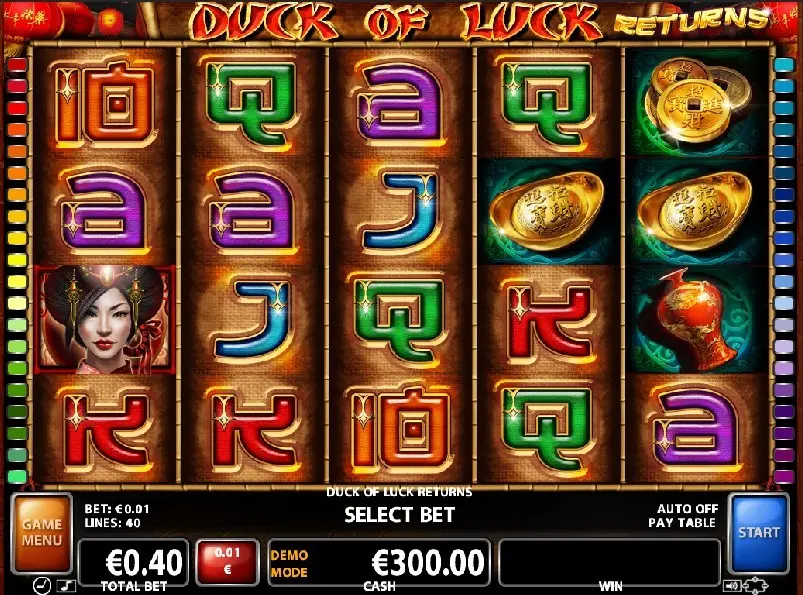
Use it deliberately. Note the stake options, the reel and payline layout, and whether any bonus features trigger. Track roughly how often spins return something. Then work out what a real session would cost: your intended stake multiplied by the spins per hour you actually play tells you the hourly outlay, and that number should sit inside a budget you set before you start.
Demo results do not predict real-money outcomes. The maths is the same but the sample you see is far too small to mean anything, and a lucky demo run is not evidence of anything at all.
Slots are 18+ entertainment you pay for, like a cinema ticket. Decide what the session is worth to you in advance, stake only that, and stop when it is gone rather than topping up.
Should you play the Duck Of Luck slot?
It depends on how much you need to know before you spin. The free demo is genuinely worth ten minutes, and the popularity percentile suggests plenty of people find the format agreeable. If you enjoy simple slot machine play and are happy to judge a game on how it handles rather than on a spec sheet, there is no reason to avoid it.
If you plan on real money, the missing data is a real drawback. Without a published RTP, volatility rating or max win, you cannot compare this title fairly against anything else. Ask your operator which RTP version they run. If they cannot say, a documented alternative such as Tesla Power gives you more to work with for the same outlay.
Frequently Asked Questions
Can I play Duck Of Luck for free without downloading anything?
A free demo is available and runs in the browser, so there is no download and no deposit required. It uses play credits rather than cash, which makes it the practical way to see the stake options, layout and any bonus features before deciding whether the game is worth real money at all.
What is the RTP of Duck Of Luck?
CT Gaming has not published an RTP figure for this title, so any percentage quoted elsewhere should be treated as unverified. For context, CT Gaming titles that do publish a figure average 96.19%, against 95.71% across the wider catalogue. Ask your operator which configuration they run before staking money.
Is Duck Of Luck high or low volatility?
No volatility rating has been published, so the risk profile is unknown. Low volatility means frequent small returns and gentler balance swings; high volatility means long quiet runs broken by rarer, larger hits and needs a deeper bankroll. A few hundred demo spins gives you a rough impression, not a measurement.
Who is CT Gaming and what else do they make?
CT Gaming is a slot studio with 95 games catalogued here, averaging 96.19% RTP across those that publish one. Their output leans towards straightforward slot machine formats. Magician Dreaming, Beetle Star and Tesla Power are three examples, the last of which publishes 96.6% RTP.
How does it compare with Tesla Power?
Tesla Power publishes 96.6% RTP, above both the 96.19% CT Gaming average and the 95.71% corpus average, while this title publishes no figure at all. On transparency alone Tesla Power is the easier game to assess. Feel and pacing are separate questions, and only demo play will answer those.